Decadent French-Style Crepes
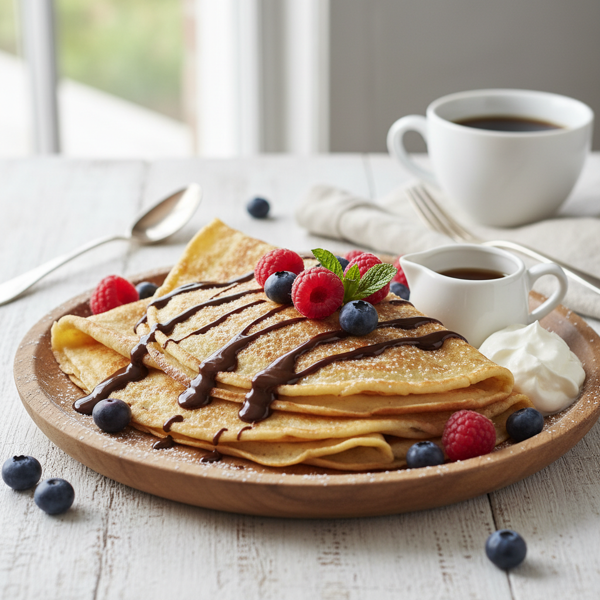
Indulge in the ultimate breakfast experience with these delightful French-style crepes! This recipe, inspired by classic culinary techniques, combines simple ingredients to create a light, tender, and versatile crepe that can be filled with your favorite sweet or savory fillings. Whether you prefer a classic Nutella spread, fresh fruits, or a gourmet ham and Gruyère combination, these crepes promise to elevate your breakfast table. Perfect for weekend brunches or special occasions, this easy recipe will impress your family and friends while delighting your taste buds.
N/A
Servings
360
Calories
6
Ingredients
Ingredients
Wondra Flour
1 1/2 cups (No preparation needed, just measure.)
Melted Butter
4 tablespoons (Melt and allow to cool slightly before using.)
Large Eggs
4 (Crack and add to the blender.)
Water
1 cup (Measure out cold water.)
Milk
1 cup (Measure out whole milk.)
Salt
1/2 teaspoon (Measure out salt.)
Instructions
1
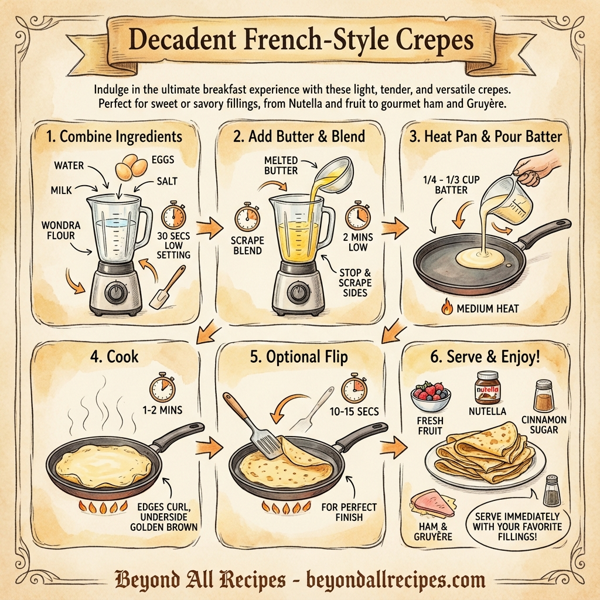
In a blender, combine water, milk, Wondra flour, eggs, and salt in that order to help incorporate the ingredients smoothly.
2
Blend on the lowest setting for 30 seconds, then pause to scrape any unmixed flour from the sides of the blender.
3
Gradually pour in the melted butter while continuing to blend on low for another two minutes. Remember to stop occasionally to scrape down the sides as needed.
4
Heat a non-stick crepe pan (8" or 10" recommended) over medium heat until warm.
5
Tilt the pan and pour in 1/4 to 1/3 cup of batter (depending on the size of your pan). Quickly tilt the pan in a circular motion to spread the batter thinly across the surface.
6
Cook the crepe until the edges begin to curl slightly and the underside is golden brown. This should take about 1-2 minutes.
7
For an optional touch, flip the crepe for an additional 10-15 seconds to achieve a perfectly finished look.
8
Serve immediately with your choice of fillings, such as fresh fruit, Nutella, cinnamon sugar, or for a savory twist, ham and Gruyère with a sprinkle of pepper.
Nutrition Information
20g
Fat
36g
Carbs
10g
Protein
Frequently Asked Questions
Frequently Asked Questions
What are French-style crepes?
French-style crepes are thin, delicate pancakes that are light and tender, suitable for a variety of sweet or savory fillings.
What kind of flour is best for these crepes?
This recipe specifically calls for Wondra Flour to achieve a smooth, lump-free consistency.
Can I use regular flour instead of Wondra flour?
While Wondra is recommended for its fine texture, you can use all-purpose flour, though the texture may vary slightly.
Why should I use a blender for this recipe?
Using a blender helps incorporate the ingredients smoothly and ensures there are no flour lumps in the batter.
What is the recommended order for adding ingredients to the blender?
Combine water, milk, Wondra flour, eggs, and salt in that specific order to help the ingredients mix efficiently.
How long should I blend the initial ingredients?
Blend the initial ingredients on the lowest setting for about 30 seconds.
When do I add the butter?
Gradually pour in the melted butter after the initial 30-second blend is complete.
How long is the total blending time for the butter phase?
You should continue blending on low for another two minutes after adding the melted butter.
Why should I scrape down the blender sides?
Scraping the sides ensures that any unmixed flour is fully incorporated into the batter for a uniform texture.
What type of pan is best for cooking crepes?
A non-stick crepe pan is highly recommended for the best results and easy release.
What size pan should I use?
An 8-inch or 10-inch pan is recommended for this specific crepe recipe.
At what heat setting should I cook the crepes?
Heat the pan over medium heat until it is warm before adding the batter.
How much batter should I use for each crepe?
Depending on your pan size, use between 1/4 and 1/3 cup of batter per crepe.
How do I get the batter to spread thinly?
Quickly tilt the pan in a circular motion immediately after pouring the batter to spread it across the surface.
How long does it take to cook one side of the crepe?
The first side typically takes about 1-2 minutes to cook until golden brown.
How do I know when to flip the crepe?
The crepe is ready to flip when the edges begin to curl slightly and the underside is golden brown.
Is flipping the crepe necessary?
Flipping for an additional 10-15 seconds is optional but helps achieve a perfectly finished look on both sides.
What are some sweet filling ideas?
Popular sweet options include Nutella, fresh fruits, or a simple dusting of cinnamon sugar.
What are some savory filling ideas?
For a savory twist, try filling the crepes with ham and Gruyere cheese with a sprinkle of pepper.
Can I make these for brunch?
Yes, these crepes are perfect for weekend brunches, special occasions, or even a quick meal.
Are these crepes high in protein?
Each serving contains 10g of protein, making them a relatively substantial breakfast option.
What is the calorie count per serving?
These decadent French-style crepes contain approximately 360 calories per serving.
How much fat is in these crepes?
There is 20g of fat per serving in this recipe.
How many carbohydrates are in this recipe?
Each serving of these crepes contains 36g of carbohydrates.
Can I use cold water and milk?
Yes, the recipe suggests measuring out cold water and whole milk for the batter.
Should the butter be hot when added?
The butter should be melted but allowed to cool slightly before being added to the blender.
How many ingredients are in this recipe?
This recipe uses 6 main ingredients: Wondra flour, butter, eggs, water, milk, and salt.
Are these crepes suitable for special occasions?
Absolutely, their elegant presentation and indulgent taste make them ideal for holidays and celebrations.
Can I prepare the batter ahead of time?
While the recipe suggests serving immediately, crepe batter can often be rested in the fridge for even better results.
What makes this recipe 'decadent'?
The combination of whole milk, melted butter, and the refined texture of Wondra flour creates an exceptionally rich experience.