Decadent Blueberry Sour Cream Scones
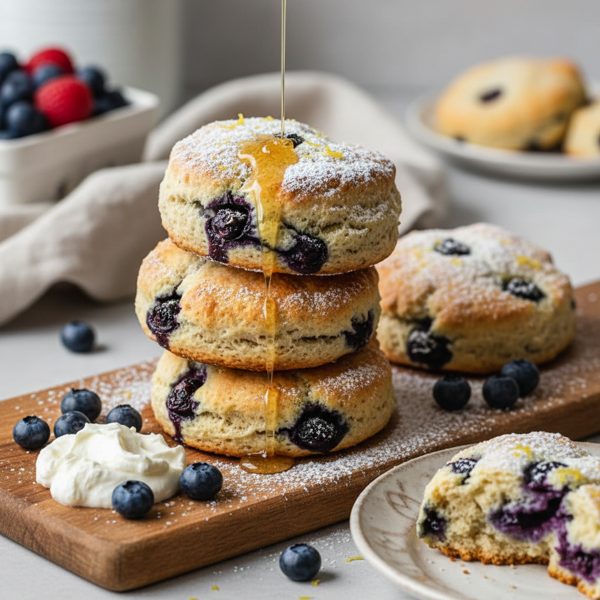
Indulge in these heavenly blueberry sour cream scones, inspired by your favorite bakery treats but made even better at home. Bursting with juicy fresh blueberries and a tender, flaky texture, these scones come together effortlessly. The rich flavor of full-fat sour cream and butter elevates each bite, making them a delightful breakfast or snack option. For a twist, feel free to substitute fresh blueberries with chocolate chips, raisins, or your favorite dried fruit. Finish off with a drizzle of vanilla glaze for an extra touch of sweetness that will leave everyone asking for seconds!
N/A
Servings
N/A
Calories
14
Ingredients
Ingredients
sour cream
1 cup (none)
large egg
1 (slightly beaten)
vanilla extract
1/2 teaspoon (none)
almond extract
1/2 teaspoon (or use 1 teaspoon vanilla)
baking soda
1 teaspoon (none)
all-purpose flour
4 cups (measured exactly)
sugar
1 cup (can use a few tablespoons more if desired)
baking powder
2 1/2 teaspoons (or use 2 semi-heaping teaspoons)
cream of tartar
1/4 teaspoon (none)
salt
1 teaspoon (none)
cinnamon
1/2-1 teaspoon (optional)
very cold butter
1 cup (cut into small cubes)
fresh blueberries
1 cup (none)
vanilla glaze
to taste (optional, for drizzling)
Instructions
1
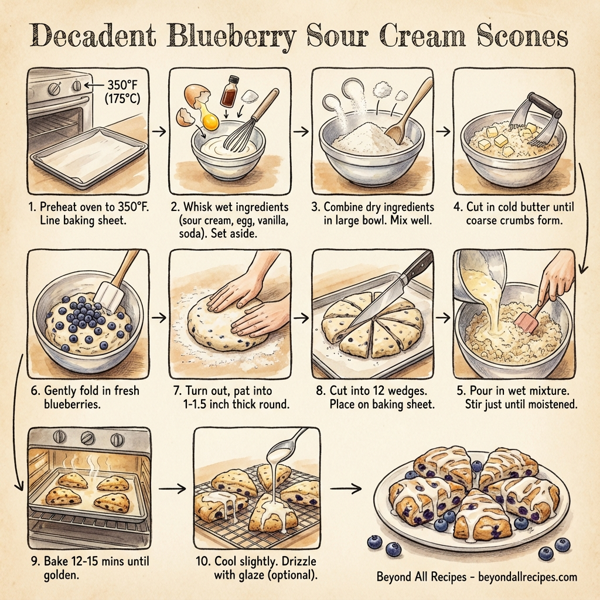
Preheat your oven to 350°F (175°C). Line a baking sheet with parchment paper or lightly grease it to prevent sticking.
2
In a small bowl, whisk together the sour cream, slightly beaten egg, vanilla extract, and baking soda. Set this mixture aside to allow the flavors to meld while you assemble the dry ingredients.
3
In a large mixing bowl, combine the all-purpose flour, sugar, baking powder, cream of tartar, salt, and optional cinnamon. Mix thoroughly to ensure all dry ingredients are evenly distributed.
4
Using a pastry blender or your fingers, cut the very cold butter into the flour mixture until it resembles coarse crumbs. Be careful not to over-mix so that the butter remains in small pieces for a flakier scone.
5
Pour in the sour cream mixture and gently stir to combine. Mix just until the dough is moistened—be mindful not to overwork it.
6
Carefully fold in the fresh blueberries, distributing them evenly throughout the dough without crushing them.
7
Turn the dough out onto a lightly floured surface. With your hands, gently roll or pat the dough into a round about 1 to 1.5 inches thick.
8
Using a sharp knife, cut the dough into 12 equal wedges. Place the wedges on the prepared baking sheet, leaving about 2 inches between them to allow for rising.
9
Bake in the preheated oven for approximately 12-15 minutes, or until the bottoms are golden brown and the tops have risen.
10
Once baked, remove the scones from the oven and allow them to cool slightly. Optionally, drizzle the warm scones with vanilla glaze or dust lightly with confectioners' sugar before serving.
Nutrition Information
Frequently Asked Questions
Frequently Asked Questions
What oven temperature is required for these scones?
The oven should be preheated to 350°F (175°C) before baking.
How should I prepare the baking sheet?
Line your baking sheet with parchment paper or lightly grease it to prevent the scones from sticking.
What ingredients go into the initial liquid mixture?
Whisk together the sour cream, one slightly beaten egg, vanilla extract, and baking soda.
How much flour is needed for this recipe?
This recipe requires 4 cups of all-purpose flour, measured exactly.
Can I use almond extract instead of vanilla?
Yes, you can use 1/2 teaspoon of almond extract or substitute it with an additional 1/2 teaspoon of vanilla extract.
What is the purpose of cream of tartar in this recipe?
Cream of tartar acts as a leavening agent and helps achieve a tender, flaky texture.
Is cinnamon required for these blueberry scones?
No, 1/2 to 1 teaspoon of cinnamon is optional and can be added to the dry ingredients for extra flavor.
What state should the butter be in when mixing?
The butter must be very cold and cut into small cubes before being added to the flour mixture.
How do I incorporate the butter into the flour?
Use a pastry blender or your fingers to cut the cold butter into the dry ingredients until the mixture resembles coarse crumbs.
Why is it important not to over-mix the butter?
Leaving small pieces of butter intact helps create a flakier scone during the baking process.
How much sugar should I use?
Use 1 cup of sugar, though you can add a few extra tablespoons if you prefer a sweeter scone.
When do I add the blueberries?
Fold in the fresh blueberries carefully after the wet and dry ingredients have been combined into a moistened dough.
Can I substitute blueberries with other ingredients?
Yes, you can substitute the blueberries with chocolate chips, raisins, or your favorite dried fruit.
How should I handle the dough when adding blueberries?
Fold them in gently to distribute them evenly without crushing the berries.
How thick should I pat the dough round?
Gently roll or pat the dough into a round that is approximately 1 to 1.5 inches thick.
How many scones does this recipe yield?
The recipe yields 12 equal wedges.
How much space should be between the scones on the baking sheet?
Leave about 2 inches between each wedge to allow for rising during baking.
What is the total baking time?
Bake the scones for approximately 12 to 15 minutes.
How do I know when the scones are finished baking?
The scones are done when the bottoms are golden brown and the tops have risen.
Do I need to cool the scones before serving?
Allow the scones to cool slightly after removing them from the oven before adding glaze or serving.
What can I use for a topping?
You can drizzle them with a vanilla glaze or lightly dust them with confectioners' sugar.
Is full-fat sour cream recommended?
Yes, full-fat sour cream is suggested for a richer flavor and more tender texture.
Can I use frozen blueberries instead of fresh?
While fresh is specified, frozen blueberries can be used; just be careful not to over-mix as they may bleed color into the dough.
Should the egg be cold or room temperature?
The recipe specifies one large egg, slightly beaten; keeping it cold is generally better for scone dough consistency.
What happens if I overwork the dough?
Overworking the dough can lead to tough scones rather than the desired tender and flaky texture.
How much baking powder is used?
The recipe calls for 2 1/2 teaspoons of baking powder (or 2 semi-heaping teaspoons).
What is the best way to cut the wedges?
Use a sharp knife to cut the round dough into 12 even triangular wedges.
What makes these scones 'bakery-style'?
The combination of high fat content from butter and sour cream, along with the vanilla glaze, gives them a professional bakery quality.
Are these scones suitable for a snack?
Yes, they are a delightful option for both breakfast and as a sweet snack.
How much salt is in the recipe?
The recipe includes 1 teaspoon of salt to balance the sweetness.