Cuban Crispy Shredded Beef (Vaca Frita)
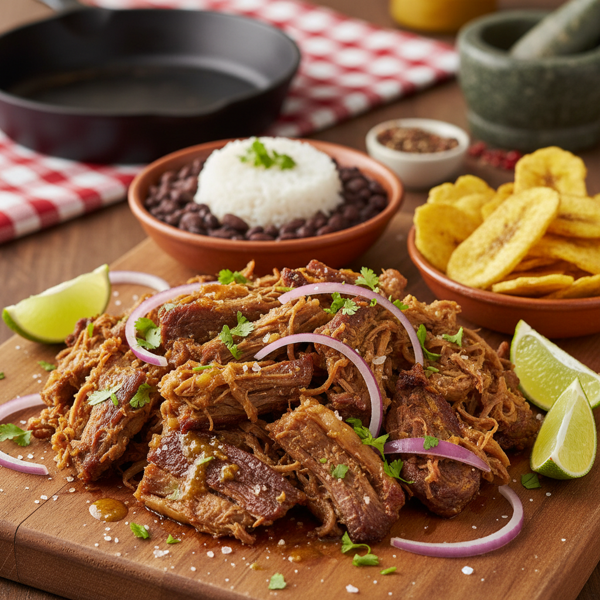
Experience the vibrant flavors of Cuba with this irresistible Vaca Frita, a classic dish that's both simple and deeply satisfying. This version utilizes budget-friendly cuts like skirt steak or bottom round roast, making it accessible for everyone. The beef is simmered until tender, then marinated in a zesty blend of sour orange and lime juices, infusing it with a bright, tangy flavor. Once shredded, it’s sautéed to achieve a delightful crispy texture on the edges while remaining juicy inside. Perfectly paired with fluffy white rice and zesty key lime wedges, this dish is ideal for family gatherings or whenever you crave a taste of Cuban cuisine. Dive into this Cuban culinary treasure adapted from the renowned !Sabor! A Passion for Cuban Cuisine, and bring a touch of Miami to your table.
N/A
Servings
300
Calories
9
Ingredients
Ingredients
bay leaf
1 (none)
flank steak
2 lbs (cut into large pieces)
salt
1 teaspoon (to taste)
pepper
1/2 teaspoon (freshly ground)
sour orange juice
1/2 cup (or 1/4 cup each lime and orange juices)
lime juice
1/4 cup (freshly squeezed)
olive oil
4 tablespoons (divided)
garlic cloves
3 (minced)
medium onions
2 (thinly sliced)
Instructions
1
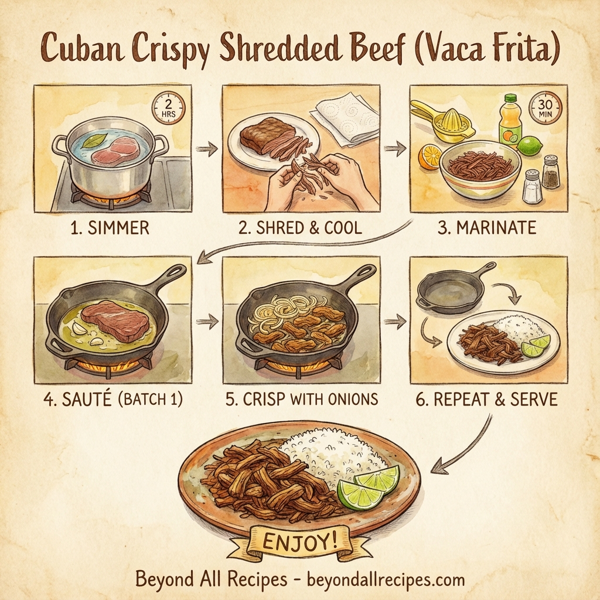
In a large stock pot, bring 2 quarts of salted water to a vigorous boil. Add 1 bay leaf and the 2 lbs of flank steak, then reduce the heat and cover to simmer for 2 hours, until the meat is tender.
2
Once cooked, carefully drain the meat and allow it to cool on a plate lined with paper towels to absorb excess moisture. Once it’s cool enough to handle, shred the meat with your hands into thin strips, ensuring you shred it along the grain for optimal texture.
3
In a bowl, combine the shredded beef with salt, pepper, and the citrus juices (1/2 cup sour orange juice or a mixture of 1/4 cup each of lime and orange juices). Let the beef marinate for at least 30 minutes to absorb the flavors, then drain the excess marinade.
4
Heat a large cast-iron skillet over medium-high heat. Add 2 tablespoons of olive oil and heat until it is nearly smoking. Sauté half of the marinated beef and half of the minced garlic for about 7 to 10 minutes, stirring frequently until the beef begins to crisp up.
5
Add half of the sliced onions to the skillet and continue to sauté for an additional 5 minutes, until the beef is golden brown and has crispy edges. Transfer this mixture to a large plate.
6
Repeat the cooking process with the remaining beef, garlic, olive oil, and onions. Once both batches are done, serve the crispy shredded beef hot, with fluffy white rice and fresh key lime wedges on the side.
Nutrition Information
16
Fat
2.5
Carbs
31.25
Protein
Frequently Asked Questions
Frequently Asked Questions
What is Vaca Frita?
Vaca Frita, which translates to "fried cow," is a classic Cuban dish consisting of shredded beef that is marinated in citrus and sautéed until it becomes crispy on the edges.
What cut of beef is best for this recipe?
Flank steak is used in this recipe, but you can also use budget-friendly cuts like skirt steak or bottom round roast.
How long should I simmer the beef?
The beef should be simmered in salted water for approximately 2 hours until it is tender enough to shred.
What is in the marinade for Cuban Crispy Shredded Beef?
The marinade consists of sour orange juice (or a mix of lime and orange juices), salt, and freshly ground pepper.
Can I substitute sour orange juice if I can't find it?
Yes, you can substitute 1/2 cup of sour orange juice with a mixture of 1/4 cup lime juice and 1/4 cup orange juice.
How do I achieve a crispy texture for the beef?
To get the beef crispy, sauté it in a large cast-iron skillet over medium-high heat with olive oil, making sure not to overcrowd the pan by cooking in batches.
Is Vaca Frita gluten-free?
Yes, this recipe is naturally gluten-free as it uses meat, vegetables, citrus, and oil without any wheat-based thickeners.
What should I serve with Vaca Frita?
It is traditionally served with fluffy white rice and fresh key lime wedges for extra zest.
How many calories are in a serving of this dish?
One serving contains approximately 300 calories.
How much protein is in Cuban Crispy Shredded Beef?
Each serving provides about 31.25 grams of protein.
Is this recipe low in carbohydrates?
Yes, it is very low in carbohydrates, containing only 2.5 grams per serving.
How long should the meat marinate?
The beef should marinate for at least 30 minutes to properly absorb the tangy citrus flavors.
What is the preparation for the garlic?
The recipe calls for three garlic cloves that should be finely minced before being added to the skillet.
How should the onions be prepared?
Two medium onions should be thinly sliced before they are sautéed with the beef.
Should I shred the beef with or against the grain?
For the best texture, you should shred the beef along the grain into thin strips.
Why do I need to drain the meat after boiling?
Draining and patting the meat dry with paper towels removes excess moisture, which helps the beef crisp up better in the skillet.
How much fat is in this Vaca Frita recipe?
There are approximately 16 grams of fat per serving.
When do I add the onions during cooking?
Add the sliced onions to the skillet after the beef has already begun to crisp up, typically after 7 to 10 minutes of sautéing.
How much oil is needed for frying?
The recipe uses 4 tablespoons of olive oil, divided between the two batches of cooking.
What flavor does the bay leaf add?
The bay leaf is added to the boiling water to infuse the beef with a subtle herbal aroma during the long simmering process.
Is it necessary to use a cast-iron skillet?
While not strictly required, a cast-iron skillet is ideal because it retains heat well and produces the best crispy edges on the meat.
Can I prepare this beef in advance?
Yes, you can boil and shred the meat ahead of time, then marinate and fry it just before you are ready to serve.
How many onions are used in this recipe?
The recipe uses two medium-sized onions.
Do I need to add sugar to this dish?
No, this savory dish does not require any added sugar.
What is the total amount of water used for boiling the beef?
The recipe specifies using 2 quarts of salted water to boil the flank steak.
Should the lime juice be fresh?
Yes, the recipe recommends 1/4 cup of freshly squeezed lime juice for the best flavor.
What is the source of this recipe?
This recipe is adapted from the cookbook '!Sabor! A Passion for Cuban Cuisine'.
How long do the onions need to sauté?
The onions should be sautéed for about 5 minutes once added to the beef, until they are golden brown.
How many batches should the beef be cooked in?
The 2 lbs of beef should be cooked in two separate batches to ensure even crisping.
What gives the beef its tangy taste?
The tanginess comes from the combination of lime and orange juices (or sour orange) used in the marinating step.