Cuban Coffee Braised Beef Stew
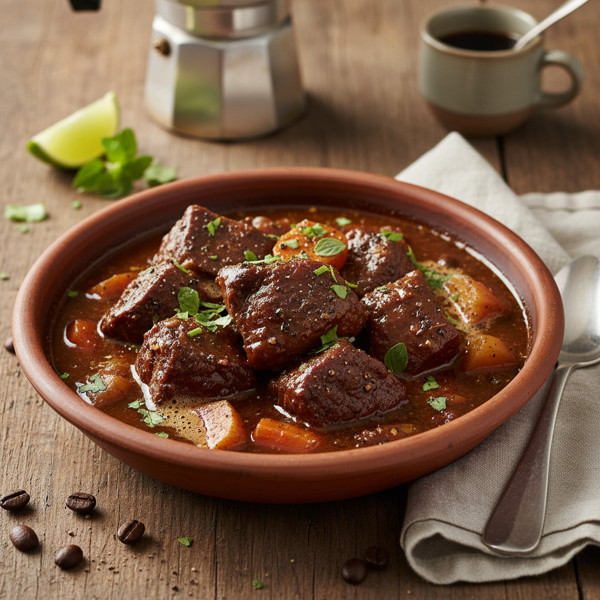
Indulge in a flavorful journey with this Cuban Coffee Braised Beef Stew, where tender pieces of rump roast meld perfectly with the rich and aromatic Cuban coffee gravy. This hearty stew is not only comforting but also features unique ingredients like taro and dates, providing a delightful twist that balances savory and sweet. Savor it over a bed of fluffy long-grain rice, topped with fresh chayote, making it an ideal dish for family gatherings or cozy nights in. Serve this meal with crusty bread for a complete experience that captures the essence of Cuban cuisine.
N/A
Servings
N/A
Calories
14
Ingredients
Ingredients
Boned rump roast
1 lb (Trimmed of fat and cut into 1-inch cubes)
Salt
1/4 teaspoon (For seasoning)
Fresh coarse ground black pepper
1/4 teaspoon (For seasoning)
Strong brewed coffee
1 1/2 cups (Freshly brewed)
No-salt-added beef broth
1 cup (For added flavor)
Finely chopped onion
1/2 cup (Freshly chopped)
Dry red wine
1/3 cup (For depth of flavor)
Garlic
2 cloves (Minced)
Taro root or potato
1 cup (Peeled, diced)
Sliced mushrooms
1 cup (Fresh or canned)
Whole pitted dates
1/4 cup (Chopped)
Capers
1 tablespoon (Rinsed)
Hot cooked long-grain rice
2 cups (For serving)
Shredded chayote or yellow squash
1/2 cup (For garnish)
Instructions
1
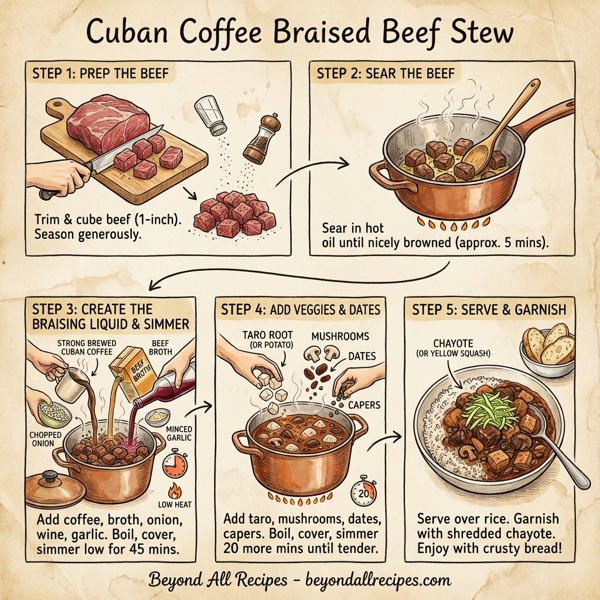
Begin by trimming any excess fat from the rump roast and cutting it into 1-inch cubes. Season the beef generously with salt and freshly ground black pepper.
2
In a large saucepan, heat a drizzle of oil over medium-high heat. Add the seasoned beef cubes and sear them for about 5 minutes, or until they are nicely browned on all sides.
3
Pour in the strong brewed coffee, beef broth, finely chopped onion, dry red wine, and minced garlic. Stir the mixture, bring it to a boil, then cover the pot and reduce the heat to low, allowing it to simmer for 45 minutes to develop deep flavors.
4
After 45 minutes, add the taro root (or potato), sliced mushrooms, chopped dates, and capers. Increase the heat again to bring the mixture back to a boil, then cover and reduce the heat, simmering for an additional 20 minutes until the vegetables are tender.
5
Finally, serve the flavorful stew over hot cooked long-grain rice and garnish with shredded chayotes (or yellow squash) for a refreshing crunch.
Nutrition Information
Frequently Asked Questions
Frequently Asked Questions
What is Cuban Coffee Braised Beef Stew?
It is a flavorful stew featuring tender rump roast pieces braised in a rich gravy made from strong Cuban coffee, beef broth, and red wine.
What cut of beef is recommended for this recipe?
The recipe calls for 1 lb of boned rump roast, trimmed of fat and cut into 1-inch cubes.
How should the beef be seasoned before cooking?
Season the beef cubes generously with 1/4 teaspoon of salt and 1/4 teaspoon of fresh coarse ground black pepper.
How long should I sear the beef?
Sear the seasoned beef cubes in a large saucepan over medium-high heat for approximately 5 minutes until they are nicely browned.
What liquids are used to create the braising gravy?
The gravy is composed of 1 1/2 cups of strong brewed coffee, 1 cup of no-salt-added beef broth, and 1/3 cup of dry red wine.
How long is the first simmering stage?
After adding the liquids, onion, and garlic, the stew should simmer on low heat for 45 minutes.
What vegetables are added to the stew?
The stew includes 1 cup of peeled and diced taro root (or potato) and 1 cup of sliced mushrooms.
Why are dates included in the beef stew?
Chopped whole pitted dates are added to provide a delightful sweet twist that balances the savory flavors of the coffee and beef.
Do I need to prepare the capers in any specific way?
Yes, the 1 tablespoon of capers should be rinsed before being added to the stew.
How is the stew served?
Serve the stew over 2 cups of hot cooked long-grain rice and garnish it with shredded chayote or yellow squash.
Can I substitute the taro root?
Yes, if taro root is not available, you can use an equal amount of diced potato.
What is the purpose of the coffee in this recipe?
Strong brewed coffee creates a rich and aromatic gravy that provides a deep, savory flavor to the braised beef.
How much onion does the recipe require?
The recipe calls for 1/2 cup of finely chopped onion.
How much garlic is used in the stew?
The recipe uses 2 cloves of minced garlic.
Can I use canned mushrooms?
Yes, the recipe allows for either fresh or canned sliced mushrooms.
How long is the second simmering stage?
After adding the taro, mushrooms, dates, and capers, simmer for an additional 20 minutes until the vegetables are tender.
What garnish provides a refreshing crunch?
Shredded chayote or yellow squash is used as a garnish to add a refreshing crunch to the meal.
Is the beef fat left on the roast?
No, the instructions specify trimming any excess fat from the rump roast before cubing it.
What type of broth is best for this stew?
No-salt-added beef broth is recommended to better control the sodium levels and flavor profile.
What type of wine is recommended?
The recipe calls for 1/3 cup of dry red wine to add depth to the braising liquid.
What size should the beef be cut into?
The rump roast should be cut into 1-inch cubes for even cooking.
Is this recipe suitable for cozy nights in?
Yes, it is described as a comforting and hearty meal ideal for family gatherings or cozy nights in.
What type of rice should I prepare?
The dish is best served over hot cooked long-grain rice.
Can I use yellow squash instead of chayote?
Yes, yellow squash is a suitable alternative for the shredded chayote garnish.
How many ingredients are in this recipe?
The recipe contains 14 distinct ingredients including the base, liquids, vegetables, and garnishes.
What is the total simmering time?
The total simmering time is 65 minutes, split into a 45-minute initial simmer and a 20-minute final simmer.
Should I cover the pot while simmering?
Yes, the instructions state to cover the pot during both simmering stages to maintain moisture and heat.
Is the stew brought to a boil more than once?
Yes, the stew is brought to a boil before the first simmer and again after adding the vegetables for the second simmer.
Can I serve this with bread?
Yes, serving the stew with crusty bread is suggested for a complete Cuban cuisine experience.
What makes this stew unique compared to traditional beef stews?
The inclusion of strong Cuban coffee, taro root, dates, and capers gives this stew a unique profile that balances savory, sweet, and tangy notes.