Crusty Gluten-Free French Bread
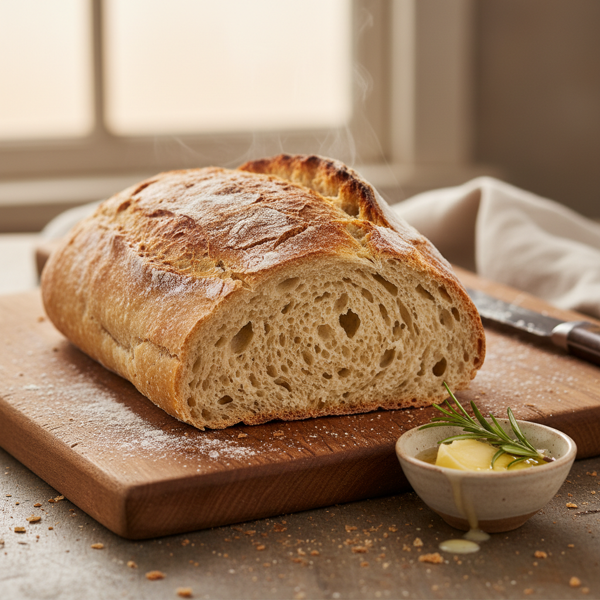
Experience the delightful taste and texture of this Crusty Gluten-Free French Bread, crafted to evoke the authentic flavor of traditional bread while being entirely free of fat and gluten. With its thick, golden crust and soft, airy interior, this versatile loaf is perfect for an array of culinary uses including gourmet sandwiches, rich garlic bread, and dipping alongside your favorite pasta dishes or fresh olive oil. Easy to prepare and quick to bake, this recipe has become a staple in our household, often disappearing within days! Keep it in the fridge to maintain its crustiness and deliciousness—it's like having a little piece of France right in your kitchen!
N/A
Servings
N/A
Calories
9
Ingredients
Ingredients
gluten-free flour mix
2 cups (Mix consisting of 2 parts rice flour, 2/3 part potato starch, and 1/3 part tapioca flour.)
gluten-free flour
2 tablespoons (Same mix as above.)
xanthan gum
2 1/2 teaspoons (No preparation needed.)
sugar
1 1/2 teaspoons (No preparation needed.)
salt
1 teaspoon (No preparation needed.)
quick-rising yeast
2 teaspoons (No preparation needed.)
vinegar or dough enhancer
1 teaspoon (No preparation needed.)
egg whites
2 (Let sit at room temperature.)
warm water
1 1/2 cups (Heat in the microwave until the right temperature.)
Instructions
1
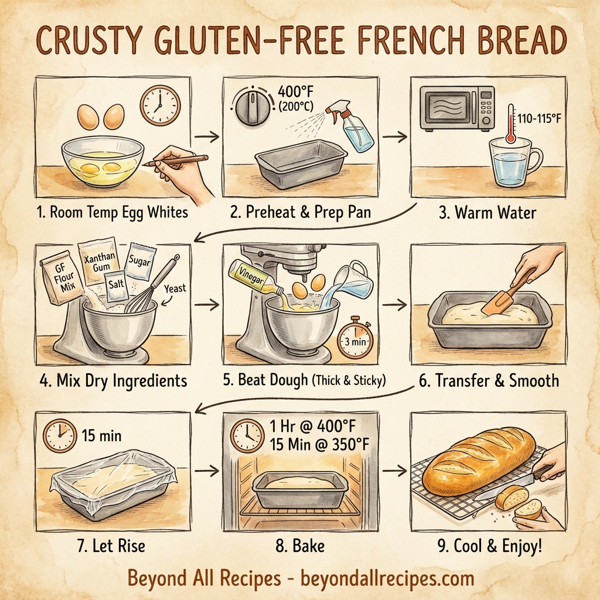
Start by allowing 2 egg whites to sit at room temperature in a bowl, which helps them whip up better.
2
Preheat your oven to 400°F (200°C) and prepare your baking pan by spraying it with non-stick cooking spray. If you are using aluminum foil, double it up and mold it to create a loaf shape, then spray with cooking spray.
3
Warm 1.5 cups of water in the microwave on high for about one minute to reach a temperature of 110-115°F (43-46°C).
4
In an electric mixer, combine the gluten-free flour mix, xanthan gum, sugar, salt, and yeast. Mix these dry ingredients until they are well blended.
5
Add the vinegar (or dough enhancer), egg whites, and warm water to the dry ingredients. Beat the mixture at medium speed for approximately 3 minutes. The dough will be thick and sticky.
6
Using a strong rubber spatula, carefully transfer the dough into the prepared pan, smoothing the top with the spatula.
7
Cover the dough with a piece of the prepared plastic wrap, sprayed side down, and let it rise in a warm, moist environment for 15 minutes. A slightly heated oven can also work well for this.
8
Once the dough has risen, place it in the preheated oven. Bake for 1 hour, then reduce the oven temperature to 350°F (175°C) and bake for an additional 15 minutes.
9
Once baked, remove from the oven and allow to cool slightly before tearing off pieces or slicing for serving. Enjoy it warm for the best texture!
Nutrition Information
Frequently Asked Questions
Frequently Asked Questions
Is this French bread gluten-free?
Yes, this recipe is specifically crafted to be entirely gluten-free.
Is this recipe fat-free?
Yes, this bread is crafted to be free of fat while maintaining an authentic flavor and texture.
What is the composition of the gluten-free flour mix?
The mix consists of 2 parts rice flour, 2/3 part potato starch, and 1/3 part tapioca flour.
How should I prepare the egg whites?
The egg whites should be allowed to sit at room temperature in a bowl before use to help them whip up better.
What is the required oven temperature for preheating?
Preheat your oven to 400°F (200°C) before you begin baking.
How do I prepare the baking pan?
Spray the baking pan with non-stick cooking spray, or use doubled-up aluminum foil molded into a loaf shape and sprayed with cooking spray.
What is the ideal water temperature for the yeast?
The water should be warmed to a temperature of 110-115°F (43-46°C).
How long should I microwave the water?
Warming 1.5 cups of water in the microwave on high for about one minute usually reaches the desired temperature.
Which dry ingredients should be combined first?
In an electric mixer, combine the gluten-free flour mix, xanthan gum, sugar, salt, and yeast.
What liquid ingredients are added to the dry mix?
Add the vinegar (or dough enhancer), egg whites, and warm water to the dry ingredients.
How long should the dough be beaten?
Beat the mixture at medium speed for approximately 3 minutes until well blended.
What is the consistency of the bread dough?
The dough will be thick and sticky rather than a traditional firm bread dough.
How should I transfer the dough to the baking pan?
Use a strong rubber spatula to carefully transfer the dough and smooth the top.
How long does the dough need to rise?
Let the dough rise for 15 minutes in a warm, moist environment.
How do I cover the dough while it rises?
Cover the dough with prepared plastic wrap, ensuring the sprayed side is facing down.
What environment is best for the rising process?
A warm, moist environment is best; a slightly heated oven can work well for this purpose.
How long is the initial baking phase?
Bake the loaf at 400°F for 1 hour.
Does the temperature change during baking?
Yes, after the first hour, reduce the oven temperature to 350°F (175°C).
How much longer does it bake after reducing the temperature?
Bake for an additional 15 minutes after reducing the heat to 350°F.
What is the texture of the finished crust?
The bread features a thick, golden, and crusty exterior.
What is the texture of the interior of the bread?
The interior of the bread is soft and airy.
How should the bread be served?
Allow it to cool slightly before tearing off pieces or slicing; it is best enjoyed warm.
How should I store the leftover bread?
Keep the bread in the fridge to maintain its crustiness and deliciousness.
What are some suggested uses for this French bread?
It is perfect for gourmet sandwiches, garlic bread, or dipping in pasta dishes and olive oil.
Can I use a dough enhancer in this recipe?
Yes, you can use 1 teaspoon of vinegar or a dough enhancer.
How much xanthan gum is required?
The recipe calls for 2 1/2 teaspoons of xanthan gum.
What type of yeast is used in this recipe?
The recipe uses 2 teaspoons of quick-rising yeast.
Does this recipe contain sugar?
Yes, it contains 1 1/2 teaspoons of sugar to help the yeast and flavor.
How many ingredients are in this recipe?
There are a total of 9 ingredients required for this bread.
Is this recipe suitable for beginners?
Yes, it is described as easy to prepare and quick to bake, making it a household staple.