Crispy Thin-Crust Artisan Pizza Dough
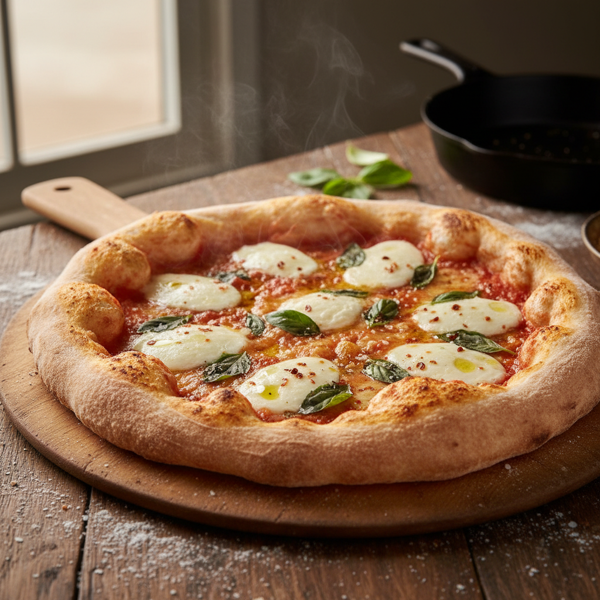
Elevate your pizza night with this easy-to-make crispy thin-crust artisan pizza dough. Developed from America's Test Kitchen, this recipe yields two delightful 12-inch pizzas that are perfectly crunchy and delicious. The secret lies in a long cold fermentation process, which enhances the dough's flavor and texture. Follow these simple step-by-step instructions to impress your family and friends with pizzeria-quality pizzas right from your own kitchen. Use your favorite sauce and toppings for a personalized touch, and enjoy the satisfying contrast of a crispy, golden crust with every bite. Perfect for pizza lovers looking for a low-cholesterol option!
N/A
Servings
450
Calories
6
Ingredients
Ingredients
bread flour
16.5 oz (plus more for work surface (approx. 3 cups))
sugar
2 tsp
yeast
1/2 tsp (instant or rapid-rise)
ice water
10.5 oz (approximately 1.33 cups)
vegetable oil
1 tbsp (plus more for work surface)
table salt
1.5 tsp
Instructions
1
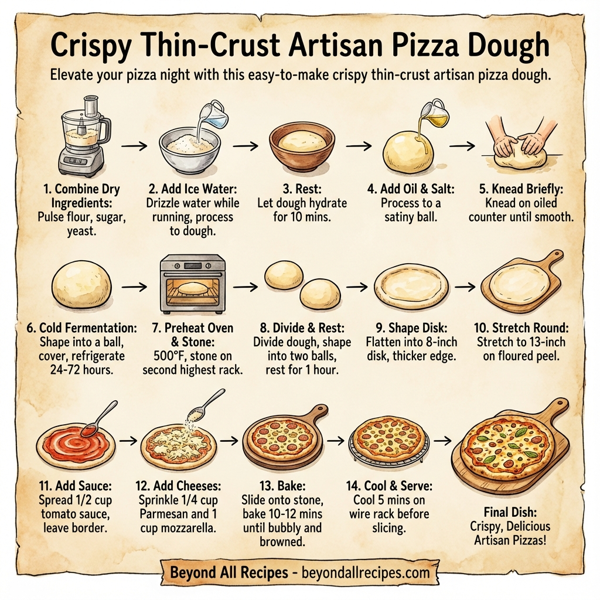
In a food processor fitted with a metal blade, combine the bread flour, sugar, and instant yeast. Pulse for about 2 seconds until mixed.
2
With the processor running, slowly drizzle in the ice water through the feed tube. Continue processing until the dough just comes together and no dry flour remains, approximately 10 seconds.
3
Let the dough rest for 10 minutes to allow the flour to fully hydrate.
4
Add the vegetable oil and table salt to the rested dough, then process until it forms a satiny, sticky ball that clears the sides of the bowl, about 30 to 60 seconds.
5
Transfer the dough to a lightly oiled countertop and knead it briefly until it becomes smooth, approximately 1 minute.
6
Shape the kneaded dough into a tight ball and place it in a large, lightly oiled bowl. Cover tightly with plastic wrap and refrigerate for a minimum of 24 hours and up to 3 days for optimal flavor development.
7
One hour before baking, adjust the oven rack to the second highest position (4 to 5 inches below the broiler). Place a pizza stone on the rack and preheat the oven to 500 degrees Fahrenheit.
8
After the resting period, remove the dough from the refrigerator and divide it into two equal halves. Shape each half into a smooth, tight ball and place them on a lightly oiled baking sheet, with at least 3 inches of space between them. Cover loosely with nonstick spray-coated plastic wrap and let them stand for 1 hour.
9
Once the dough has rested, generously coat one ball with flour and place it on a well-floured countertop. Using your fingertips, gently flatten the dough into an 8-inch disk, ensuring the outer edge remains about 1 inch thicker than the center.
10
Carefully stretch the disk into a 12-inch round by working your hands along the edges and giving it quarter turns. Transfer the stretched dough to a well-floured pizza peel and stretch it to a 13-inch round for the perfect fit.
11
Spread 1/2 cup of tomato sauce in a thin layer over the surface of the dough, leaving a 1/4-inch border around the edge.
12
Sprinkle 1/4 cup of grated Parmesan evenly over the sauce, followed by 1 cup of shredded mozzarella cheese, ensuring not to overload the pizza to avoid a soggy crust.
13
Slide the prepared pizza carefully onto the preheated stone and bake for 10 to 12 minutes, rotating halfway through if possible, until the crust is well browned and the cheese is bubbly and slightly browned.
14
Once baked, remove the pizza from the oven and let it cool on a wire rack for 5 minutes before slicing and serving. Enjoy your homemade crispy thin-crust pizza!
Nutrition Information
85g
Carbs
16g
Protein
4g
Fiber
1g
Sugar
750mg
Sodium
0mg
Cholesterol
Frequently Asked Questions
Frequently Asked Questions
What is the secret to the flavor of this artisan pizza dough?
The secret lies in a long cold fermentation process in the refrigerator, which significantly enhances the dough's flavor and texture.
How many pizzas does this recipe make?
This recipe yields two 12-inch pizzas.
What type of flour is recommended for this dough?
Bread flour is used for this recipe to achieve the desired chewy and crispy texture.
What kind of yeast should I use?
You should use 1/2 teaspoon of instant or rapid-rise yeast.
Why is ice water used in the recipe?
Ice water is used to keep the dough temperature low while processing in the food processor, preventing the yeast from over-activating too early.
What equipment is needed to mix the dough?
A food processor fitted with a metal blade is used to combine and process the ingredients.
How long should the dough rest before adding oil and salt?
The dough should rest for 10 minutes after the initial mixing to allow the flour to fully hydrate.
What is the minimum refrigeration time for this dough?
The dough requires a minimum of 24 hours of refrigeration for proper flavor development.
How long can the dough stay in the refrigerator?
The dough can be refrigerated for up to 3 days for optimal flavor.
What is the recommended oven temperature?
The oven should be preheated to 500 degrees Fahrenheit.
Where should the oven rack be positioned?
Adjust the oven rack to the second highest position, approximately 4 to 5 inches below the broiler.
Should I use a pizza stone?
Yes, placing a pizza stone on the rack during preheating is recommended for a crispy crust.
How long before baking should the dough be removed from the fridge?
Remove the dough from the refrigerator one hour before you plan to bake.
How do I shape the dough balls before the final rest?
Divide the dough into two equal halves, shape each into a smooth, tight ball, and place them on a lightly oiled baking sheet.
How long do the shaped dough balls need to stand at room temperature?
They should stand covered for 1 hour before stretching.
How large should I stretch the pizza dough?
Initially flatten it into an 8-inch disk, then stretch it into a 12-inch round on the counter, and finally to a 13-inch round on the pizza peel.
How thick should the edges be compared to the center?
The outer edge should remain about 1 inch thicker than the center of the disk.
How much sauce should I apply to each pizza?
Spread 1/2 cup of tomato sauce in a thin layer over the surface, leaving a 1/4-inch border.
What types of cheese are suggested in the instructions?
The recipe suggests 1/4 cup of grated Parmesan and 1 cup of shredded mozzarella cheese.
How long does the pizza take to bake?
The pizza takes between 10 to 12 minutes to bake.
Should I rotate the pizza during baking?
Yes, it is recommended to rotate the pizza halfway through the baking time if possible.
How do I know the pizza is finished cooking?
The pizza is done when the crust is well browned and the cheese is bubbly and slightly browned.
Why should I let the pizza cool on a wire rack?
Cooling on a wire rack for 5 minutes helps prevent the bottom crust from becoming soggy.
Is this pizza dough suitable for low-cholesterol diets?
Yes, the recipe contains 0mg of cholesterol.
How many calories are in a serving?
Each serving contains 450 calories.
How much sodium is in this recipe?
There is 750mg of sodium per serving.
How many carbohydrates are in the dough?
There are 85g of carbohydrates per serving.
Does this recipe contain fiber?
Yes, it contains 4g of fiber per serving.
Can I use a different type of oil?
The recipe specifies vegetable oil, but you can use it for both the dough and for oiling the work surfaces.
What is the protein content of this pizza?
There are 16g of protein per serving.