Crispy Thai Noodle Delight
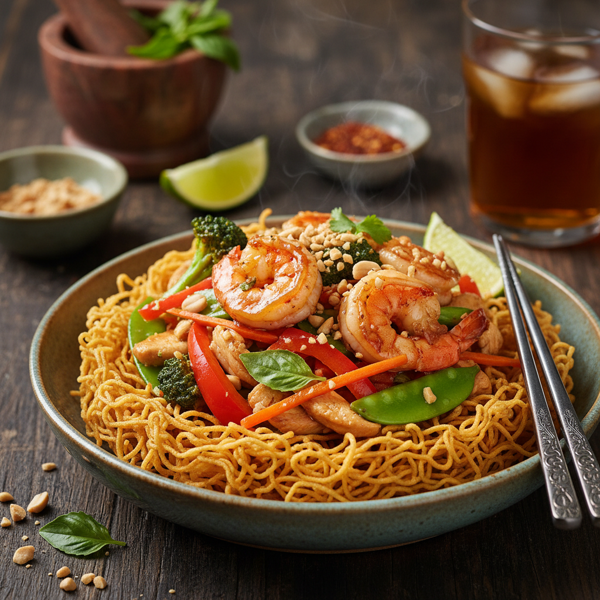
Savor the explosion of flavors and textures in our Crispy Thai Noodle Delight, featuring perfectly puffed rice vermicelli noodles enveloped in a tangy sweet-and-sour tamarind sauce. This dish is not just a meal; it's a delightful experience where the crunch of the fried noodles contrasts beautifully with fresh vegetables and protein options like tender pork, juicy shrimp, or crispy tofu. Finished with a sprinkle of fresh herbs and chilies, this dish is sure to impress at lunchtime or as a snack. Customize it according to your taste and dietary preferences for a satisfying treat any time of day!
4
Servings
300
Calories
19
Ingredients
Ingredients
dried rice vermicelli
6 ounces (broken into pieces)
tamarind pulp
1 1/2 inches (soaked in hot water)
peanut oil
3 cups (for frying)
eggs
2 (lightly beaten with a pinch of salt)
garlic
4 cloves (finely chopped)
green onions
6 (finely chopped)
fresh red chile
1 (sliced)
boneless pork or chicken
4 ounces (finely chopped (optional))
shrimp
4 ounces (peeled, deveined, and finely chopped (optional))
tamarind juice
4 tablespoons (from soaked pulp)
fresh lime juice
4 tablespoons (freshly squeezed)
palm sugar or brown sugar
4 tablespoons (packed)
Thai fish sauce
3 tablespoons
lime zest
2 teaspoons (preferably kaffir)
tomato paste
2 teaspoons
bean sprouts
1 cup (rinsed)
cilantro
1/2 cup (roughly chopped)
fresh red chile
1 (sliced (for garnish))
firm tofu
1/2-1 cup (diced (optional))
Instructions
1
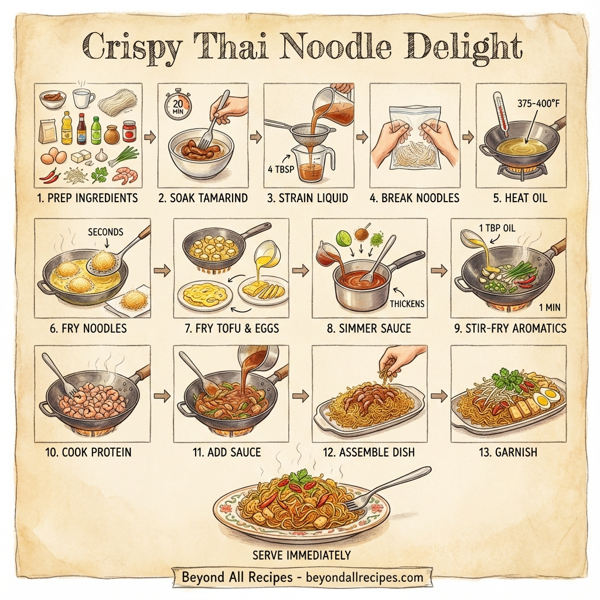
Gather all ingredients and prepare your workspace for a smooth cooking experience.
2
Soak the tamarind pulp in 2/3 cup hot water for about 20 minutes, breaking up the pulp with a fork.
3
Strain the mixture through a fine sieve, pressing to extract at least 4 tablespoons of tamarind liquid for the sauce.
4
Break the rice vermicelli into smaller pieces and place them in a paper or plastic bag to make frying easier.
5
Heat the peanut oil in a deep pot or wok until it reaches 375-400°F (190-204°C).
6
Fry the noodles in small batches, allowing them to puff up and turn a golden brown. This should take only a few seconds. Remove them with a slotted spoon and drain on paper towels.
7
Next, deep fry the diced tofu until golden brown. Set it aside in a low oven to keep warm.
8
Drizzle the beaten eggs into the hot oil in a circular motion and let them cook for about 30 seconds until golden and crisp. Remove and slice into pieces, keeping warm with the tofu.
9
Combine the reserved tamarind liquid, lime juice, palm sugar, fish sauce, lime zest, and tomato paste in a saucepan. Bring to a boil while stirring constantly. Reduce heat and let simmer until the sauce thickens slightly, then set aside.
10
Pour out the excess oil from the wok, leaving one tablespoon behind. Stir-fry the garlic, green onions, and one sliced chile for about one minute until fragrant.
11
If using, add the chopped meat or shrimp and stir-fry until just cooked through, about one minute.
12
Add the prepared sauce to the wok, tossing to ensure everything is heated through.
13
On a serving platter, heap the crispy fried noodles, then drizzle the sauce over them.
14
Garnish with bean sprouts, cilantro, the remaining sliced chili, the fried tofu, and the chopped egg.
15
Serve immediately to enjoy the crispy texture before the noodles soften.
Nutrition Information
13.75g
Fat
37.5g
Carbs
8.75g
Protein
Frequently Asked Questions
Frequently Asked Questions
What is Crispy Thai Noodle Delight?
Crispy Thai Noodle Delight is a dish featuring puffed rice vermicelli noodles coated in a tangy sweet-and-sour tamarind sauce, often served with vegetables and proteins like shrimp or tofu.
What type of noodles are used in this recipe?
The recipe calls for six ounces of dried rice vermicelli, broken into smaller pieces before frying.
How do I prepare the tamarind for the sauce?
Soak the tamarind pulp in 2/3 cup of hot water for 20 minutes, then strain it through a fine sieve to extract the liquid.
What is the correct temperature for frying the noodles?
The peanut oil should reach a temperature between 375-400 degrees Fahrenheit (190-204 degrees Celsius) for optimal puffing.
How long does it take to fry the rice vermicelli?
Frying the noodles happens very quickly, usually taking only a few seconds per batch until they puff up and turn golden brown.
Can this recipe be made vegetarian or vegan?
Yes, you can use tofu as the primary protein and substitute the fish sauce with a vegan alternative to make it plant-based.
What oil is recommended for frying this dish?
Peanut oil is recommended for its high smoke point and flavor, though other high-heat frying oils can be used.
How do you prepare the tofu for the dish?
The firm tofu should be diced and deep-fried until golden brown, then kept warm in a low oven until assembly.
What is the unique method for cooking the eggs in this recipe?
Beat the eggs with a pinch of salt and drizzle them into the hot oil in a circular motion, cooking for about 30 seconds until crisp.
What are the ingredients in the sweet-and-sour sauce?
The sauce consists of tamarind liquid, lime juice, palm sugar, fish sauce, lime zest, and tomato paste.
Can I use brown sugar instead of palm sugar?
Yes, brown sugar can be used as a direct substitute for palm sugar in the sauce.
How many servings does this recipe provide?
This recipe is designed to produce four servings.
How many calories are in one serving of Crispy Thai Noodle Delight?
Each serving contains approximately 300 calories.
What is the protein content per serving?
Each serving provides about 8.75 grams of protein.
Is there a recommended protein to add to the stir-fry?
The recipe suggests using four ounces of finely chopped boneless pork or chicken and four ounces of shrimp.
What aromatics are used in the stir-fry stage?
The aromatics include finely chopped garlic, green onions, and sliced fresh red chile.
Why is tomato paste included in the sauce?
Tomato paste is used to add depth of flavor and help thicken the tamarind-based sauce.
What is the best way to serve this dish?
It should be served immediately after assembly to ensure the noodles remain crispy before they soften from the sauce.
What kind of lime zest works best?
While regular lime zest works, kaffir lime zest is preferred for a more authentic Thai citrus aroma.
How do you garnish the final dish?
Garnish with bean sprouts, roughly chopped cilantro, sliced red chiles, the fried tofu, and the sliced fried egg.
How much fat is in one serving?
There are approximately 13.75 grams of fat per serving.
How much carbohydrate is in one serving?
There are 37.5 grams of carbohydrates per serving.
Can this be eaten as a snack?
Yes, it is versatile and works perfectly as either a light lunch or a flavorful snack.
How many garlic cloves are needed?
The recipe requires four cloves of garlic, finely chopped.
Do you cook the bean sprouts?
No, the bean sprouts are rinsed and used fresh as a garnish to provide a crisp contrast.
Should the shrimp be chopped?
Yes, if using shrimp, they should be peeled, deveined, and finely chopped for even distribution.
What should I do after boiling the sauce?
Reduce the heat and let the sauce simmer until it thickens slightly before setting it aside.
How many green onions are used?
The recipe uses six green onions, finely chopped.
Why use a paper or plastic bag for the noodles?
It makes the noodles easier to handle and prevents them from scattering when breaking them into smaller pieces.
Is the tamarind juice the same as the pulp?
The juice is the liquid extracted from the pulp after soaking and straining; you need 4 tablespoons for this recipe.