Crispy Soy Garlic Korean Fried Chicken
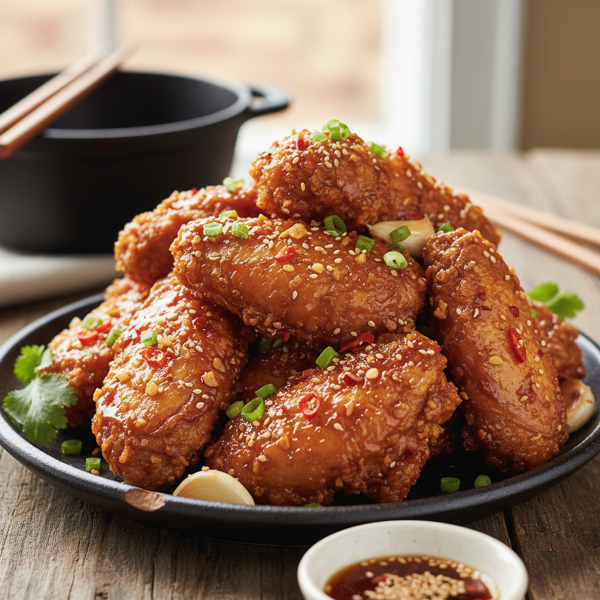
Indulge in the deliciously crispy goodness of this Korean Fried Chicken recipe, featuring a delectable soy and garlic sauce. Perfectly fried wings are coated in a savory and slightly sweet sauce that will leave you craving more. This dish is ideal for parties, game day, or a cozy dinner with friends and family. It's easy to prepare and guarantees a crowd-pleaser with every bite. Gather your ingredients and let's get frying!
4
Servings
N/A
Calories
8
Ingredients

Ingredients
onion
1/4 (small, finely chopped)
garlic cloves
2 (minced)
soy sauce
1/2 (cup)
mirin
1/4 (cup)
brown sugar
2 (tablespoons)
ginger
2 (tablespoons, grated)
chicken wings
2 (dozen)
corn starch
as needed (for dredging)
Instructions
1
In a saucepan, combine the chopped onion, minced garlic, soy sauce, mirin, brown sugar, and grated ginger.
2
Cook the sauce over medium heat for about 2 minutes until it starts to bubble and the sugar dissolves. Remove from heat and let it cool slightly.
3
In a separate bowl, dredge the chicken wings in corn starch until they are well-coated.
4
Heat oil in a deep fryer or large pot to 350°F (175°C). Fry the wings in batches for about 5-6 minutes until they start to brown, then remove and drain on paper towels.
5
Once all wings have been fried for the first time, return them to the hot oil in batches and fry again for an additional 3-4 minutes, or until they reach a golden brown and crispy texture.
6
While the wings are frying, reheat the sauce over medium heat, then strain it to remove any solids.
7
Toss the hot fried wings in the strained sauce until they are evenly coated. Serve immediately, garnished with sesame seeds or green onions if desired.
Nutrition Information
Frequently Asked Questions
Frequently Asked Questions
What is Crispy Soy Garlic Korean Fried Chicken?
It is a popular Korean dish featuring double-fried chicken wings coated in a savory, sweet, and aromatic soy and garlic-based glaze.
Why is the chicken fried twice in this recipe?
Double frying is the secret to Korean fried chicken's signature crunch; the first fry cooks the meat, and the second fry renders the fat and creates an extra-crispy skin.
What makes the sauce savory and sweet?
The balance of flavors comes from the combination of soy sauce, brown sugar, mirin, and fresh aromatics like ginger and garlic.
Can I use chicken thighs instead of wings?
Yes, you can use boneless or bone-in chicken thighs, though you may need to adjust the frying time slightly depending on the size of the pieces.
What is the purpose of corn starch in this recipe?
Corn starch provides a thinner, crispier, and more brittle crust than regular flour, which helps the chicken stay crunchy even after being coated in sauce.
Is this recipe spicy?
No, this specific soy garlic version is savory and sweet. If you want heat, you can add gochugaru or red pepper flakes to the sauce.
What can I substitute for mirin?
You can substitute mirin with dry sherry, sweet marsala wine, or a mix of white wine and a pinch of sugar.
How do I store leftovers?
Store any leftover chicken in an airtight container in the refrigerator for up to 3 days.
What is the best way to reheat Korean Fried Chicken?
To maintain the crispiness, reheat the wings in an air fryer or oven at 375°F (190°C) for several minutes until heated through.
Can I use an air fryer instead of deep frying?
Yes, you can air fry the wings at 400°F, flipping halfway through, though the texture will be slightly different than traditional deep frying.
What type of oil is best for frying?
Use an oil with a high smoke point and neutral flavor, such as vegetable oil, canola oil, or peanut oil.
Can I make the sauce ahead of time?
Absolutely. The sauce can be prepared and kept in the refrigerator for up to a week. Just reheat it before tossing with the chicken.
Why do I need to strain the sauce?
Straining the sauce removes the bits of onion, garlic, and ginger, resulting in a smooth, glossy glaze that coats the wings evenly.
Can I use honey instead of brown sugar?
Yes, honey is a great substitute and will add a slightly different floral sweetness and a beautiful shine to the chicken.
Should I thaw frozen wings before cooking?
Yes, wings should be completely thawed and patted dry with paper towels to ensure they fry correctly and safely.
What are the best garnishes for this dish?
Toasted sesame seeds and finely chopped green onions are the most traditional and flavorful garnishes for this recipe.
How many people does this recipe serve?
As written, the recipe serves approximately 4 people as a main dish or more as an appetizer.
Can I use garlic powder instead of fresh garlic?
While fresh garlic is recommended for the best flavor, you can use about 1/2 teaspoon of garlic powder as a substitute.
Is fresh ginger necessary?
Fresh ginger provides a sharp, bright flavor that is key to the sauce, but you can use 1/2 teaspoon of ground ginger if fresh is unavailable.
What should the oil temperature be for frying?
Maintain an oil temperature of 350°F (175°C) to ensure the chicken cooks properly without burning the coating.
How long is the first frying session?
The first fry should last about 5 to 6 minutes, just until the chicken is cooked and starts to turn a pale golden color.
How long is the second frying session?
The second fry takes about 3 to 4 minutes until the wings reach a deep golden brown and the skin becomes very firm and crispy.
Can I make this recipe gluten-free?
Yes, simply use a gluten-free soy sauce or tamari, as corn starch is naturally gluten-free.
Is this recipe kid-friendly?
Yes, children usually love the sweet and savory soy garlic flavor and the crunchy texture of the chicken.
What type of soy sauce should I use?
Regular all-purpose soy sauce works best. Avoid dark soy sauce as it may make the dish too salty and overly dark.
Do I need to marinate the chicken?
No marination is required for this recipe because the double frying and the intense sauce provide all the necessary flavor.
Can I use potato starch instead of corn starch?
Yes, potato starch is an excellent alternative and is often used in Korea to achieve an even crunchier texture.
What sides go well with Korean Fried Chicken?
It is traditionally served with pickled daikon radish (mu), a side of steamed white rice, or a simple cabbage slaw.
How do I know the chicken is fully cooked?
The chicken is safe to eat when the internal temperature reaches 165°F (74°C) and the juices run clear.
Why did my chicken turn out soggy?
Sogginess usually occurs if the oil was not hot enough, if the pan was overcrowded, or if the wings were not drained properly after frying.