Crispy Southern-Style Tilapia Bites
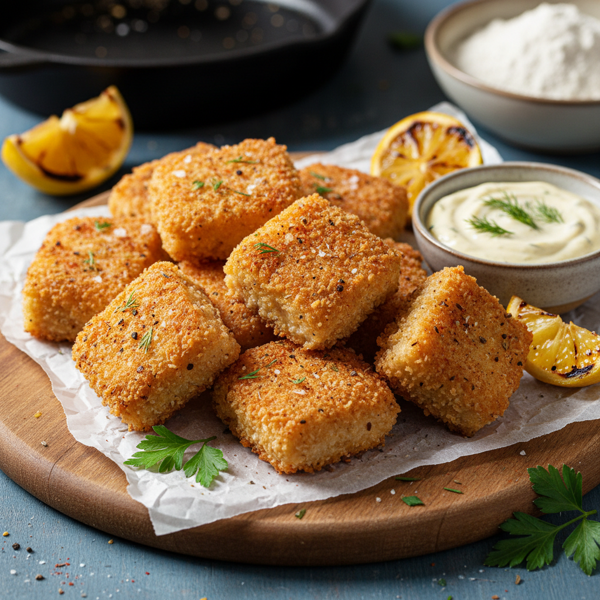
Indulge in these Crispy Southern-Style Tilapia Bites that deliver a delightful crunch with every bite! Perfectly seasoned and breaded, these fish morsels are not only irresistible but also kid-friendly - simply cut the fillets into smaller pieces and serve like nuggets. Whether enjoyed fresh from the pan or packed for a picnic, these crispy delights come with an option for deep frying, ensuring maximum flavor and satisfaction. Pair them with a zesty tartar sauce for a classic touch or enjoy them solo. Savor the taste of artisanal tilapia, a fish that holds significant cultural value in Africa and the Levant, currently thriving in aquaculture worldwide.
4
Servings
N/A
Calories
12
Ingredients
Ingredients
Tilapia fillets
3 lbs (Cut into 10 fillets)
All-purpose flour
1/3 cup (For dusting fish)
Egg
1 (Beaten)
Buttermilk
1/2 cup
All-purpose flour
1/2 cup (For breading mixture)
Yellow cornmeal
1/2 cup
Salt
To taste
Pepper
To taste
Baking soda
1/2 teaspoon
Baking powder
1/2 teaspoon
Old Bay Seasoning
2 tablespoons
Canola oil
For frying (Enough to cover bottom of pan)
Instructions
1
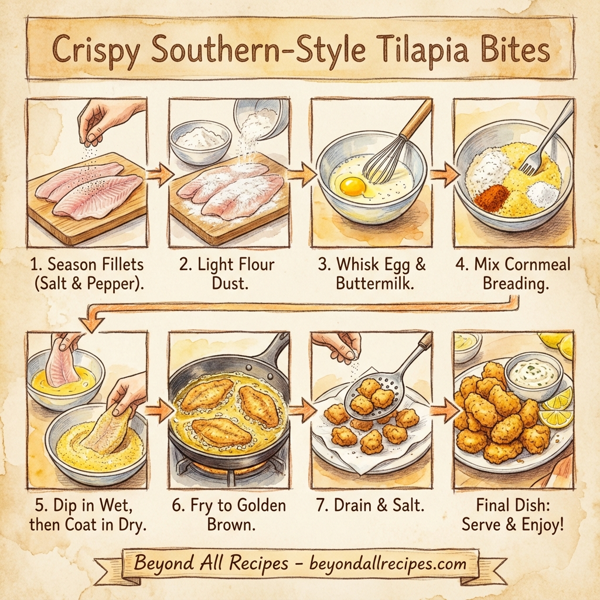
Start by seasoning the tilapia fillets with salt and pepper evenly on both sides.
2
Dust the seasoned fillets lightly with 1/3 cup of flour, ensuring an even coating.
3
In a separate bowl, whisk together the egg and buttermilk until well combined.
4
In another bowl, combine the remaining 1/2 cup of flour, cornmeal, baking soda, baking powder, and Old Bay seasoning. Mix thoroughly to ensure even distribution of the seasonings.
5
Submerge each floured fillet into the egg and buttermilk mixture, allowing any excess to drip off.
6
Next, coat each fillet in the flour and cornmeal mixture, ensuring they are well covered. Press gently to adhere the breading.
7
Heat a generous amount of canola oil in a large pan over medium-high heat; you want enough to cover the bottom of the pan.
8
Carefully place the coated fillets in the hot oil, frying them in batches. Cook for about 2-3 minutes on one side until golden brown, then turn and fry for another 2-3 minutes until the other side is equally browned.
9
Once cooked, use a slotted spoon to remove the tilapia bites from the pan and place them on a paper towel-lined plate to absorb excess oil.
10
Sprinkle a touch of salt on the freshly cooked fish right after removing from the pan to enhance flavor.
11
Continue frying the remaining batches until all tilapia bites are crispy and golden.
Nutrition Information
Frequently Asked Questions
Frequently Asked Questions
What are Crispy Southern-Style Tilapia Bites?
These are seasoned and breaded fish morsels that deliver a delightful crunch, perfect as a snack or a kid-friendly meal.
How many servings does this recipe provide?
This recipe is designed to serve 4 people.
Is this tilapia recipe suitable for children?
Yes, it is very kid-friendly because the fillets are cut into smaller pieces and served like nuggets.
What kind of fish is used in this recipe?
The recipe uses 3 lbs of tilapia fillets.
How should I prepare the tilapia fillets?
You should cut the tilapia fillets into 10 pieces or smaller bite-sized nuggets.
What type of oil is recommended for frying?
Canola oil is recommended for frying these tilapia bites.
What provides the signature Southern-style crunch?
The combination of yellow cornmeal and all-purpose flour in the breading mixture provides the crunch.
How much flour is needed for the initial dusting?
You need 1/3 cup of all-purpose flour for dusting the fish fillets.
What is the role of buttermilk in this recipe?
Buttermilk is mixed with a beaten egg to create a wash that helps the breading adhere to the fish.
How much Old Bay Seasoning should I use?
The recipe calls for 2 tablespoons of Old Bay Seasoning.
Why are baking soda and baking powder included?
These ingredients help create a lighter and crispier texture in the breading during frying.
How much baking soda is required?
The recipe requires 1/2 teaspoon of baking soda.
How much baking powder is required?
The recipe requires 1/2 teaspoon of baking powder.
What is the first step in the cooking process?
The first step is seasoning the tilapia fillets with salt and pepper evenly on both sides.
How long do I fry each side of the tilapia?
Fry each side for about 2-3 minutes until golden brown.
What heat setting should I use for the oil?
Heat the oil over medium-high heat.
How do I remove excess oil from the fish?
Place the cooked tilapia bites on a paper towel-lined plate to absorb the excess oil.
When should I add extra salt to the fish?
Sprinkle a touch of salt on the freshly cooked fish right after removing it from the pan.
Can these tilapia bites be deep fried?
Yes, there is an option to deep fry these bites for maximum flavor and satisfaction.
What is the cultural significance of tilapia mentioned?
Tilapia holds significant cultural value in Africa and the Levant and thrives in aquaculture worldwide.
How many ingredients are in this recipe?
There are 12 ingredients in total.
Should the fish be fried all at once?
No, the fish should be fried in batches to ensure even cooking and to keep the oil temperature steady.
What dipping sauce goes well with these bites?
A zesty tartar sauce is a classic touch that pairs perfectly with these bites.
What is the texture of these tilapia bites?
They have a crispy, crunchy exterior with a tender fish interior.
Can I pack these for a picnic?
Yes, they are described as being great for packing for a picnic.
How much yellow cornmeal is used?
The recipe uses 1/2 cup of yellow cornmeal.
Do I need to beat the egg?
Yes, the recipe specifies using one beaten egg.
What is the purpose of the 1/2 cup of flour mentioned separately?
The second 1/2 cup of flour is used for the breading mixture along with the cornmeal.
How do I ensure the breading sticks to the fish?
Press gently on the fish fillets when coating them in the flour and cornmeal mixture to help the breading adhere.
Is tilapia a sustainable choice?
The description mentions tilapia currently thrives in aquaculture worldwide, which is a common form of sustainable fish farming.