Crispy Seafood Po'Boy with Spicy Remoulade
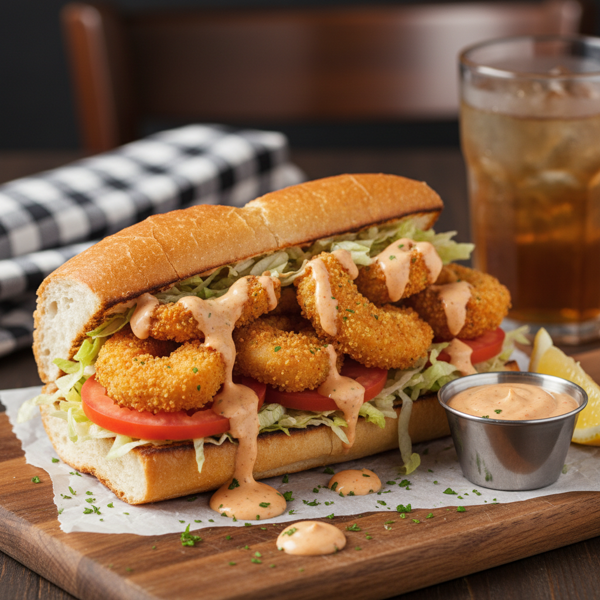
Indulge in the mouthwatering delight of our Crispy Seafood Po'Boy, featuring succulent shrimp and plump oysters, all enveloped in a crusty French loaf. Inspired by the flavors of New Orleans, this recipe incorporates a zesty homemade remoulade that amplifies the dish's depth and flavor. Served with fresh, crisp lettuce and juicy tomatoes, this sandwich captures the essence of Creole cuisine and is perfect for lunch or a casual dinner. Each bite is a harmony of textures and tastes that will transport you straight to the heart of Louisiana. Enjoy the experience of crafting this classic dish, slightly elevated to satisfy even the most discerning palate!
N/A
Servings
700
Calories
10
Ingredients
Ingredients
French bread
1 large (cut in half crosswise and horizontally)
Mayonnaise
1/2 cup (for spreading)
Tomatoes
2-3 (sliced)
Lettuce
1 cup (shredded)
Vegetable oil
as needed (for deep-frying)
Yellow cornmeal
1 cup (for coating)
Creole seasoning
1 tablespoon (or use Emeril's Original Essence)
Oysters
20 (shucked and drained)
Shrimp
12 large (peeled and deveined)
Hot pepper sauce
to taste (for garnish)
Instructions
1
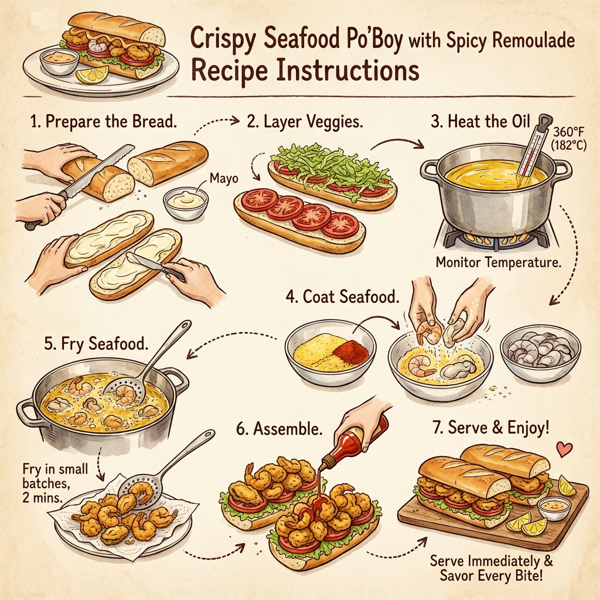
Start by cutting the French bread in half crosswise, then slice each half horizontally. Spread a generous layer of mayonnaise on the inside of the bread halves.
2
Layer the sliced tomatoes and shredded lettuce on the bottom halves of the bread. Set aside.
3
In a large, heavy-bottomed pot or electric deep fryer, pour in enough vegetable oil to fill it halfway up the sides. Heat the oil to 360°F (182°C) over high heat, taking care to monitor the temperature.
4
In a separate bowl, combine the yellow cornmeal and Creole seasoning. Toss the drained oysters and peeled shrimp in the mixture until evenly coated, shaking off any excess.
5
Fry the seafood in small, manageable batches to avoid overcrowding. Carefully lower each piece into the hot oil and cook for about 2 minutes, or until they are golden brown. Use a slotted spoon to transfer the fried seafood to a plate lined with paper towels for draining.
6
Once all seafood is fried, pile the warm oysters and shrimp atop the prepared lettuce and tomatoes. Drizzle with hot pepper sauce to taste.
7
Finally, cap the Po'Boys with the tops of the French bread. Serve immediately and savor every delicious bite!
Nutrition Information
40
Fat
60
Carbs
30
Protein
Frequently Asked Questions
Frequently Asked Questions
What is a Crispy Seafood Po'Boy?
It is a New Orleans-inspired sandwich featuring succulent fried shrimp and oysters served on a crusty French loaf with fresh toppings and a zesty remoulade flavor.
What seafood is included in this recipe?
The recipe uses 20 shucked and drained oysters and 12 large peeled and deveined shrimp.
What kind of bread is best for a Po'Boy?
A large French bread loaf is used, cut in half crosswise and horizontally to create the sandwich base.
How is the seafood coated before frying?
The shrimp and oysters are tossed in a mixture of 1 cup yellow cornmeal and 1 tablespoon of Creole seasoning until evenly coated.
What temperature should the oil be for frying?
The vegetable oil should be heated to 360 degrees Fahrenheit (182 degrees Celsius) in a heavy-bottomed pot or electric deep fryer.
How long does it take to fry the oysters and shrimp?
The seafood should be fried for approximately 2 minutes or until golden brown.
What toppings are used in this Po'Boy?
The sandwich is topped with a generous layer of mayonnaise, sliced tomatoes, and shredded lettuce.
Is there a specific seasoning recommended for this dish?
The recipe suggests using Creole seasoning, specifically mentioning Emeril's Original Essence as an option.
How many calories are in one serving of this sandwich?
Each serving of the Crispy Seafood Po'Boy contains approximately 700 calories.
What is the fat content per serving?
There are 40 grams of fat per serving in this recipe.
How many grams of protein does this recipe provide?
This seafood sandwich provides 30 grams of protein per serving.
What are the total carbohydrates in this dish?
One serving contains 60 grams of carbohydrates.
What kind of oil should I use for deep-frying?
Vegetable oil is the recommended choice for deep-frying the seafood in this recipe.
How do I ensure the fried seafood isn't too greasy?
Use a slotted spoon to transfer the fried seafood to a plate lined with paper towels to drain excess oil.
Should I fry all the seafood at once?
No, you should fry the seafood in small, manageable batches to avoid overcrowding the pot.
How do you prepare the French bread for the sandwich?
Cut the loaf in half crosswise, then slice each half horizontally and spread a generous layer of mayonnaise on the inside.
How much mayonnaise is used?
The recipe calls for 1/2 cup of mayonnaise for spreading on the bread.
What type of lettuce is recommended?
The recipe calls for 1 cup of shredded lettuce to provide a crisp texture.
How many tomatoes are needed?
You will need 2 to 3 tomatoes, which should be sliced before layering them onto the bread.
How do I add spice to the Po'Boy?
Drizzle hot pepper sauce to taste over the warm fried seafood before capping the sandwich.
Is this recipe considered quick to make?
Yes, it is tagged as a 'quick dinner' and is perfect for a fast but satisfying meal.
What culinary tradition does this recipe draw from?
It is inspired by Cajun and Creole cuisine, specifically the flavors of New Orleans.
How many main ingredients are required for this recipe?
There are 10 total ingredients, including the bread, seafood, seasonings, and toppings.
When should I serve the Po'Boy?
It should be served immediately after assembly to enjoy the contrast of warm fried seafood and fresh vegetables.
What preparation is required for the shrimp?
The 12 large shrimp should be peeled and deveined before being coated in the cornmeal mixture.
What preparation is required for the oysters?
The 20 oysters should be shucked and drained before frying.
What is the primary coating for the seafood?
Yellow cornmeal provides the signature crispy crust for the fried oysters and shrimp.
What does the 'encased' tag mean for this recipe?
The 'encased' tag refers to the seafood being served inside the French bread loaf, which acts as a vessel or casing for the ingredients.
Is this dish considered comfort food?
Yes, it is tagged as 'comfort food' due to its hearty nature and fried components.
Can I adjust the heat level of this sandwich?
Yes, the heat can be adjusted by the amount of Creole seasoning used in the coating and the amount of hot pepper sauce drizzled on at the end.