Crispy Roman Artichokes for Passover
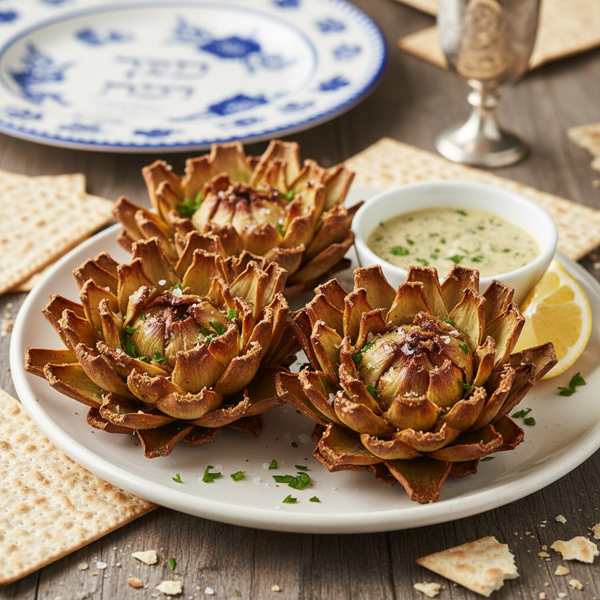
Experience the vibrant flavors of Roman cuisine with these Crispy Roman Artichokes, a delightful dish perfect for your Passover table. Inspired by the charming outdoor cafes of the historic Roman Ghetto, these artichokes are fried to perfection, offering a crunchy exterior that gives way to a tender, flavorful heart. The dual-frying technique enhances their taste and texture: first, they are cooked thoroughly at a lower temperature, allowing the artichokes to become tender and flavorful, and then they are fried at a higher temperature for a golden, crispy finish. Served whole for a stunning presentation or cut into wedges for easy snacking, these artichokes are sure to impress. Pair with a refreshing glass of amarone and enjoy the essence of spring with each bite. Perfect for a festive Seder, these Carciofi Alla Giudia offer both tradition and indulgence. Enjoy & sameach Pesach!
N/A
Servings
N/A
Calories
5
Ingredients
Ingredients
lemon
1 (juiced)
globe artichokes
8 (trimmed and cleaned)
peanut oil or olive oil
6 cups (for frying)
fine sea salt
2 tablespoons (to taste)
lemon wedges
4 (for garnish)
Instructions
1
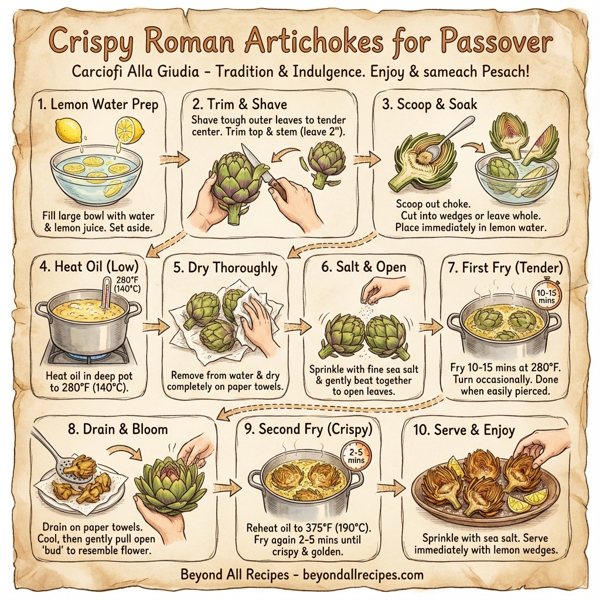
Fill a large bowl with water and add the juice of one lemon. Set the bowl aside to prepare the lemon water.
2
Using a sharp paring knife, carefully shave off the tough outer leaves of each artichoke until you reach the tender pale green or yellow leaves. Trim at least one inch off the thorny top, and trim the stem near the heart, leaving approximately two inches of stem if possible.
3
Scoop out the furry center of the choke with a spoon. If you prefer serving the artichokes as finger food, cut each artichoke into four wedges. Otherwise, leave them whole. As you prepare the artichokes, place them immediately into the lemon water to prevent browning.
4
Heat the oil in a deep fryer or large, heavy pot to 280°F (140°C).
5
While the oil is heating, remove the artichokes from the lemon water and dry them thoroughly on paper towels.
6
Sprinkle fine sea salt over the artichokes and gently beat them against one another to open the leaves slightly.
7
Once the oil has reached 280°F, carefully add the artichokes and fry them for about 10 to 15 minutes, adjusting the heat as needed to maintain a gentle bubbling. They're done when they can be easily pierced with a fork. Turn larger artichokes occasionally for even cooking.
8
Using a slotted spoon or spider, transfer the artichokes to a paper towel-lined plate to drain. Allow them to cool until they're safe to handle, then gently pull open each artichoke 'bud' to resemble an open flower. If you are using wedges, this step is not necessary.
9
Just before serving, reheat the reserved oil to 375°F (190°C). Fry the artichokes again until they are crispy and golden brown, about 2 to 5 minutes.
10
Sprinkle the fried artichokes with fine sea salt and serve immediately, accompanied by lemon wedges for garnish.
Nutrition Information
Frequently Asked Questions
Frequently Asked Questions
What is the recipe for Crispy Roman Artichokes for Passover?
This recipe is for Carciofi Alla Giudia, a traditional Roman Jewish dish where artichokes are double-fried to achieve a crispy exterior and tender heart.
Is this recipe suitable for Passover Seder?
Yes, these artichokes are specifically noted as being perfect for a festive Passover Seder and are labeled with the Passover tag.
What type of artichokes are used in this recipe?
The recipe calls for 8 globe artichokes that have been trimmed and cleaned.
How many lemons do I need for this recipe?
You will need one lemon for juicing into the water and four lemon wedges for garnish.
What kind of oil should I use for frying?
You can use 6 cups of either peanut oil or olive oil for frying the artichokes.
What is the first step in preparing the artichokes?
The first step is to fill a large bowl with water and add the juice of one lemon to prevent the artichokes from browning.
How do I trim the artichokes for this dish?
Shave off the tough outer leaves until you reach the pale green or yellow leaves, trim at least one inch off the top, and leave about two inches of the stem.
Do I need to remove the center of the artichoke?
Yes, you should scoop out the furry center of the choke with a spoon.
Can I serve these artichokes as finger food?
To serve as finger food, cut each prepared artichoke into four wedges before frying.
What temperature should the oil be for the first fry?
The oil should be heated to 280°F (140°C) for the first round of frying.
How long do the artichokes fry the first time?
They should be fried for about 10 to 15 minutes at the lower temperature until they are tender.
How do I know when the first fry is finished?
The artichokes are done with the first fry when they can be easily pierced with a fork.
What should I do after the first frying?
Transfer them to a paper towel-lined plate to drain and allow them to cool enough to handle before opening the leaves.
How do I get the 'open flower' look for the artichokes?
Gently pull open each artichoke bud after the first fry and cooling to resemble an open flower.
What temperature is required for the second fry?
For the second fry, reheat the oil to 375°F (190°C).
How long is the second frying process?
The second fry takes about 2 to 5 minutes until the artichokes are crispy and golden brown.
When do I add the salt to the artichokes?
Sprinkle fine sea salt over the artichokes before the first fry and again immediately after the second fry before serving.
How many servings does this recipe provide?
The recipe uses 8 globe artichokes, which typically serves 8 people if served whole or more if cut into wedges.
What is the traditional name for this dish in Italy?
The traditional name is Carciofi Alla Giudia.
Is this dish vegetarian friendly?
Yes, this dish is vegetarian and uses only plant-based ingredients like artichokes, lemon, and oil.
What should I serve with these crispy artichokes?
Serve them immediately with lemon wedges for garnish and optionally pair with a glass of amarone.
Why is the dual-frying technique used in this recipe?
The dual-frying technique allows the heart to become tender at a lower temperature first, while the second high-heat fry creates a crispy exterior.
Can I leave the artichokes whole for serving?
Yes, leaving them whole provides a stunning presentation resembling a flower, though they can also be cut into wedges.
What season is best for making this dish?
This is considered a spring dish, making it perfect for Passover celebrations which occur in the spring.
How do I prevent the artichokes from turning brown while prepping?
Place the trimmed artichokes immediately into lemon water to prevent oxidation and browning.
What amount of sea salt is recommended?
The recipe calls for 2 tablespoons of fine sea salt, though it can be adjusted to taste.
What tool is best for removing the artichokes from the hot oil?
A slotted spoon or a spider is recommended for safely transferring the artichokes from the deep fryer.
Do I need to dry the artichokes after the lemon water bath?
Yes, you must dry them thoroughly on paper towels after removing them from the lemon water to prevent oil splattering.
Where does this recipe draw its cultural inspiration?
It is inspired by the outdoor cafes of the historic Roman Ghetto in Rome, Italy.
What does 'Sameach Pesach' mean?
It is a Hebrew greeting meaning 'Happy Passover,' often used during the holiday season.