Crispy Potato Pancakes with Sour Cream and Chives
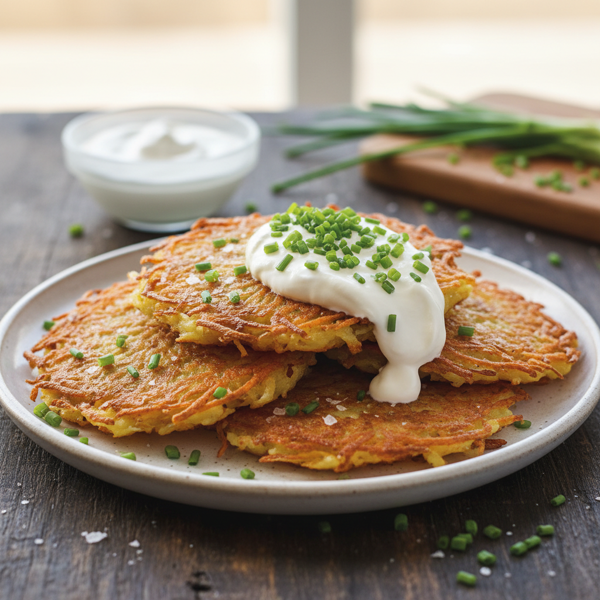
Indulge in these delightful potato pancakes, perfect for any meal from breakfast to dinner. The crispy exterior and flavorful interior make these a versatile option that can be served as a standalone dish or as a delectable side. This recipe uses sebago potatoes, known for their baking qualities, and incorporates rich flavors with chives, rosemary, and sage. Originally inspired by a classic recipe from 'Potatoes: Over 100 Exciting Ways to Cook the Humble Spud', a book cherished by many, this dish is a standout with its creamy yet crisp texture.
6
Servings
N/A
Calories
13
Ingredients
Ingredients
sebago potatoes
900g (peeled and grated)
brown onion or yellow onion
150g (finely chopped)
garlic cloves
2-3 (finely chopped)
fresh chives
1/4 cup (finely chopped)
dried rosemary
1 teaspoon (to taste)
dried sage
1 teaspoon (to taste)
sea salt
to taste (none)
fresh ground pepper
to taste (none)
eggs
2 (separated)
plain flour
2 tablespoons (none)
sour cream
1/2 cup (low fat is fine)
vegetable oil
2/3 cup (none)
butter
80g (none)
Instructions
1
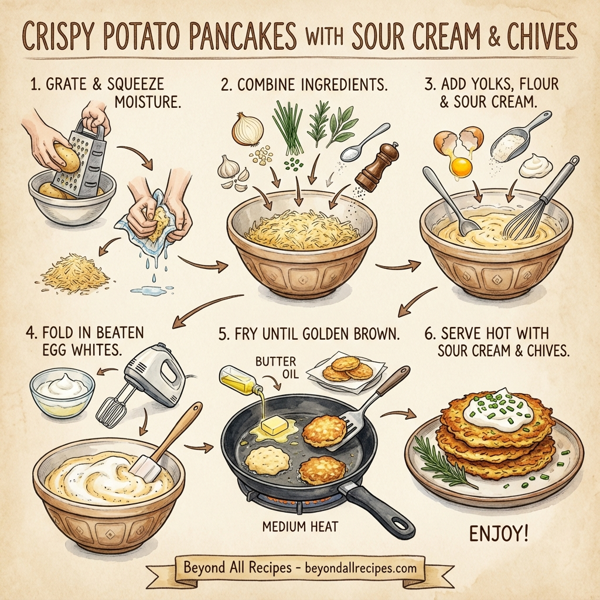
Grate the peeled potatoes coarsely and squeeze out as much moisture as possible. This step is crucial to ensure the pancakes are crispy.
2
In a large mixing bowl, combine the grated potatoes, finely chopped onion, garlic cloves, chives, and season with rosemary, sage, sea salt, and freshly ground pepper to your taste.
3
Separate the eggs. Add the yolks to the potato mixture along with the plain flour and sour cream. Mix well to combine all ingredients.
4
In a separate small bowl, beat the egg whites with an electric mixer until they form stiff peaks. Gently fold the beaten egg whites into the potato mixture to introduce airiness.
5
Heat a non-stick frying pan over medium heat, adding 2 tablespoons of vegetable oil and 20 g of butter. Once the butter is melted and sizzling, add heaping tablespoons of the potato mixture to the pan.
6
Cook the pancakes, uncovered, until they are golden brown on both sides. This should take about 5-7 minutes per side. Remove the cooked pancakes and drain on paper towels. Keep them warm while repeating with the remaining batter, oil, and butter.
7
Serve the pancakes hot with an additional dollop of sour cream or garnish with extra chives, if desired.
Nutrition Information
Frequently Asked Questions
Frequently Asked Questions
What is the main ingredient in these pancakes?
The main ingredient is 900g of sebago potatoes, which are ideal for their frying and baking qualities.
How should I prepare the potatoes?
The potatoes should be peeled and coarsely grated, then squeezed to remove as much moisture as possible for maximum crispiness.
What type of onion is recommended for this recipe?
You can use either a brown onion or a yellow onion, approximately 150g in weight, finely chopped.
How many garlic cloves are needed?
The recipe calls for 2 to 3 garlic cloves, which should be finely chopped before being added to the mixture.
What herbs are used to flavor the potato pancakes?
The dish is flavored with fresh chives, dried rosemary, and dried sage.
How much fresh chives should I add?
Use 1/4 cup of finely chopped fresh chives for the batter, with extra available for garnishing if desired.
Why are the eggs separated in this recipe?
The yolks are added directly to the mixture for richness, while the whites are beaten to stiff peaks and folded in to provide an airy texture.
How much sour cream is required for the batter?
The recipe requires 1/2 cup of sour cream; low-fat varieties are also acceptable.
How much flour is used?
You should add 2 tablespoons of plain flour to help bind the potato mixture together.
What type of oil is used for frying?
The recipe uses 2/3 cup of vegetable oil in total for the frying process.
How much butter is used for cooking?
A total of 80g of butter is used, starting with 20g for the first batch to add flavor and color.
What is the recommended heat setting for frying?
The pancakes should be cooked in a non-stick frying pan over medium heat.
How long does it take to cook the pancakes?
Each pancake should be cooked for approximately 5 to 7 minutes per side until golden brown.
Should I cover the pan while frying?
No, the pancakes should be cooked uncovered to ensure they become and stay crispy.
How many servings does this recipe yield?
This recipe is designed to provide 6 servings.
How should I drain the pancakes after cooking?
Once removed from the pan, the pancakes should be drained on paper towels to remove excess oil.
How can I keep the pancakes warm?
Keep the cooked pancakes in a warm place while you continue frying the remaining batter in batches.
What are the suggested garnishes?
Serve the pancakes hot with a dollop of sour cream and a sprinkle of extra chives.
What is the origin or inspiration for this recipe?
This recipe was inspired by the book 'Potatoes: Over 100 Exciting Ways to Cook the Humble Spud'.
What is the final texture of the pancakes?
These pancakes feature a very crispy exterior with a flavorful, creamy, and airy interior.
Can I use sea salt and pepper?
Yes, the recipe suggests seasoning with sea salt and freshly ground pepper to your personal taste.
How much rosemary and sage is used?
Use 1 teaspoon each of dried rosemary and dried sage for the seasoned potato mixture.
What kind of pan is best for this recipe?
A non-stick frying pan is best to prevent sticking and ensure even browning.
When can these pancakes be served?
They are versatile enough to be served for any meal, including breakfast, lunch, or dinner.
What should I do if the batter seems too dense?
Ensure the egg whites are beaten to stiff peaks and folded gently to maintain the light, airy consistency.
Is it okay to use dried herbs?
Yes, the recipe specifically calls for dried rosemary and dried sage.
Why is squeezing the potatoes so important?
Removing moisture prevents the pancakes from being soggy and allows them to crisp up properly in the hot oil.
Can I make these ahead of time?
While best served hot and fresh for maximum crispiness, they can be kept warm briefly before serving.
Are sebago potatoes necessary?
Sebago potatoes are recommended for their texture, but other starchy baking potatoes can serve as a substitute.
How much oil and butter should I add for subsequent batches?
Repeat the frying process using the remaining 2/3 cup of oil and 80g of butter as needed for the batter.