Crispy Piadine Romagnole (Italian Flatbread)
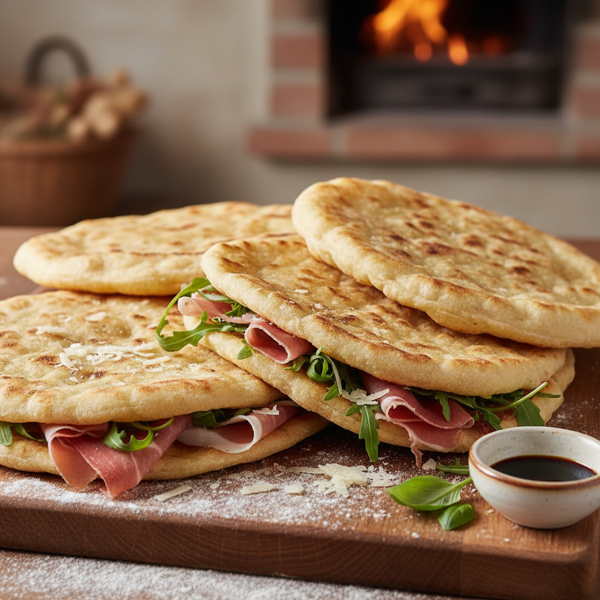
Piadine Romagnole is a beloved Italian flatbread steeped in tradition, passed down through generations in my family. This versatile bread is celebrated for its crisp texture and ability to be filled with a variety of delicious ingredients. While the classic combination of Parma ham and arugula is a favorite, feel free to get creative with your fillings, whether it's flavorful cheeses, fresh vegetables, or cured meats. It’s essential to enjoy these flatbreads fresh off the skillet, as storing them tightly can result in a softer texture. Embrace the distinctive taste and texture of these artisanal piadine by preparing them with care and serving them warm, ensuring each bite is a delightful experience.
N/A
Servings
N/A
Calories
6
Ingredients
Ingredients
Flour
500 g (All-purpose flour)
Olive Oil
75 ml (Extra virgin olive oil, can use rendered lard for traditional version)
Baking Soda
1 teaspoon (Leavening agent)
Salt
1/2 teaspoon (Sea salt or kosher salt)
Milk
100 ml (Whole milk or water as an alternative)
Water
100 ml (Room temperature water)
Instructions
1
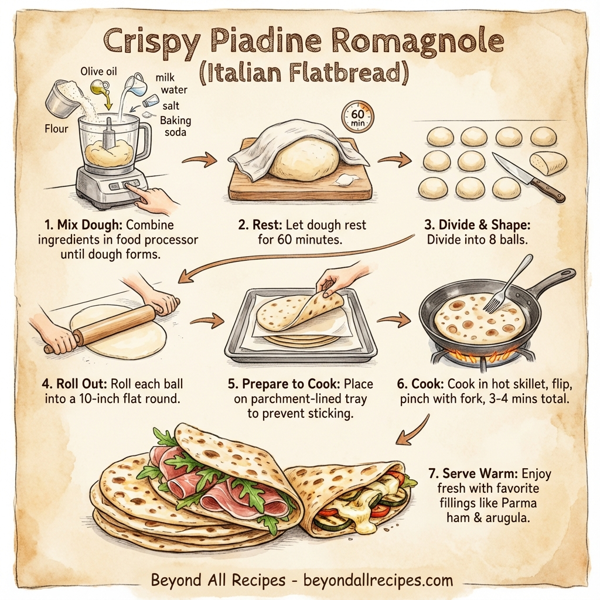
In a food processor, combine flour, olive oil, baking soda, salt, milk, and water, processing until the mixture forms a dough that is not sticky and easily rolls out.
2
Allow the dough to rest for a minimum of 60 minutes, which helps to relax the gluten for easier rolling.
3
Divide the rested dough into 8 equal portions and shape each portion into a ball.
4
On a clean surface, roll out each ball into a flat round shape, approximately 10 inches in diameter. No additional flour is needed on the surface.
5
Place the rolled piadina on a parchment-lined tray, ensuring they are separated to prevent sticking.
6
Preheat a skillet or a non-stick frying pan over medium-high heat. When hot, add the first piadina to the pan.
7
Cook the piadina on the first side until the underside develops pale spots and is slightly firm. Flip and cook the second side, aiming for pale with dark brown spots, about 3-4 minutes total cooking time.
8
During cooking, gently pinch and roll the piadina with a fork to ensure even cooking.
9
While the first piadina is cooking, roll out the next one to make the process efficient.
10
Serve the piadine warm, filled with your favorite ingredients like Parma ham and arugula, or any other delicious filling of your choice.
Nutrition Information
Frequently Asked Questions
Frequently Asked Questions
What is Piadine Romagnole?
Piadine Romagnole is a traditional Italian flatbread from the Romagna region, known for its crispy texture and versatility.
What is the characteristic texture of this flatbread?
This flatbread is celebrated for being crispy, especially when served fresh off the skillet.
How long does the dough need to rest?
The dough should rest for a minimum of 60 minutes to relax the gluten for easier rolling.
Can I use lard instead of olive oil?
Yes, you can use rendered lard for a more traditional version of the recipe.
How many piadine does this recipe make?
This recipe is designed to be divided into 8 equal portions.
Do I need to flour the surface when rolling the dough?
No additional flour is needed on the surface when rolling out these piadine.
What diameter should each piadina be?
Each portion should be rolled into a flat round shape approximately 10 inches in diameter.
How long should I cook each flatbread?
The total cooking time is approximately 3-4 minutes across both sides.
What are the classic fillings for Piadine Romagnole?
A favorite classic combination is Parma ham and arugula.
Can I store these flatbreads for later use?
While they can be stored, they are best enjoyed fresh; storing them tightly can result in a softer texture.
What happens if I store the piadine in an airtight container?
Storing them tightly will cause the texture to become softer rather than remaining crispy.
What equipment is recommended for mixing the dough?
A food processor is recommended to combine the ingredients until a non-sticky dough forms.
Can I use water as a substitute for milk?
Yes, water can be used as an alternative to whole milk in this recipe.
What type of flour is used in this recipe?
The recipe specifies using 500g of all-purpose flour.
Why should I use a fork during the cooking process?
Gently pinching and rolling the piadina with a fork ensures even cooking while it is in the pan.
What is the leavening agent used in this bread?
One teaspoon of baking soda is used as the leavening agent.
What heat setting should I use for the skillet?
The skillet or non-stick frying pan should be preheated over medium-high heat.
What is the traditional fat used in authentic Romagnole recipes?
While this recipe uses olive oil, rendered lard is the traditional ingredient.
What kind of salt is best for this recipe?
You can use either sea salt or kosher salt.
How should the dough feel after processing?
The dough should not be sticky and should be easy to roll out.
Should the piadine be served hot or cold?
They should be served warm, ideally fresh off the skillet for the best experience.
What should the underside look like when it is time to flip?
The underside should develop pale spots and be slightly firm before flipping.
Do I need to grease the pan?
The instructions recommend a non-stick frying pan and do not specify adding extra grease to the pan.
How much flour is required in grams?
The recipe requires 500 grams of all-purpose flour.
How much olive oil is used in the dough?
The recipe calls for 75 ml of extra virgin olive oil.
What other filling ideas are suggested?
Besides ham and arugula, you can use flavorful cheeses, fresh vegetables, or other cured meats.
Is this a family recipe?
Yes, it is a traditional recipe passed down through generations.
How can I make the cooking process more efficient?
You can roll out the next piadina while the previous one is cooking in the skillet.
What temperature should the water be for the dough?
The water should be at room temperature.
How do I prevent the rolled dough from sticking before cooking?
Place the rolled piadine on a parchment-lined tray and ensure they are separated.