Crispy Parboiled Potato Latkes
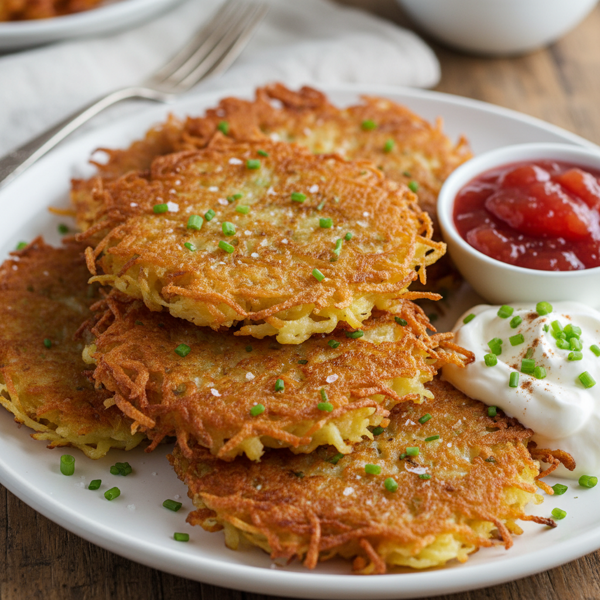
These crispy parboiled potato latkes, inspired by Marcy Goldman's innovative technique, are a game-changer. Unlike traditional methods, parboiling the potatoes ensures a remarkably light and crispy texture, making these latkes a standout addition to your breakfast or brunch menu. The perfect harmony of soft, tender interiors and crispy edges will make these latkes a family favorite. Customizable for little ones or anyone sensitive to onions, simply substitute with onion powder for a delicious variation. Ideal for those who love both cooking and eating latkes, this recipe offers simple instructions for flawless results every time.
N/A
Servings
N/A
Calories
7
Ingredients
Ingredients
Red potatoes
5-6 medium or large (unpeeled, parboiled, and shredded)
Onion
1 small to medium (finely grated)
Eggs
4 (beaten)
Flour
1 tablespoon (all-purpose)
Salt
1 teaspoon (to taste)
Pepper
1/4 teaspoon (to taste)
Vegetable oil
for frying (as needed)
Instructions
1
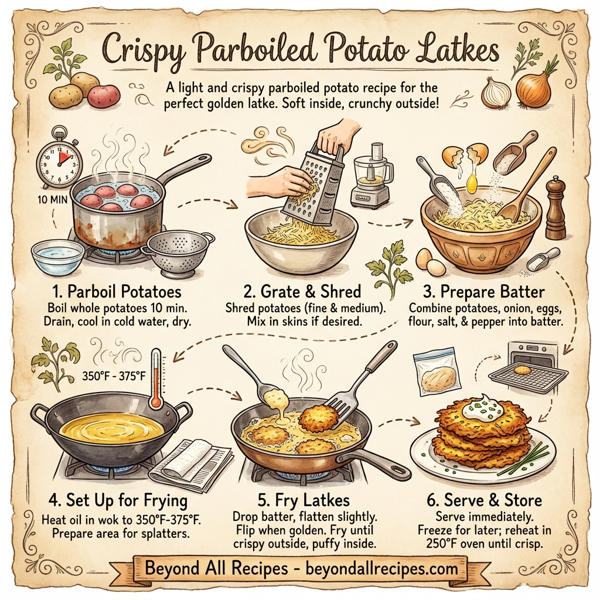
Parboil the Potatoes: In a medium saucepan, place the whole, unpeeled red potatoes. Cover them with cold water. Bring the water to a boil over high heat, then set a timer for 10 minutes. Once the timer goes off, remove the saucepan from the heat. Immediately drain the hot water and cover the potatoes with cold water, allowing them to sit for five minutes before draining again. Pat the potatoes dry.
2
Grate the Potatoes: Using a hand grater or a food processor with a medium disc, shred the potatoes into fine pieces. If the potato skins separate during grating, discard them. Otherwise, mix them into the potato shreds. A combination of two-thirds finely grated and one-third shredded potatoes is recommended for optimal texture.
3
Prepare the Batter: In a large mixing bowl, combine the shredded potatoes with the grated onion. Add the eggs, flour, salt, and pepper, mixing well to form a cohesive batter.
4
Set up for Frying: Place newspaper on your work surface near the frying area and cover it with paper towels to catch oil splatters. In a large deep skillet or wok, pour enough vegetable oil to fill two-thirds of the pan. If using an electric fry pan, preheat the oil to 350°F to 375°F, depending on desired cooking speed.
5
Fry the Latkes: Using a teaspoon for small latkes or a soup spoon for larger ones, drop small dollops of batter into the hot oil, slightly flattening each with a metal spatula if desired. Use metal tongs to carefully flip each latke once the underside is golden brown. Cook until the second side is also golden brown, ensuring a balance of crispy edges and a puffy center.
6
Serve and Store: Serve the latkes immediately for optimal crispness. For later enjoyment, freeze them in a single layer. To reheat, place the latkes on a large wire rack set over a cookie sheet and warm in a 250°F oven until crisp. If freezing, consider frying them slightly underdone to achieve even browning upon reheating.
Nutrition Information
Frequently Asked Questions
Frequently Asked Questions
What is the secret to making these latkes extra crispy?
The secret technique is parboiling the potatoes for 10 minutes before grating, which ensures a light and remarkably crispy texture.
How long should I parboil the red potatoes?
You should bring the whole, unpeeled potatoes to a boil and set a timer for exactly 10 minutes.
Do I need to peel the potatoes before boiling?
No, place the red potatoes in the saucepan whole and unpeeled.
What should I do after draining the hot water from the potatoes?
Immediately cover the potatoes with cold water and let them sit for five minutes before draining and patting them dry.
What is the best way to grate the parboiled potatoes?
You can use a hand grater or a food processor equipped with a medium disc.
Should I include the potato skins in the batter?
If the skins separate during grating, you can discard them; otherwise, mix them directly into the potato shreds.
What is the recommended ratio for grating textures?
A combination of two-thirds finely grated and one-third shredded potatoes is recommended for the best texture.
Can I substitute the fresh onion in this recipe?
Yes, if you are cooking for someone sensitive to onions, you can substitute the grated onion with onion powder.
How many eggs are required for the batter?
This recipe requires 4 beaten eggs to help bind the ingredients.
How much flour is needed for the latke mixture?
You only need 1 tablespoon of all-purpose flour for this recipe.
What seasonings are used in these latkes?
The batter is seasoned with 1 teaspoon of salt and 1/4 teaspoon of pepper, or to taste.
What type of oil is best for frying latkes?
Vegetable oil is recommended for frying these potato pancakes.
How much oil should I put in the frying pan?
Fill a large deep skillet or wok until it is approximately two-thirds full of vegetable oil.
What temperature should the oil be for an electric fry pan?
Preheat the oil to between 350°F and 375°F for optimal cooking speed and results.
How can I prevent oil splatters in my kitchen?
Place newspaper covered with paper towels on your work surface near the frying area to catch any splatters.
What size should I make the latkes?
Use a teaspoon for small, bite-sized latkes or a soup spoon for larger ones.
Should I flatten the latkes while they are frying?
Yes, you can slightly flatten each dollop of batter with a metal spatula once it is in the hot oil.
What tool should I use to flip the latkes?
Metal tongs are the preferred tool for carefully flipping the latkes once the underside is golden.
How do I know when the latkes are finished cooking?
They are done when both sides are golden brown, featuring crispy edges and a puffy center.
When is the best time to serve the latkes?
Serve them immediately after frying for the best possible crispness.
Can these potato latkes be frozen?
Yes, you can freeze them in a single layer for later enjoyment.
What is the best way to reheat frozen latkes?
Place them on a large wire rack set over a cookie sheet and warm them in a 250°F oven until they become crisp.
Is there a tip for frying latkes that I plan to freeze?
Consider frying them slightly underdone so they achieve perfect browning when you reheat them later.
Why use a wire rack for reheating instead of a flat pan?
Using a wire rack allows air to circulate, which helps keep the latkes crisp on all sides during reheating.
Is this recipe suitable for vegetarians?
Yes, this recipe is vegetarian as it contains no meat products.
How many medium or large potatoes are needed?
The recipe calls for 5 to 6 medium or large red potatoes.
What category of meal is this recipe typically served for?
These latkes are a standout addition to a breakfast or brunch menu.
Who inspired this specific parboiling technique?
This technique was inspired by Marcy Goldman's innovative cooking methods.
Does this recipe have a gluten-free option?
While the recipe uses 1 tablespoon of flour, you could likely substitute a gluten-free flour blend if needed.
What is the final texture of the interior of the latkes?
The parboiling method creates a soft and tender interior contrasted by very crispy edges.