Crispy Lime-Garlic Chicken Tenders
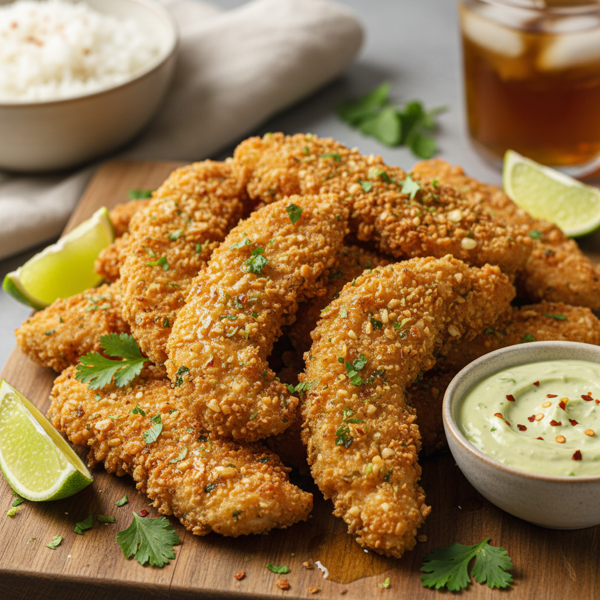
Indulge in these irresistible Crispy Lime-Garlic Chicken Tenders, featuring tender chicken marinated in a zesty lime and Worcestershire sauce blend, infused with the aromatic essence of garlic and oregano. After soaking to enhance tenderness, the chicken pieces are lightly battered and perfectly fried until golden brown, resulting in a crunchy exterior and juicy interior. Serve them with fresh lime wedges for a zesty finish that will tantalize your taste buds. Perfect as a main dish or an appetizer, these tenders are sure to be a crowd-pleaser at any gathering. Enjoy them with your favorite dipping sauces or alongside a fresh salad for a delightful meal.
4
Servings
N/A
Calories
13
Ingredients
Ingredients
chicken tenders
2 lbs (none)
Worcestershire sauce
2 tablespoons (none)
garlic cloves
5 (finely chopped or mashed)
oregano
1 teaspoon (dried)
lime juice
from 2 limes (freshly squeezed)
salt
to taste (none)
black pepper
to taste (freshly ground)
sugar
2 teaspoons (none)
canola oil
for frying (none)
vinegar
1/2 cup (none)
water
8 cups (for soaking)
all-purpose flour
4-6 cups (for coating)
lime wedges
as needed (for garnish)
Instructions
1
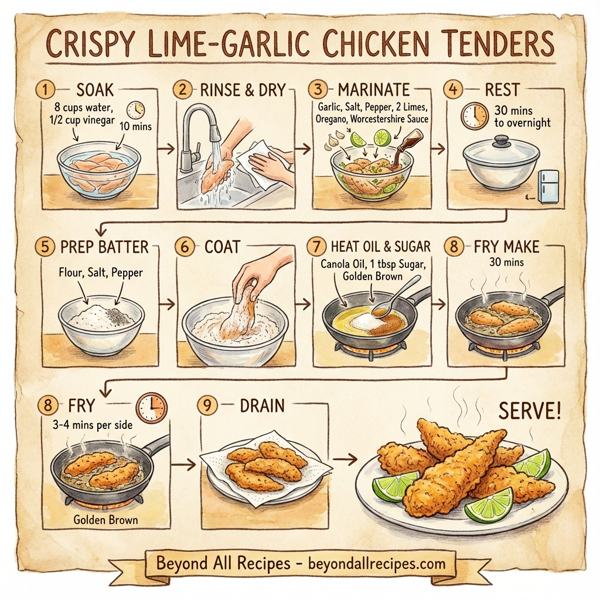
In a large bowl, soak the chicken tenders in a mixture of 8 cups of water and 1/2 cup of vinegar for about 10 minutes. This will help to tenderize the meat.
2
After soaking, rinse the chicken well under cold water and pat dry with paper towels. Place the chicken tenders in a large resealable plastic bag or mixing bowl.
3
Add the finely chopped garlic, salt, black pepper, juice of 2 limes, oregano, and Worcestershire sauce to the chicken. Mix thoroughly to ensure the chicken is well-coated in the marinade.
4
Allow the chicken to marinate for at least 30 minutes at room temperature or up to overnight in the refrigerator for enhanced flavor. If refrigerating, let the chicken come to room temperature before frying.
5
In a separate mixing bowl or resealable bag, combine the flour with salt and freshly ground pepper to taste.
6
Remove the marinated chicken from the marinade, shaking off excess liquid, and coat each piece in the flour mixture, ensuring they are fully coated.
7
Heat a large sauté pan over medium heat and add enough canola oil to cover the bottom of the pan generously. Add 1 tablespoon of sugar to the oil; when it begins to turn a dark golden brown, it's time to add the chicken.
8
Fry the chicken tenders in batches, avoiding overcrowding the pan. Cook for 3 to 4 minutes on each side, or until they are golden brown and cooked through.
9
Transfer the cooked chicken tenders to a paper towel-lined dish to drain excess oil.
10
Serve hot, garnished with lime wedges for a fresh citrus kick.
Nutrition Information
Frequently Asked Questions
Frequently Asked Questions
What is the primary protein in this recipe?
The primary protein used in this recipe is 2 lbs of chicken tenders.
Why should I soak the chicken in water and vinegar?
Soaking the chicken in a mixture of 8 cups of water and 1/2 cup of vinegar for about 10 minutes helps to tenderize the meat.
Do I need to rinse the chicken after soaking it in the vinegar solution?
Yes, after soaking, you should rinse the chicken well under cold water and pat it dry with paper towels before marinating.
What ingredients are used in the marinade?
The marinade consists of finely chopped garlic, salt, black pepper, fresh lime juice from 2 limes, dried oregano, and Worcestershire sauce.
How long should the chicken marinate?
The chicken should marinate for at least 30 minutes at room temperature, or up to overnight in the refrigerator for enhanced flavor.
What should I do if I marinate the chicken in the refrigerator?
If refrigerating, you should let the chicken come to room temperature before frying.
What is the coating for the chicken tenders?
The coating is a mixture of 4-6 cups of all-purpose flour seasoned with salt and freshly ground pepper.
What kind of oil is recommended for frying?
Canola oil is recommended for frying these chicken tenders.
Why is sugar added to the frying oil?
One tablespoon of sugar is added to the oil to help the chicken achieve a dark golden brown color; when the sugar browns, it signals that it's time to add the chicken.
How long does it take to fry the chicken tenders?
The chicken tenders should be fried for 3 to 4 minutes on each side until they are golden brown and cooked through.
Should I fry all the chicken at once?
No, you should fry the chicken tenders in batches to avoid overcrowding the pan.
How should I drain the excess oil from the cooked chicken?
Transfer the cooked chicken tenders to a paper towel-lined dish to drain any excess oil.
What garnish is suggested for this dish?
The dish is best served garnished with fresh lime wedges for a citrus kick.
How many servings does this recipe provide?
This recipe is designed to serve 4 people.
Is this dish suitable as an appetizer?
Yes, these tenders are perfect as either a main dish or an appetizer for gatherings.
What can I serve with these chicken tenders?
They pair well with your favorite dipping sauces or alongside a fresh salad.
How many garlic cloves are needed?
The recipe calls for 5 garlic cloves, finely chopped or mashed.
What flavor profile can I expect?
You can expect a zesty flavor from the lime and Worcestershire sauce, with aromatic notes of garlic and oregano.
What texture does the chicken have?
The chicken features a crunchy, crispy exterior and a juicy, tender interior.
What type of flour is best for the breading?
All-purpose flour is specified for the coating mixture.
How much Worcestershire sauce is used?
The recipe requires 2 tablespoons of Worcestershire sauce for the marinade.
Is the oregano fresh or dried?
The recipe uses 1 teaspoon of dried oregano.
How much lime juice is required?
You will need the freshly squeezed juice from 2 limes for the marinade.
What temperature should I use for frying?
You should heat the sauté pan over medium heat.
How much oil should I use for frying?
You should add enough canola oil to cover the bottom of the pan generously.
Is there sugar in the breading?
No, the sugar is added directly to the frying oil, not the flour coating.
What category of food is this recipe?
This recipe is categorized under Chicken dishes.
Can I prepare the chicken ahead of time?
Yes, you can marinate the chicken in the refrigerator overnight to enhance the flavor before frying the next day.
How do I ensure the chicken is well coated in the marinade?
Mix the chicken thoroughly with the marinade ingredients in a large resealable bag or mixing bowl to ensure every piece is covered.
What is the key to the 'crispy' part of these tenders?
The combination of patting the chicken dry before coating it in seasoned flour and frying it in hot oil produces the crispy exterior.