Crispy Korean Zucchini Fritters (Hobak Jeon)

Experience the delightful taste of these Crispy Korean Zucchini Fritters, a perfect dish to highlight the abundance of fresh zucchinis. This simple yet delicious recipe features thinly sliced zucchinis that are coated in a light batter and pan-fried until golden brown and crispy. Serve these fritters alongside a savory Korean soy dipping sauce for an appetizer or side dish that will impress your family and guests alike. Not only is this dish versatile enough to include other vegetables like Asian eggplant, but it also enhances any meal with its vibrant flavors.
N/A
Servings
N/A
Calories
4
Ingredients
Ingredients
zucchini
2 (medium, sliced into 1/4 inch rounds)
all-purpose flour
1/2 cup (for dredging)
eggs
2 (beaten)
vegetable oil
as needed (for frying)
Instructions
1
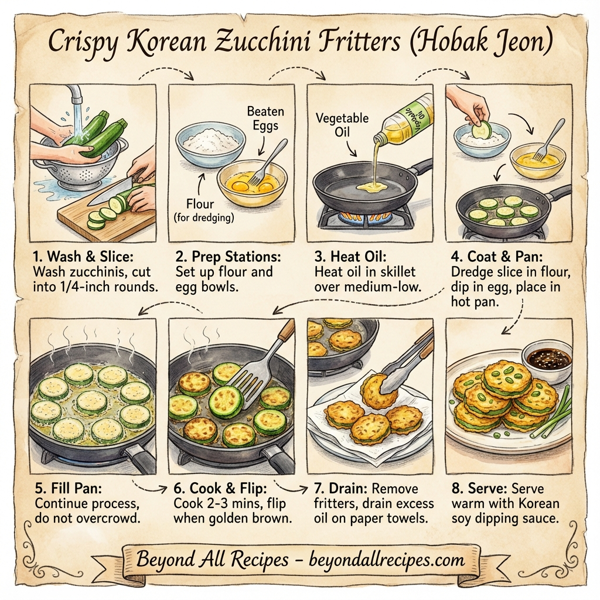
Start by washing the zucchinis thoroughly under cold water. Slice them into 1/4-inch thick rounds and set aside.
2
In one shallow bowl, place the all-purpose flour for dredging. Set up a second bowl with the beaten eggs.
3
Heat a non-stick skillet over medium-low heat and pour in enough vegetable oil to coat the bottom of the pan.
4
Prepare an assembly line: Take a zucchini slice, dredge it in the flour, shaking off any excess. Dip it into the beaten eggs, ensuring it's fully coated, and then place it carefully into the hot pan.
5
Continue this process until the pan is filled with zucchini slices, making sure not to overcrowd the pan.
6
Cook the zucchini slices for about 2-3 minutes on one side, or until they are golden brown, then flip them over. The green color of the zucchini will intensify when cooked through.
7
Once both sides are crispy and golden, remove the fritters from the pan and place them on paper towels to drain excess oil.
8
Serve your crispy zucchini fritters warm alongside a flavorful Korean soy dipping sauce for a mouthwatering experience.
Nutrition Information
Frequently Asked Questions
Frequently Asked Questions
What is Hobak Jeon?
Hobak Jeon is a traditional Korean dish featuring sliced zucchini that is dredged in flour, dipped in egg, and pan-fried until crispy.
How do I make Korean zucchini fritters crispy?
To ensure crispiness, fry the zucchini on medium-low heat for 2-3 minutes per side until they reach a golden brown color.
What ingredients are needed for this recipe?
You will need 2 medium zucchinis, 1/2 cup of all-purpose flour, 2 beaten eggs, and vegetable oil for frying.
How thick should I slice the zucchini?
The zucchini should be sliced into rounds that are approximately 1/4-inch thick.
What is the best way to dredge the zucchini?
Place flour in a shallow bowl, coat the zucchini slice thoroughly, and then shake off any excess before dipping it into the egg.
What kind of oil should I use for frying?
Any neutral vegetable oil works well for frying these fritters.
What heat setting is best for cooking Hobak Jeon?
Medium-low heat is recommended to cook the zucchini through without burning the delicate egg coating.
Can I use other vegetables in this recipe?
Yes, this batter method is versatile and works well with other vegetables like Asian eggplant.
How do I serve Korean zucchini fritters?
Serve them warm alongside a savory Korean soy dipping sauce as an appetizer or side dish.
How many zucchinis are required for this recipe?
The recipe calls for 2 medium-sized zucchinis.
Is it necessary to peel the zucchini?
No, the skin is left on to provide structure and a vibrant green color that intensifies when cooked.
How long does it take to cook each batch?
Each side takes about 2 to 3 minutes to become golden brown and crispy.
What should I do after removing them from the pan?
Place the fritters on paper towels to drain any excess oil before serving.
Can I overcrowd the pan?
No, it is important not to overcrowd the pan so that each slice cooks evenly and remains crispy.
What is the purpose of the egg wash?
The beaten eggs create a light, golden crust that holds the zucchini together and adds flavor.
Is this recipe easy to follow?
Yes, this is a simple and quick recipe perfect for beginners or as a fast side dish.
How do I know when the zucchini is cooked through?
The zucchini is done when the coating is golden brown and the green flesh of the vegetable looks more vibrant.
Can I make these gluten-free?
You can substitute the all-purpose flour with a gluten-free flour blend or rice flour for a similar texture.
What does 'Jeon' mean in Korean cooking?
'Jeon' refers to various pan-fried, battered dishes in Korean cuisine, which can include vegetables, meat, or seafood.
Is this dish suitable for vegetarians?
Yes, these zucchini fritters are a popular vegetable-based dish, though they do contain eggs.
Can these be made in advance?
They are best served warm and fresh, but you can reheat them in a pan to restore their crispiness.
Why should I wash the zucchini first?
Washing removes any dirt or debris from the skin since the zucchini is cooked unpeeled.
What if my fritters are too oily?
Ensure the oil is hot enough before adding the zucchini and always drain them on paper towels immediately after frying.
Can I add seasoning to the flour?
Yes, adding a pinch of salt or pepper to the flour can enhance the overall flavor of the fritters.
What makes this a good appetizer?
Its light texture and the ability to dip it into savory sauces make it a crowd-pleasing starter.
Can I use zucchini that is very large?
Medium zucchinis are preferred as they have smaller seeds and a firmer texture suitable for slicing into rounds.
Is a non-stick skillet required?
A non-stick skillet is highly recommended to prevent the egg coating from sticking to the pan.
Can I air fry these instead?
While pan-frying is traditional for 'Jeon', you can air fry them with a light spray of oil for a healthier alternative.
What is the primary flavor profile?
The dish has a mild, sweet zucchini flavor complemented by a savory, crispy egg and flour coating.
Does this dish belong to a specific meal category?
It is typically served as a side dish (banchan) or a snack/appetizer in Korean meals.