Crispy Korean Mung Bean Pancakes with Pork and Kimchi

Delight in the unique flavors of these crispy Korean mung bean pancakes, also known as Bindaetteok. Traditionally enjoyed as a street food snack or a comforting meal, this recipe elevates humble ingredients like mung beans and pork into a delicious treat loved by all. With the delightful crunch of the outside and the savory filling of kimchi and ground pork, these pancakes offer a perfect blend of textures and tastes. Best enjoyed hot off the skillet, they are an excellent choice for lunch or as a hearty snack at any time of the day.
12
Servings
N/A
Calories
12
Ingredients
Ingredients
Dried split mung beans
2 cups (rinsed in a few changes of water)
Short-grain rice
1/4 cup (rinsed)
Ground pork
1/3 lb (seasoned with garlic, salt, and pepper)
Garlic cloves
2 (finely minced)
Cabbage kimchi
1 1/2 cups (chopped)
Mung bean sprouts
4 ounces (blanched and squeezed to remove moisture)
Fiddleheads (optional)
3 ounces (sliced)
Kimchi juice
1/2 cup
Soy sauce
1 tablespoon
Salt and pepper
to taste
Low sodium soy sauce
1/3 cup
Rice vinegar
2 tablespoons
Instructions
1
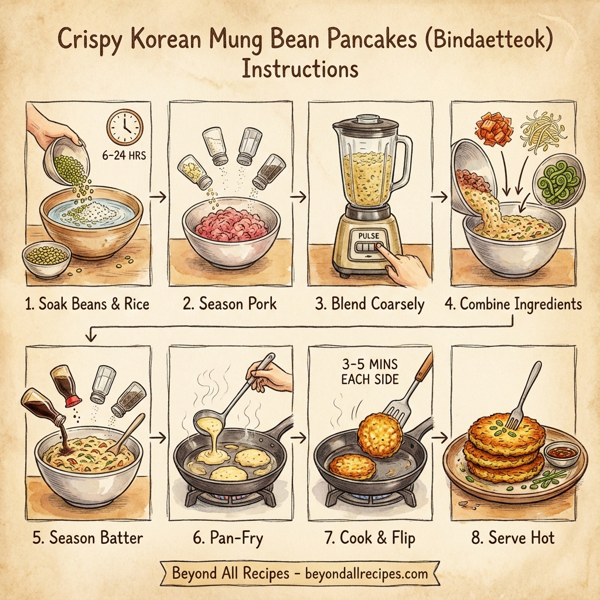
In a large bowl, combine the rinsed mung beans and short-grain rice. Cover them with cold water and soak for at least 6 hours, or up to 24 hours in the refrigerator. After soaking, drain and rinse well. Set aside.
2
In a separate bowl, season the ground pork with minced garlic, salt, and pepper. Mix until well combined.
3
Transfer the soaked mung beans and rice to a blender. Add 1/4 cup of water and blend until the mixture is coarsely smooth, adding 1/2 cup of kimchi juice to aid the blending process. You should not over-puree the mixture; it should still have some texture.
4
Pour the blended mixture into a large mixing bowl. Add the seasoned pork, chopped kimchi, blanched mung bean sprouts, and sliced fiddleheads (if using). Stir to combine all the ingredients thoroughly.
5
Season the mixture with soy sauce, salt, and pepper to taste. Mix well to ensure an even distribution of seasonings.
6
Heat a generous amount of cooking oil in a skillet over medium heat. Once hot, ladle 2-3 tablespoons of the pancake batter into the skillet, spreading it into a round shape.
7
Cook the pancake for 3 to 5 minutes on each side, or until it is golden brown and crispy. If the pan seems dry during cooking, add more oil as necessary.
8
Remove the pancake from the skillet and serve immediately for the best texture and flavor.
Nutrition Information
Frequently Asked Questions
Frequently Asked Questions
What is the traditional name for these Korean pancakes?
These Korean mung bean pancakes are traditionally known as Bindaetteok.
How many servings does this recipe yield?
This recipe makes approximately 12 servings.
How long should I soak the mung beans and rice?
The mung beans and short-grain rice should be soaked for at least 6 hours, or up to 24 hours in the refrigerator.
What kind of rice is used in Bindaetteok?
Short-grain rice is used in this recipe to provide the right texture.
Is this mung bean pancake recipe gluten-free?
Yes, based on the ingredients and tags, these savory pancakes are gluten-free.
What meat is included in these pancakes?
The recipe calls for 1/3 lb of ground pork.
How do I prepare the ground pork?
Season the ground pork with minced garlic, salt, and pepper before adding it to the batter.
What should the consistency of the blended batter be?
The batter should be blended until coarsely smooth; do not over-puree it, as it should still have some texture.
How much kimchi juice is needed for the batter?
You will need 1/2 cup of kimchi juice to aid the blending process.
Should the mung bean sprouts be raw when added to the batter?
No, the mung bean sprouts should be blanched and squeezed to remove excess moisture before being added.
Are fiddleheads a required ingredient?
No, fiddleheads are listed as an optional ingredient for this recipe.
How much water should I add to the blender?
Add 1/4 cup of water to the blender along with the soaked beans and rice.
What is the best way to cook these pancakes?
They should be fried in a skillet with a generous amount of cooking oil over medium heat.
How long do the pancakes take to cook?
Cook each pancake for 3 to 5 minutes on each side until golden brown and crispy.
How much batter should I use for each pancake?
Ladle about 2-3 tablespoons of the pancake batter into the skillet for each pancake.
What should I do if the pan becomes dry while frying?
Add more oil as necessary during the cooking process to ensure the pancakes remain crispy.
When is the best time to serve Bindaetteok?
They are best enjoyed immediately hot off the skillet for the best texture and flavor.
What are the primary flavor components of this dish?
The dish features a savory blend of mung beans, pork, and tangy kimchi.
What category of meal does this recipe fall into?
This recipe is categorized as Lunch or Snacks.
How should the cabbage kimchi be prepared?
The cabbage kimchi should be chopped before being stirred into the batter.
What can I use for a dipping sauce?
The recipe includes low sodium soy sauce and rice vinegar which can be used to create a dipping sauce.
Are these pancakes considered street food?
Yes, they are traditionally enjoyed as a popular Korean street food snack.
What gives the pancakes their crispy texture?
The combination of soaked mung beans, rice, and frying in a generous amount of oil creates the signature crispiness.
Can I prepare the beans ahead of time?
Yes, you can soak the beans and rice in the refrigerator for up to 24 hours.
What seasoning is added to the final batter?
The batter is seasoned with soy sauce, salt, and pepper to taste.
What type of garlic is used?
The recipe uses 2 finely minced garlic cloves to season the pork.
Is there a specific ratio for the dipping sauce?
The recipe suggests 1/3 cup of low sodium soy sauce and 2 tablespoons of rice vinegar.
Should the mung beans be peeled?
The recipe calls for dried split mung beans, which are typically already peeled.
What shape should the pancakes be?
Spread the batter into a round shape once it is ladled into the hot skillet.
Is this recipe suitable for a hearty snack?
Yes, it is described as an excellent choice for a hearty snack or a comforting meal at any time of day.