Crispy Korean Dumplings (Gunmandu)
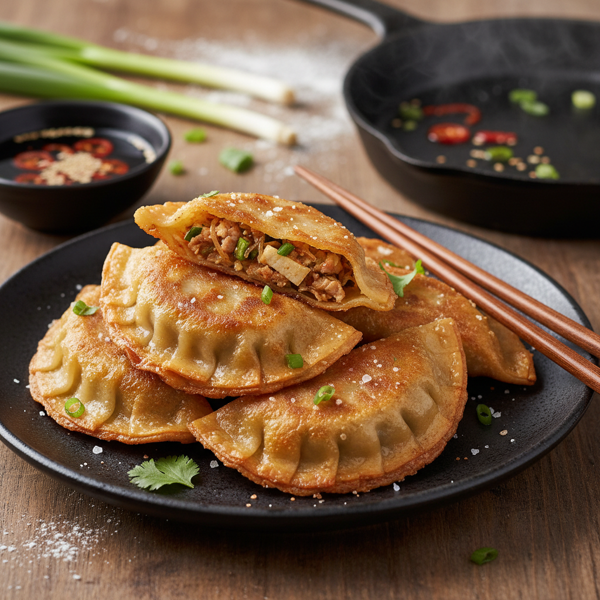
Experience the savory delight of Crispy Korean Dumplings, known as Gunmandu. These delectable treats are a Korean twist on the legendary buuz from Mongolia and manti from Turkey, while also drawing inspiration from Chinese jiaozi and Japanese gyoza. Each dumpling is packed with a flavorful mixture of ground beef, pork, and fermented kimchi, harmoniously blended with tofu and aromatic herbs, all enveloped in a crispy, golden-brown wonton wrapper. Perfect as an appetizer or a main course, these dumplings are sure to impress family and friends at your next gathering!
36
Servings
N/A
Calories
13
Ingredients
Ingredients
cabbage kimchi
1/2 cup (finely chopped)
ground beef
1/2 lb
ground pork
1/2 lb
firm tofu
1/2 cup (mashed)
garlic
1/2 ounce (minced)
green onion
1 tablespoon (finely chopped)
soy sauce
1 teaspoon
square wonton wrappers
30-36
soy sauce for dipping sauce
1/3 cup
vinegar
2 tablespoons ((rice vinegar preferably))
toasted sesame seeds
1 teaspoon
gingerroot
2 teaspoons (grated (optional))
red pepper flakes
1 teaspoon ((optional))
Instructions
1
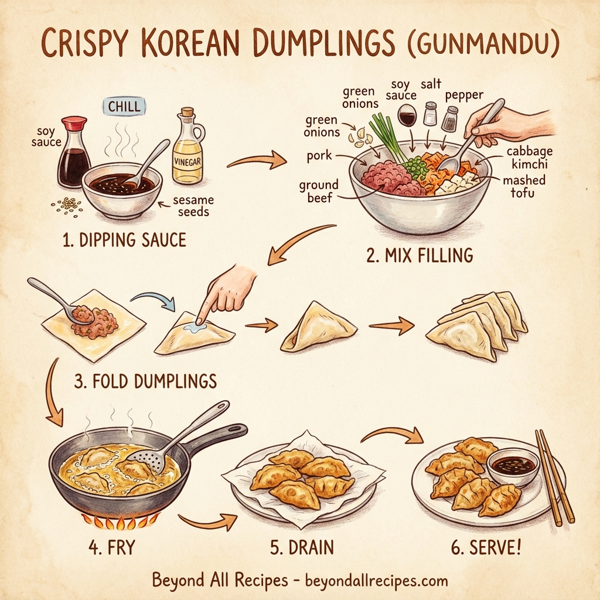
In a small bowl, combine the soy sauce, vinegar, and toasted sesame seeds to create a flavorful dipping sauce. Mix well and chill until serving time.
2
In a large mixing bowl, combine the ground beef, ground pork, minced garlic, finely chopped green onion, soy sauce, and a pinch of salt and pepper. Mix until well incorporated.
3
Stir in the finely chopped cabbage kimchi, squeezing excess liquid from the kimchi, followed by the mashed tofu. Mix thoroughly until the filling is even.
4
Take a square wonton wrapper and place about one teaspoon of the meat and tofu mixture in the center. Moisten the edges with water, fold the wrapper diagonally to form a triangle, and press the edges to seal tightly. Repeat with remaining wrappers and filling.
5
Heat vegetable oil in a deep frying pan over medium-high heat. Once hot, carefully add the dumplings in batches, frying for about 4 minutes or until they turn golden brown and are cooked through.
6
Remove the dumplings from the oil and place them on paper towels to drain excess oil.
7
Serve the crispy dumplings hot with the prepared dipping sauce.
Nutrition Information
Frequently Asked Questions
Frequently Asked Questions
What is Gunmandu?
Gunmandu is the Korean name for crispy fried dumplings, which are a savory treat inspired by various Asian dumpling traditions.
Which cultures influenced this dish?
These dumplings are a Korean twist on Mongolian buuz and Turkish manti, while also drawing inspiration from Chinese jiaozi and Japanese gyoza.
What is the primary filling for these dumplings?
The filling consists of a flavorful mixture of ground beef, ground pork, fermented cabbage kimchi, and mashed firm tofu.
What ingredients are in the dipping sauce?
The dipping sauce is made by combining soy sauce, vinegar (preferably rice vinegar), and toasted sesame seeds.
How should the dipping sauce be prepared?
Mix the soy sauce, vinegar, and sesame seeds in a small bowl and chill it until you are ready to serve.
What aromatics are used in the meat mixture?
The meat is seasoned with minced garlic, finely chopped green onion, soy sauce, salt, and pepper.
Do I need to prepare the kimchi specifically?
Yes, use finely chopped cabbage kimchi and be sure to squeeze out any excess liquid before adding it to the filling.
What kind of tofu should I use?
The recipe calls for 1/2 cup of mashed firm tofu to be thoroughly mixed into the filling until even.
What type of wrappers are required?
You will need 30 to 36 square wonton wrappers for this recipe.
How much filling goes into each wrapper?
Place approximately one teaspoon of the meat and tofu mixture in the center of each square wonton wrapper.
How do you seal the dumplings?
Moisten the edges of the wrapper with water, fold it diagonally to form a triangle, and press the edges tightly to seal.
What is the best way to cook Gunmandu?
They are deep-fried in vegetable oil over medium-high heat until they turn golden brown.
How long do the dumplings take to fry?
Each batch of dumplings takes about 4 minutes to become golden brown and fully cooked.
How should I handle the dumplings after frying?
Remove them from the oil and place them on paper towels to drain any excess oil before serving.
Are there any optional spices for this recipe?
Yes, you can optionally add 2 teaspoons of grated gingerroot and 1 teaspoon of red pepper flakes for extra flavor.
How many dumplings does this recipe yield?
This recipe makes approximately 36 individual dumplings.
What is the recommended vinegar for the sauce?
Rice vinegar is the preferred choice for creating the flavorful dipping sauce.
Can Gunmandu be served as a main meal?
Yes, they are versatile enough to be served as either an appetizer or a main course for family gatherings.
What meat ratio is used in the recipe?
The recipe uses equal parts of ground beef and ground pork, specifically 1/2 lb of each.
How do I ensure the dumplings don't open during frying?
Moisten the edges of the wonton wrapper with water and press them together firmly to ensure they are sealed tightly.
What is the heat setting for frying?
The vegetable oil should be heated in a deep frying pan over medium-high heat.
What gives these dumplings their texture?
The combination of crispy deep-fried wonton wrappers and a soft meat and tofu filling provides a unique texture.
What are the main tags for this dish?
Common tags include gunmandu, korean dumplings, fried dumplings, meat appetizer, and asian cuisine.
What is the suggested serving temperature?
These crispy dumplings are best when served hot immediately after frying.
Is this a good recipe for entertaining guests?
Yes, these dumplings are perfect for impressing friends and family at gatherings and parties.
How much ginger is added if used?
If using the optional ginger, the recipe suggests 2 teaspoons of grated gingerroot.
How much garlic is needed for the filling?
The filling requires 1/2 ounce of minced garlic for aromatic flavor.
Are there red pepper flakes in the dipping sauce?
The recipe lists red pepper flakes as an optional ingredient for the filling, but the sauce specifically contains sesame seeds.
What is the first step in preparing the filling?
The first step is combining the ground beef, ground pork, garlic, green onion, soy sauce, and seasonings.
How do you incorporate the kimchi?
Stir in the finely chopped kimchi after the meat is mixed, ensuring you have squeezed out excess liquid first.