Crispy Kimchi and Crab Delight Rolls
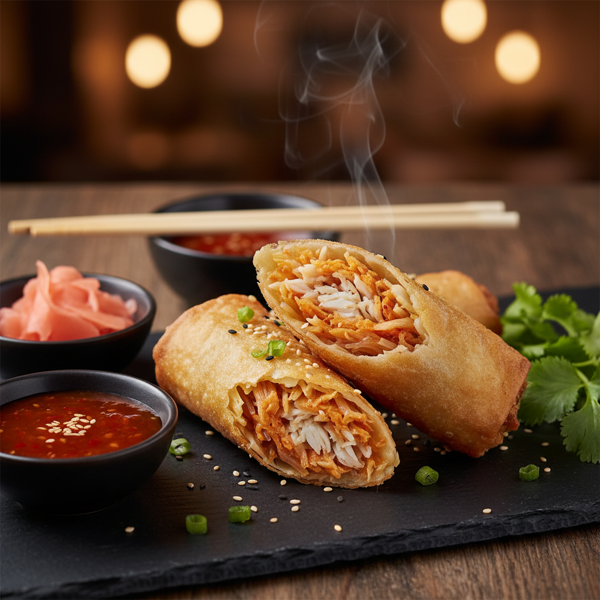
Delight your taste buds with the bold flavors of these Crispy Kimchi and Crab Delight Rolls. Juicy snow crab combined with vibrant homemade kimchi and crunchy vegetables is wrapped in spring roll sheets and fried to perfection. Presented with a sweet and tangy dipping sauce, these appetizing rolls are perfect for any occasion. Prepared with care, the dish offers a playful balance of textures and a burst of dynamic flavors — a true culinary adventure inspired by Chuck Hughes.
6
Servings
N/A
Calories
30
Ingredients
Ingredients
Granulated sugar
1/2 cup (none)
Rice vinegar
1/4 cup (none)
Fish sauce
2 tablespoons (none)
Fresh ginger
2 tablespoons (finely chopped)
Soy sauce
2 tablespoons (none)
Garlic clove
1 (minced)
Lime
1 (juiced)
Eggs
3 (beaten)
Canola oil
as needed (for the skillet and frying)
Snow crab
1 pound (remove meat from shells)
Spring roll wrappers
12 (none)
Scallions
2 (julienned)
Carrot
1 (julienned)
Celery rib
1 (julienned)
Cabbage kimchi
1 1/2 cups (see recipe below)
Fresh cilantro
1 bunch (chopped)
Salt
1/4 cup (for kimchi brine)
Napa cabbage
1 large (cut into big chunks)
Rice flour or all-purpose flour
1/4 cup (none)
Granulated sugar
2 tablespoons (none)
Red pepper powder
1/2 cup (none)
Garlic cloves
3 (minced)
Fresh ginger
1-inch piece (peeled)
Lemongrass
1 stalk (minced, tough parts discarded)
Onion
1 (chopped)
Fresh chives
1/4 cup (chopped)
Fish sauce
1/4 cup (none)
Soy sauce
2 tablespoons (none)
Scallions
5 (minced)
Cucumbers
2 to 3 large (cubed)
Instructions
1
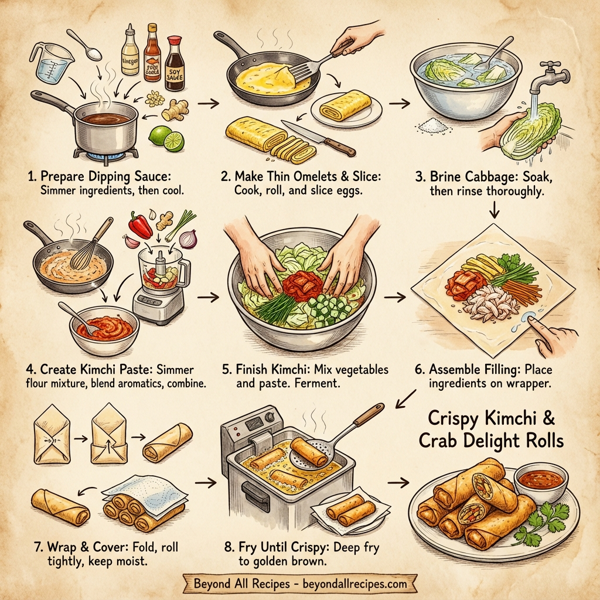
Prepare the Dipping Sauce: In a small saucepan, combine 1/2 cup (125ml) water with sugar, rice vinegar, fish sauce, finely chopped ginger, soy sauce, minced garlic, and lime juice. Bring to a simmer over medium heat and cook for about 5 minutes until slightly thickened. Allow to cool before serving.
2
Make Thin Omelets: Season beaten eggs with salt and pepper. Heat a nonstick skillet over medium-low heat with a light coating of canola oil. Using a paper towel, spread the oil evenly and remove excess. Pour a small amount of eggs into the skillet, swirling rapidly to coat the bottom. Cook over low heat for 15 to 30 seconds until set and slightly dry on the edges. Flip the omelet onto a plate and repeat with remaining eggs. Roll and slice omelets into thin strips. Set aside.
3
Assemble the Spring Rolls: Carefully remove crabmeat from shells, preserving leftovers for stock if desired. On a flat work surface, lay a spring roll wrapper in a diamond shape. Place julienned scallions, carrots, and celery, along with a portion of kimchi and strip of omelet in the center. Top with crabmeat and a sprinkle of chopped cilantro. Moisten the wrapper's edges with water using your finger.
4
Wrap the Spring Rolls: Fold the sides of the wrapper inward, then fold the top downwards and the bottom upwards, securely enclosing the filling. Place wrapped rolls under damp paper towels until ready to fry.
5
Fry the Rolls: Heat canola oil in a deep fryer to 375 degrees F (190 degrees C). Fry the rolls in the hot oil, turning occasionally, until they achieve a golden-brown, crispy exterior. Transfer to paper towels to drain excess oil.
6
Make Chuck's Kimchi: Dissolve salt in 12 cups (3 liters) of cold water for brining. Soak napa cabbage chunks submerged in brine, refrigerating for 4 hours. Rinse thoroughly under cold water three times and pat dry.
7
Create Kimchi Paste: Simmer 1 1/2 cups (375ml) water in a skillet over medium-high heat. Whisk in rice or all-purpose flour for 3 minutes, then add sugar and cook for another minute. Blend red pepper powder, garlic, ginger, lemongrass, and onion in a processor until smooth. Incorporate the flour mixture to form the kimchi paste.
8
Finish the Kimchi: Mix brined cabbage with chopped chives, fish sauce, soy sauce, scallions, and cubed cucumbers in a large bowl. Stir in the prepared kimchi paste thoroughly. Cover and refrigerate. Consume fresh or after 24 hours for fermentation.
Nutrition Information
Frequently Asked Questions
Frequently Asked Questions
What are Crispy Kimchi and Crab Delight Rolls?
They are appetizing rolls featuring juicy snow crab, vibrant homemade kimchi, and crunchy vegetables wrapped in spring roll sheets and fried until crispy.
Who inspired this recipe?
This recipe is a culinary adventure inspired by Chuck Hughes.
How many servings does this recipe make?
This recipe makes approximately 6 servings.
What ingredients are needed for the dipping sauce?
The sauce requires 1/2 cup water, granulated sugar, rice vinegar, fish sauce, finely chopped ginger, soy sauce, minced garlic, and lime juice.
How long should the dipping sauce simmer?
The dipping sauce should simmer over medium heat for about 5 minutes until it is slightly thickened.
How do you prepare the omelet strips for the filling?
Beat the eggs with salt and pepper, cook them in a lightly oiled nonstick skillet in thin layers for 15 to 30 seconds, then roll and slice them into thin strips.
What kind of crab is used in this recipe?
The recipe calls for 1 pound of snow crab, with the meat carefully removed from the shells.
Should I save the crab shells?
Yes, you can preserve the leftover crab shells for making stock if desired.
What vegetables are julienned for the roll assembly?
The rolls include julienned scallions, carrots, and celery.
How do you seal the spring roll wrappers?
Moisten the edges of the spring roll wrapper with water using your finger before folding to securely enclose the filling.
How should the rolls be stored before frying?
Place the wrapped rolls under damp paper towels until you are ready to fry them to prevent them from drying out.
What is the correct oil temperature for frying the rolls?
The canola oil should be heated to 375 degrees F (190 degrees C) in a deep fryer.
What is the secret to Chuck's homemade kimchi?
It involves brining napa cabbage in a salt-water solution for 4 hours and mixing it with a custom paste made of red pepper powder, garlic, ginger, lemongrass, and onion.
How many times should the brined cabbage be rinsed?
The napa cabbage should be rinsed thoroughly under cold water three times after brining.
What is used to thicken the kimchi paste?
A mixture of rice flour (or all-purpose flour), water, and sugar is cooked for several minutes to form the base of the paste.
What aromatic ingredients are blended for the kimchi paste?
The paste includes red pepper powder, garlic, ginger, lemongrass, and onion blended until smooth.
Are there cucumbers in the kimchi?
Yes, 2 to 3 large cubed cucumbers are mixed into the kimchi along with the cabbage.
How long should the kimchi ferment?
The kimchi can be consumed fresh or after 24 hours of refrigeration for fermentation.
What herbs are added to the spring roll filling?
A sprinkle of chopped fresh cilantro is added to the center of each roll during assembly.
How many spring roll wrappers are needed for this recipe?
You will need 12 spring roll wrappers.
What type of flour is recommended for the kimchi paste?
You can use either rice flour or all-purpose flour.
What kind of oil is used for both the skillet and frying?
Canola oil is used for both making the omelets and deep-frying the rolls.
How do you prepare the lemongrass for the kimchi paste?
The lemongrass stalk should be minced, and the tough outer parts should be discarded.
What kind of cabbage is used for the kimchi?
One large napa cabbage, cut into big chunks, is used for the kimchi.
What are the key flavor profiles of this dish?
The dish offers a balance of bold, dynamic, sweet, tangy, and savory flavors with a crispy texture.
Is there fish sauce in the kimchi?
Yes, 1/4 cup of fish sauce is mixed into the kimchi finish.
How are the eggs seasoned for the omelet?
The beaten eggs are seasoned simply with salt and pepper.
What is the preparation for the fresh chives in the kimchi?
The fresh chives should be chopped before being mixed into the cabbage.
What is the final step after frying the rolls?
Transfer the rolls to paper towels to drain any excess oil before serving.
How is the salt used in the kimchi process?
1/4 cup of salt is dissolved in 12 cups (3 liters) of cold water to create a brine for soaking the cabbage.