Crispy Japanese Vegetable and Fish Tempura
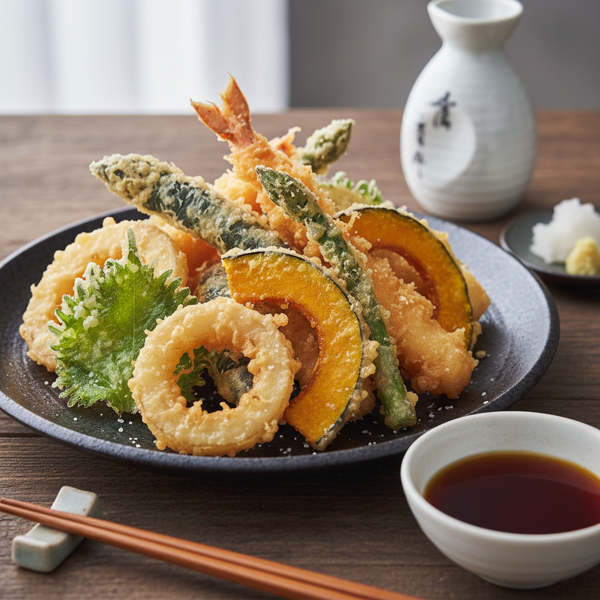
This delicious crispy tempura recipe, inspired by my time in Japan, combines an array of fresh vegetables and tender fish, all beautifully coated with a light and airy batter. The term 'kolomo' refers to the art of dressing these ingredients before frying, creating a delightful texture that's both crunchy and flavorful. This recipe is versatile, allowing the use of various vegetables such as zucchini, asparagus, and eggplant. Serve it alongside a tangy tempura dipping sauce for an authentic Japanese culinary experience that can feed a crowd, perfect for gatherings or special occasions.
10
Servings
N/A
Calories
6
Ingredients
Ingredients
flour
2 1/2 cups (all-purpose flour)
water
2 - 2 1/2 cups (cold water)
salt
1 teaspoon (fine sea salt)
assorted fresh vegetables
1 gallon (washed and cut)
fresh fish
1 pint (cut into pieces)
oil
sufficient for frying (high smoke point oil (e.g., canola or vegetable oil))
Instructions
1
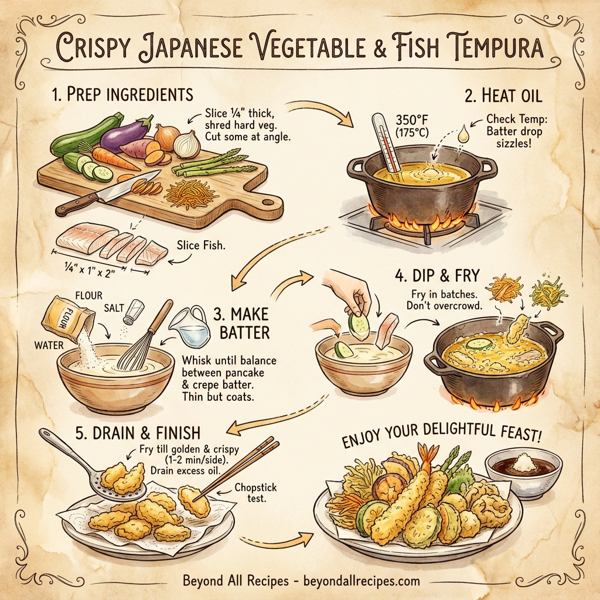
Begin by washing and preparing your vegetables. Cut them into 1/4 inch thick slices, ensuring that those like potatoes, cabbage, onions, and carrots are shredded for better texture. Presentation tip: cut vegetables, such as zucchini and eggplant, at an angle.
2
For the fish, slice it into pieces approximately 1/4 inch wide by 1 inch long and 2 inches thick. Set both the vegetables and fish aside.
3
In a wide pot or frying pan, pour about 1.5 to 2 inches of oil and heat it over medium heat until it reaches 350°F (175°C). A drop of batter should sizzle and rise to the surface quickly when the oil is ready.
4
While the oil heats, prepare the batter by whisking together the flour, salt, and enough water until you achieve a consistency that balances between pancake and crepe batter. This should be thin enough to coat the ingredients without being too runny.
5
Once the oil is hot, take a handful of vegetables, dip each piece into the batter ensuring they are well-coated, then gently place them into the oil. For shredded vegetables, gather small clumps and fry them together.
6
Fry the tempura in batches, making sure not to overcrowd the pan. Turn the pieces after about a minute or two, or until they become golden brown and crispy. They are ready when a chopstick easily pierces through them.
7
Use a slotted spoon to remove the cooked tempura and place them on a plate lined with paper towels to drain excess oil, keeping them warm.
8
Continue the process with the remaining vegetables and then the fish. Serve hot alongside tempura sauce for dipping. Enjoy your delightful tempura feast!
Nutrition Information
Frequently Asked Questions
Frequently Asked Questions
What is Japanese Tempura?
Tempura is a popular Japanese dish consisting of vegetables and seafood that are coated in a light, airy batter and deep-fried to achieve a crispy texture.
What does the term 'kolomo' mean?
'Kolomo' refers to the art of dressing or coating ingredients with batter before frying them, which is essential for creating the signature light and crunchy tempura texture.
What vegetables are recommended for this tempura recipe?
This recipe is versatile and works well with a variety of fresh vegetables including zucchini, asparagus, eggplant, potatoes, cabbage, onions, and carrots.
How should the vegetables be sliced for even cooking?
Vegetables should generally be cut into 1/4 inch thick slices. For better presentation, vegetables like zucchini and eggplant can be cut at an angle.
How do I prepare shredded vegetables like onions and carrots?
Vegetables like potatoes, cabbage, onions, and carrots should be shredded and then gathered into small clumps to be fried together for the best texture.
What are the recommended dimensions for the fish pieces?
The fish should be sliced into pieces approximately 1/4 inch wide, 1 inch long, and 2 inches thick.
What type of oil should I use for frying tempura?
It is best to use an oil with a high smoke point, such as canola or vegetable oil, to ensure the tempura fries cleanly without burning.
What temperature should the oil reach before frying?
The oil should be heated over medium heat until it reaches 350°F (175°C).
How can I tell if the oil is hot enough without a thermometer?
You can test the oil by dropping a small amount of batter into it; if the batter sizzles and rises to the surface quickly, the oil is ready.
What ingredients are needed for the tempura batter?
The batter is made by whisking together 2 1/2 cups of all-purpose flour, 1 teaspoon of fine sea salt, and 2 to 2 1/2 cups of cold water.
What should the consistency of the batter look like?
The batter should have a consistency that balances between a pancake batter and a crepe batter—thin enough to coat ingredients without being overly runny.
Why is it important to use cold water for the batter?
Using cold water helps to keep the batter light and prevents the development of gluten, which ensures a crispier texture after frying.
How much oil is required for the frying pan?
You should pour about 1.5 to 2 inches of oil into a wide pot or frying pan to adequately submerge the tempura pieces.
How do I coat the ingredients in the batter?
Take a handful of prepared vegetables or fish pieces and dip each one into the batter, ensuring they are thoroughly and evenly coated before placing them in the oil.
Should I fry all the tempura at once?
No, you should fry the tempura in batches to avoid overcrowding the pan, which can lower the oil temperature and lead to greasy results.
How long does it take to fry each piece of tempura?
Each piece typically takes about one to two minutes per side to become golden brown and crispy.
What is a simple way to check if the tempura is fully cooked?
The tempura is ready when a chopstick can easily pierce through the ingredients, and the exterior is a light golden brown.
How should I drain the tempura after frying?
Remove the cooked pieces with a slotted spoon and place them on a plate lined with paper towels to drain any excess oil.
In what order should I fry the ingredients?
It is recommended to fry the vegetables first and then finish with the fish to keep the oil as clean as possible for the delicate seafood.
What is the best way to serve tempura?
Tempura should be served hot immediately after frying, accompanied by a tangy tempura dipping sauce for an authentic experience.
How many servings does this recipe provide?
This recipe is designed to serve 10 people, making it ideal for large gatherings or family meals.
Can I use frozen fish for this recipe?
The recipe specifies fresh fish for the best flavor and texture, though thawed frozen fish can be used if it is dried thoroughly before battering.
Is the salt content in the batter adjustable?
Yes, while the recipe calls for 1 teaspoon of fine sea salt, you can adjust this to your personal taste preference.
What can I do if my batter is too thick?
If the batter is too thick, slowly whisk in small amounts of additional cold water until you reach a consistency similar to crepe batter.
How do I keep the first batches warm while I finish frying?
You can keep the drained tempura on a paper-towel-lined plate in a low-temperature oven to maintain warmth and crispiness.
Are there specific types of fish that work best?
Tender white fish or other mild fresh fish varieties are typically preferred for tempura to complement the light batter.
What makes this tempura recipe 'Japanese-style'?
The use of a very cold, thin batter (kolomo) and the specific selection of vegetables and thinly sliced fish cooked quickly at high heat are hallmarks of Japanese tempura.
Can I add spices to the flour mixture?
While traditional tempura uses a simple salt and flour base, you can experiment with additions, though the recipe focuses on the natural flavors of the ingredients.
What happens if the oil temperature is too low?
If the oil is not hot enough, the batter will absorb too much oil, resulting in soggy and greasy tempura instead of a light, crispy finish.
Is this a good recipe for beginners?
Yes, by following the simple batter ratio and oil temperature guidelines, beginners can successfully recreate this authentic Japanese dish at home.