Crispy Japanese-Style Chicken Thighs with Sweet Potato
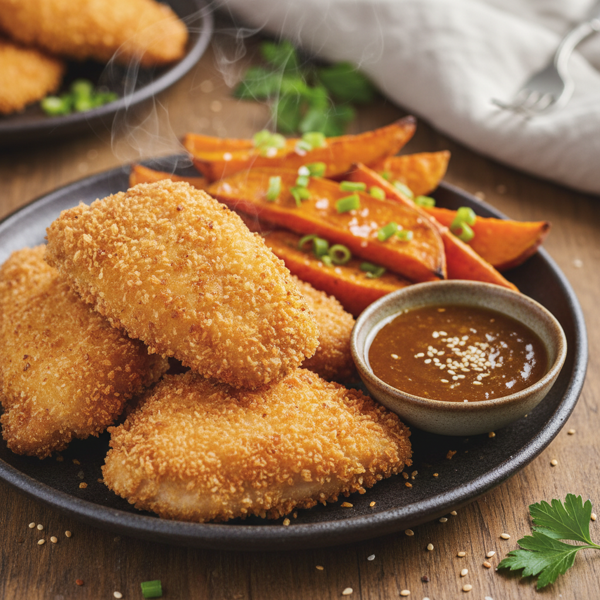
This Crispy Japanese-Style Chicken Thighs recipe brings a taste of Japan to your kitchen, inspired by my delightful summer holiday experience back home. The chicken is marinated in a flavorful blend of sake, balsamic vinegar, sugar, and soy sauce, then coated in cornstarch for an irresistibly crunchy exterior. Served alongside fried sweet potatoes, or satsuma imo, reminiscent of crispy French fries, this dish is sure to impress your family and friends with its unique flavors and textural contrast. Whether it's a weeknight dinner or a special occasion, this dish delivers a delicious and authentic taste of Japan.
N/A
Servings
N/A
Calories
11
Ingredients

Ingredients
sake
3 tablespoons (N/A)
balsamic vinegar
3 tablespoons (N/A)
sugar
2 tablespoons (N/A)
soy sauce
3 tablespoons (N/A)
garlic
1 clove (chopped)
vegetable oil
1 tablespoon (to be used in marinade)
bone-in chicken thighs
4 (skin on)
salt
to taste (N/A)
black pepper
to taste (N/A)
cornstarch
1/2 cup (for coating)
oil
for deep frying (N/A)
Instructions
1
In a mixing bowl, combine sake, balsamic vinegar, sugar, soy sauce, and chopped garlic to create the marinade.
2
Trim off any yellow fat from the chicken thighs and pierce the skin and meat with a fork to allow the marinade to penetrate better.
3
Season both sides of the chicken thighs generously with salt and pepper.
4
Pour the marinade over the chicken, ensuring each piece is well coated. Cover and refrigerate for at least 30 minutes, or up to 2 hours for deeper flavor.
5
In a deep frying pan or wok, heat oil over medium-high heat until it reaches 350°F (175°C).
6
While the oil is heating, remove the chicken from the marinade and pat it dry with kitchen paper towels to ensure crispiness.
7
Dredge the chicken thighs in cornstarch, shaking off any excess coating.
8
Carefully place the coated chicken into the hot oil, frying in batches to avoid overcrowding. Fry until golden brown and cooked through, about 8-10 minutes per side.
9
To check for doneness, insert a skewer into the thickest part of the chicken; if the juices run clear and not red, it's ready.
10
Once done, remove the chicken and place it on a wire rack or paper towels to drain excess oil. Serve hot alongside crispy fried sweet potatoes.
Nutrition Information
Frequently Asked Questions
Frequently Asked Questions
What is the inspiration behind this Crispy Japanese-Style Chicken recipe?
This recipe is inspired by the author's summer holiday experiences in Japan, aiming to bring an authentic taste of Japanese home cooking to your kitchen.
What makes the chicken thighs so crispy?
The chicken is patted dry after marinating and then dredged in cornstarch before being deep-fried, which creates a light and irresistibly crunchy exterior.
How long should I marinate the chicken?
You should marinate the chicken for at least 30 minutes, or up to 2 hours for a deeper infusion of flavors.
Can I use boneless chicken thighs instead?
Yes, you can use boneless chicken thighs, but keep in mind that they may cook slightly faster than the bone-in variety.
What are the main components of the marinade?
The marinade consists of sake, balsamic vinegar, sugar, soy sauce, and chopped garlic.
Why do I need to pierce the chicken with a fork?
Piercing the skin and meat with a fork allows the marinade to penetrate deeper into the chicken, ensuring better flavor throughout.
What temperature should the oil be for frying?
The oil should be heated to 350 degrees Fahrenheit (175 degrees Celsius) before adding the chicken.
What is the purpose of sake in this recipe?
Sake helps tenderize the meat and adds a distinct umami depth to the marinade.
Can I substitute the balsamic vinegar?
While balsamic vinegar adds a unique tang, you could substitute it with rice vinegar for a more traditional Japanese flavor profile.
Why is it important to pat the chicken dry before dredging?
Removing excess moisture ensures the cornstarch adheres properly and results in a crispier crust rather than a soggy one.
How do I know when the chicken is fully cooked?
Insert a skewer into the thickest part of the thigh; if the juices run clear and not red or pink, it is finished.
What are satsuma imo?
Satsuma imo are Japanese sweet potatoes, which are served fried alongside the chicken for a sweet and savory contrast.
Can I use chicken breasts for this recipe?
You can, but chicken thighs are recommended for their higher fat content, which keeps the meat juicy during deep frying.
What type of oil is best for deep frying this chicken?
A neutral oil with a high smoke point, such as vegetable oil, canola oil, or peanut oil, is best.
How long does the chicken take to fry per side?
The chicken thighs typically take about 8 to 10 minutes per side to cook through and turn golden brown.
Is this recipe gluten-free?
No, as soy sauce contains wheat. To make it gluten-free, substitute the soy sauce with tamari.
How should I drain the chicken after frying?
Place the finished chicken on a wire rack or paper towels to drain any excess oil and maintain crispiness.
Can I air fry this Japanese-style chicken?
While deep frying provides the most authentic crunch, you can try air frying at 400 degrees Fahrenheit, though the texture will be different.
What should I do if my oil temperature drops?
Fry the chicken in small batches to avoid overcrowding the pan, which helps maintain a consistent oil temperature.
How do I store leftovers?
Store any leftover chicken in an airtight container in the refrigerator for up to 3 days.
What is the best way to reheat the chicken?
To keep the exterior crispy, reheat the chicken in an oven or air fryer rather than a microwave.
Can I marinate the chicken overnight?
It is not recommended to marinate for more than 2 hours as the vinegar may begin to over-tenderize and change the texture of the meat.
What side dishes go well with this chicken?
In addition to fried sweet potatoes, it pairs well with steamed rice, a fresh cabbage salad, or miso soup.
How many servings does this recipe provide?
The recipe uses 4 bone-in chicken thighs, which typically serves 2 to 4 people.
Why use cornstarch instead of flour?
Cornstarch creates a thinner, crispier, and more delicate coating than standard all-purpose flour.
Do I need to remove the skin from the thighs?
No, keeping the skin on is essential for this recipe as it becomes very crispy and flavorful during the frying process.
Can I use frozen chicken?
Yes, but ensure the chicken is completely thawed and patted dry before starting the marinating process.
What kind of sugar should I use?
Standard granulated white sugar is recommended for the marinade.
What should I do with the leftover marinade?
The marinade that has come into contact with raw chicken should be discarded for safety reasons.
Does this dish taste like traditional Karaage?
It shares similarities with Karaage but features a unique flavor profile due to the inclusion of balsamic vinegar in the marinade.