Crispy Homemade Vegetable Samosas with Spiced Potato Filling

Indulge in the flavorful experience of making your very own vegetable samosas from scratch! This recipe yields crispy, golden brown pockets filled with a savory mixture of spiced potatoes, peas, and fresh herbs, making them a delightful Asian snack or appetizer. Made with a homemade dough that ensures the perfect flaky texture, these samosas can be enjoyed at room temperature or warm, lending them versatility for any occasion. Whether you're serving them at a party, as part of a meal, or simply enjoying them as a tasty snack, their enticing crunch and fragrant filling are sure to impress. You can also prepare these samosas in advance and refrigerate or freeze them, ensuring that you always have a delicious treat at hand. With the blend of spices and fresh ingredients, this recipe will transport your taste buds to another world!
N/A
Servings
125
Calories
16
Ingredients
Ingredients
unbleached all-purpose white flour
1 1/2 cups (sifted)
salt
1/4 teaspoon (fine)
soft unsalted butter
4 tablespoons (softened (or vegan butter alternative))
medium potatoes
4 (boiled, unpeeled, and cooled)
vegetable oil
4 tablespoons (for frying)
medium onion
1 (peeled and minced)
frozen peas
1 cup (thawed)
fresh ginger
1 tablespoon (peeled and grated)
Chinese parsley (cilantro)
3 tablespoons (finely minced)
salt
1 1/2 teaspoons (to taste)
ground coriander
1 teaspoon (for flavor)
garam masala
1 teaspoon (for flavor)
ground roasted cumin seeds
1 teaspoon (for flavor)
lemon juice
2 tablespoons (freshly squeezed)
oil
for frying (as needed)
flour
1/2 cup (for dusting)
Instructions
1
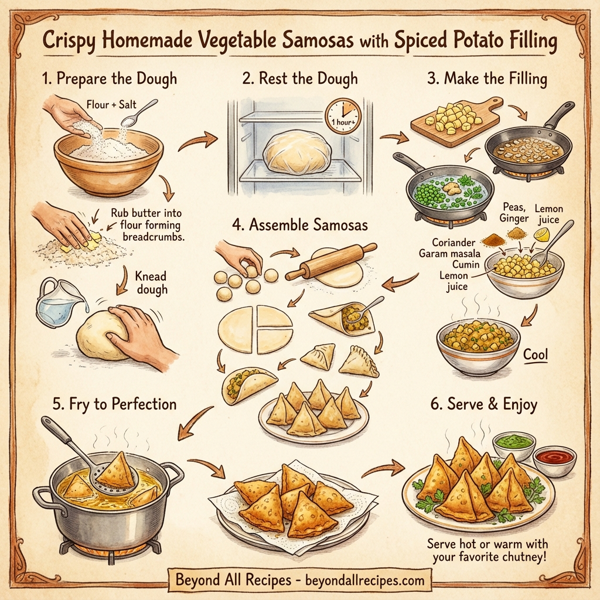
In a large mixing bowl, sift together the all-purpose flour and salt. Add the softened butter and rub it into the flour using your fingertips until the mixture resembles fine breadcrumbs.
2
Gradually add warm water, one tablespoon at a time, gathering the flour into a ball. You should use approximately 5 tablespoons of water in total. Once formed, knead the dough for about 10-15 minutes until it becomes soft and pliable.
3
Wrap the dough in plastic wrap and let it rest in the refrigerator for at least one hour, or overnight for enhanced flavor.
4
For the filling, peel the cooled boiled potatoes and dice them into 1/4-inch pieces. Heat 4 tablespoons of vegetable oil in a skillet over medium heat, then add the minced onion. Cook until the onion is lightly browned.
5
Stir in the frozen peas, grated ginger, and Chinese parsley, adding 3 tablespoons of water. Cover and simmer on low, stirring occasionally, until the peas are tender, adding more water if necessary.
6
Add the diced potatoes to the skillet along with salt, coriander, garam masala, roasted cumin, and lemon juice. Mix well and continue cooking gently for an additional 3-4 minutes. Taste and adjust seasoning as needed before allowing the mixture to cool.
7
Remove the dough from the refrigerator and knead it again. Divide it into 24 equal portions, rolling each into a ball and keeping them covered to prevent drying out.
8
On a lightly floured surface, flatten one dough ball and roll it into a 6-inch circle. Cut the circle in half, forming two semicircles. Take one semicircle and create a cone shape, overlapping the edges slightly and sealing them with a bit of water.
9
Fill the cone with a heaping tablespoon of the potato filling, then seal the top by pressing the edges together and adding water as needed. Flute the edges for an attractive finish. Repeat this process until all samosas are formed.
10
Heat oil in a deep fryer or wide pot to about 2.5 inches deep over medium-low heat. When the oil is ready, carefully add the samosas in batches, ensuring not to overcrowd the pan.
11
Fry the samosas until they are golden brown, turning them occasionally for even cooking. Once done, remove them using a slotted spoon and place them on paper towels to drain excess oil.
12
Serve hot or warm with your favorite chutney or dipping sauce.
Nutrition Information
5.4g
Fat
17.5g
Carbs
2.7g
Protein
1.7g
Fiber
0.4g
Sugar
Frequently Asked Questions
Frequently Asked Questions
What are vegetable samosas?
Vegetable samosas are crispy, golden brown pockets filled with a savory mixture of spiced potatoes, peas, and fresh herbs, typically served as an Asian snack or appetizer.
What type of flour is used for the samosa dough?
The dough is made using unbleached all-purpose white flour.
How do I achieve a flaky texture in the samosa crust?
To ensure a flaky texture, rub softened butter into the sifted flour and salt until the mixture resembles fine breadcrumbs before adding water.
How long should the samosa dough be kneaded?
The dough should be kneaded for about 10-15 minutes until it becomes soft and pliable.
Does the dough need to rest before rolling?
Yes, the dough should be wrapped in plastic and rested in the refrigerator for at least one hour, or even overnight for better flavor.
How do I prepare the potatoes for the filling?
The potatoes should be boiled, cooled, peeled, and then diced into 1/4-inch pieces.
What vegetables are included in the samosa filling?
The filling includes diced potatoes, frozen peas (thawed), and minced onions.
Which spices are used to flavor the potato filling?
The filling is flavored with ginger, salt, ground coriander, garam masala, and ground roasted cumin seeds.
How do I cook the peas for the filling?
Stir the peas with ginger and parsley in a skillet with a bit of water, then cover and simmer on low until the peas are tender.
Why is lemon juice added to the samosa filling?
Lemon juice is added at the end of the filling preparation to provide a fresh, tangy flavor that complements the spices.
How many portions should I divide the dough into?
The recipe instructs to divide the dough into 24 equal portions, which are then rolled and cut into halves to form 48 samosas.
What is the correct size to roll the dough balls?
Each dough ball should be flattened and rolled into a 6-inch circle.
How do I shape the samosas into cones?
Cut the 6-inch dough circle in half to create two semicircles. Fold one semicircle into a cone shape, overlapping the edges and sealing them with water.
How much filling goes into each samosa?
Use a heaping tablespoon of the potato and pea mixture for each samosa.
How do I seal the samosas so they don't open during frying?
Press the edges together using a bit of water to seal them, and flute the edges for an attractive and secure finish.
What is the best way to fry samosas?
Heat about 2.5 inches of oil in a deep fryer or wide pot over medium-low heat and fry the samosas in batches until golden brown.
Can I make these samosas vegan?
Yes, you can make them vegan by substituting the unsalted butter in the dough with a vegan butter alternative.
How many calories are in one serving of these samosas?
Each samosa contains approximately 125 calories.
What is the nutritional content regarding fat and carbohydrates?
Each samosa has about 5.4g of fat and 17.5g of carbohydrates.
How much protein is in each samosa?
There is approximately 2.7g of protein in each samosa.
What is the fiber content of this recipe?
Each samosa provides about 1.7g of fiber.
Can these samosas be prepared in advance?
Yes, you can prepare them in advance and either refrigerate or freeze them until you are ready to fry and serve.
What temperature should samosas be served at?
They are best enjoyed hot or warm, though they can also be served at room temperature.
What should I serve with vegetable samosas?
They are traditionally served with your favorite chutney or a dipping sauce.
What is Chinese parsley?
Chinese parsley is another name for fresh cilantro, which is used in the filling for its fragrant aroma.
Why should I use medium-low heat for frying?
Using medium-low heat ensures the samosas cook evenly and the crust becomes perfectly crispy without burning the outside too quickly.
Is it necessary to sift the flour?
Sifting the flour helps remove lumps and ensures a smoother dough consistency.
How do I keep the dough from drying out while working?
Keep the dough balls covered with a cloth or plastic while you work on individual pieces to prevent them from drying.
What is garam masala?
Garam masala is a blend of ground spices used in this recipe to give the potato filling its signature warm and fragrant flavor.
Can I use fresh ginger or is ground ginger better?
This recipe calls for fresh ginger, peeled and grated, to provide a bright and sharp flavor to the filling.