Crispy Herb-Infused Roast Turkey
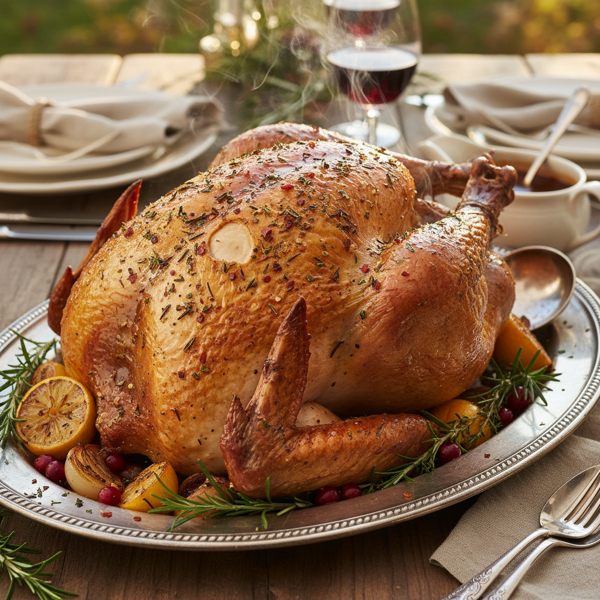
This Crispy Herb-Infused Roast Turkey is the star of any holiday feast, boasting a flavorful herb rub that seeps deep into the tender meat, ensuring every bite is a burst of deliciousness. The secret lies in the combination of dried and zesty herbs paired with a light touch of smoked paprika, which adds depth to the turkey's flavor profile. The roasting technique, inspired by Fine Cooking Magazine, results in a beautifully golden-brown, crispy skin that encases juicy, succulent meat. Ideal for gatherings of family and friends, this turkey is perfect for Thanksgiving, Christmas, or any special occasion. Serve it alongside your favorite sides, and don't forget to whip up some rich gravy with the pan drippings for an unforgettable meal.
N/A
Servings
N/A
Calories
14
Ingredients
Ingredients
Olive oil
3 tablespoons (None)
Dijon mustard
2 tablespoons (None)
Minced garlic
1 tablespoon (Minced)
Kosher salt
2 teaspoons (None)
Paprika
1 teaspoon (Smoked is preferred)
Black pepper
1/2 teaspoon (None)
Dried sage
1/2 teaspoon (Crumble)
Dried thyme
1/2 teaspoon (Crumble)
Oregano
1/2 teaspoon (Crumble)
Basil
1/2 teaspoon (Crumble)
Rosemary
1/2 teaspoon (Crumble)
Orange zest
1 (Zested)
Lemon zest
1 (Zested)
Whole turkey
1 (15 - 20 lb) (Kosher turkey preferred)
Instructions
1
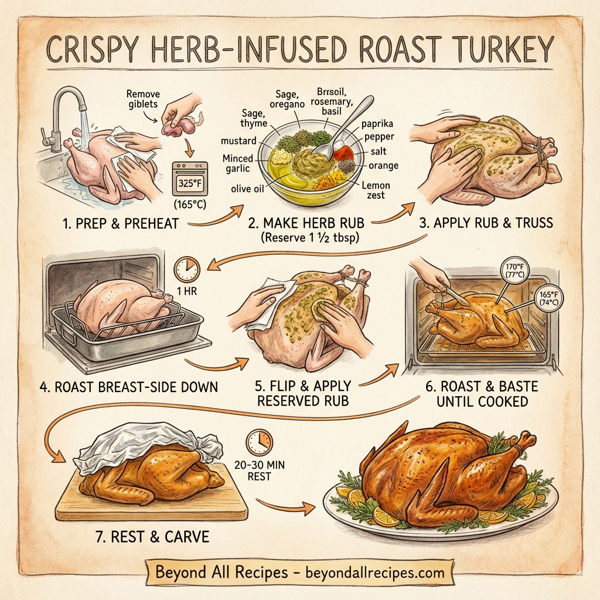
Preheat your oven to 325°F (165°C). Remove the neck, giblets, and tail from the turkey, and save those for making broth later. Rinse the turkey thoroughly, both inside and out, then pat it dry with paper towels. If desired, you can stuff the turkey now or prepare the stuffing separately. For an even cooking experience, truss the turkey legs with kitchen twine.
2
To prepare the rub: In a mixing bowl, combine the olive oil, Dijon mustard, minced garlic, kosher salt, paprika, pepper, dried sage, thyme, oregano, basil, rosemary, orange zest, and lemon zest. Mix well to form a paste. Reserve 1 1/2 tablespoons of the rub for later use.
3
Generously massage the remaining rub all over the turkey, making sure to carefully lift the skin and apply some directly to the meat beneath for enhanced flavor.
4
Place the turkey breast side down on a V-shaped rack in a heavy-duty roasting pan. This helps promote even cooking and browning. Roast for 1 hour.
5
After one hour, using paper towels for grip, carefully flip the turkey so it's breast side up. Rub the reserved rub over the breast, ensuring an even coating.
6
Continue to roast the turkey for an additional 2 to 2.5 hours, or until a meat thermometer inserted into the thickest part of the thigh reads 170°F (77°C) and the thickest part of the breast reaches at least 165°F (74°C). Baste the turkey every 30 minutes with the pan drippings to achieve the perfect golden-brown color, and rotate the pan as needed for even browning.
7
Once fully cooked, transfer the turkey to a carving board or platter and loosely tent with aluminum foil. Let it rest for 20 to 30 minutes before carving. This allows juices to redistribute for a moister turkey. Remove any trussing before slicing.
Nutrition Information
Frequently Asked Questions
Frequently Asked Questions
What oven temperature is best for roasting this turkey?
The oven should be preheated to 325°F (165°C) to ensure a steady and even roasting process.
What should I do with the turkey neck and giblets?
Remove the neck, giblets, and tail before roasting; you should save them to make a flavorful broth later.
How do I prepare the turkey's skin for the best results?
After rinsing the turkey thoroughly, pat it completely dry with paper towels to help the herb rub stick and to ensure the skin becomes crispy.
Should I truss the turkey legs?
Yes, trussing the turkey legs with kitchen twine is recommended for an even cooking experience.
What are the main components of the herb-infused rub?
The rub consists of olive oil, Dijon mustard, minced garlic, kosher salt, paprika, pepper, and a blend of dried sage, thyme, oregano, basil, and rosemary, plus citrus zests.
What kind of paprika is recommended for this recipe?
Smoked paprika is preferred as it adds a nice depth and zesty flavor profile to the turkey's skin.
Why should I reserve some of the herb rub?
You should reserve 1 1/2 tablespoons of the rub to apply to the breast after flipping the turkey halfway through cooking.
How should I apply the rub to the turkey?
Massage the rub all over the turkey, including carefully lifting the skin to apply it directly to the meat for enhanced flavor.
What type of roasting rack should I use?
A V-shaped rack in a heavy-duty roasting pan is ideal as it promotes even air circulation and browning.
Why do I start roasting the turkey breast side down?
Roasting breast side down for the first hour helps keep the breast meat moist and promotes even cooking.
How long does the turkey roast breast side down?
The turkey should roast breast side down for the first 1 hour of the cooking process.
When do I flip the turkey to be breast side up?
Flip the turkey to the breast side up position after the initial hour of roasting.
How do I safely flip a hot turkey?
Use paper towels for a firm grip to carefully flip the bird without burning yourself or tearing the skin.
What do I do once the turkey is flipped breast side up?
Once flipped, apply the reserved 1 1/2 tablespoons of herb rub over the breast for a final layer of flavor.
How often should I baste the turkey?
Baste the turkey with pan drippings every 30 minutes to achieve a perfect golden-brown color.
Why should I rotate the roasting pan?
Rotating the pan occasionally ensures that the turkey browns evenly on all sides.
What is the target internal temperature for the turkey thigh?
The thickest part of the thigh should reach an internal temperature of 170°F (77°C).
What is the target internal temperature for the turkey breast?
The thickest part of the breast should reach at least 165°F (74°C) to be considered fully cooked.
How long is the total roasting time?
After the first hour, the turkey typically needs an additional 2 to 2.5 hours of roasting, totaling 3 to 3.5 hours.
What should I do once the turkey is finished cooking?
Transfer it to a carving board or platter and loosely tent it with aluminum foil.
How long should the turkey rest before carving?
Let the turkey rest for 20 to 30 minutes to allow the juices to redistribute for a moister result.
Can I use fresh herbs instead of dried?
While the recipe calls for crumbled dried herbs like sage, thyme, and rosemary, you can use fresh, though dried provides a concentrated flavor for the rub.
What citrus zests are used in the rub?
The rub includes the zest of one orange and one lemon for a bright, aromatic flavor.
What size turkey does this recipe work for?
This recipe is designed for a whole turkey weighing between 15 and 20 pounds.
Is a specific type of turkey recommended?
A kosher turkey is preferred for this recipe to ensure the best flavor and texture.
Can I stuff the turkey using this recipe?
Yes, you can stuff the turkey before roasting or prepare the stuffing separately if preferred.
What can I make with the pan drippings?
The pan drippings are perfect for making a rich, savory gravy to serve alongside the meat.
How do I prevent the turkey skin from burning?
Basting every 30 minutes and monitoring the oven temperature helps, but you can also tent parts with foil if they brown too quickly.
When should I remove the kitchen twine?
Remove any trussing or kitchen twine after the turkey has rested and right before you begin carving.
What makes the skin particularly crispy?
The combination of patting the skin dry, using an oil-based rub, and roasting at a consistent temperature creates the crispy texture.