Crispy Herb-Crusted Baked Fish
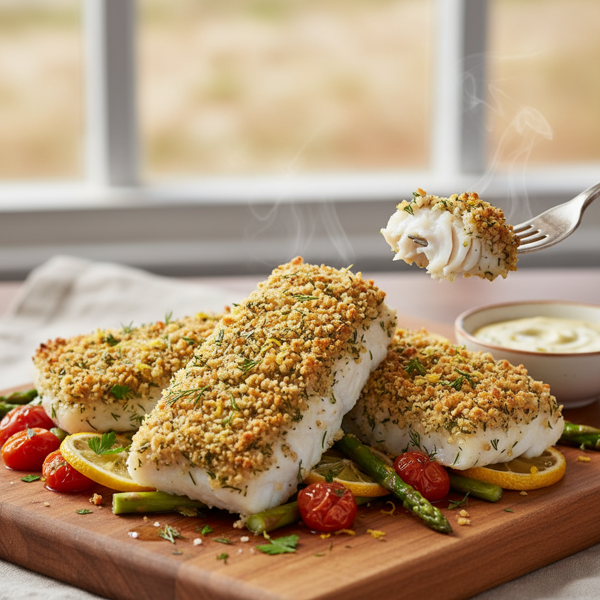
Discover the secret to perfectly crispy baked fish with our Crispy Herb-Crusted Baked Fish recipe! This easy and healthier alternative to frying ensures that you enjoy deliciously flavorful fish that's not only crispy on the outside but also tender and flaky on the inside. Using a broiler pan or a cooling rack over a cookie sheet is essential for achieving that ideal crunch without sogginess. This recipe is incredibly versatile, allowing you to customize the spices to your liking—swap out ingredients, adjust salt levels, or even replace cornmeal with panko for a different texture. Perfect for a light lunch or a tasty snack, this dish pairs beautifully with a squeeze of fresh lemon to brighten up the flavors. Don't let the ingredient list intimidate you; it's mostly spices and herbs designed to enhance the natural taste of the fish!
4
Servings
120
Calories
13
Ingredients
Ingredients
Tilapia fillets or other mild white fish
1 lb (Fillets, skinless)
Milk
1/4 cup (Whole milk or buttermilk)
Vinegar
1/2 teaspoon (White vinegar)
Dijon mustard
1 tablespoon (Prepared)
Cornmeal or panko breadcrumbs
1/2 cup (Coarse or fine)
Salt
1 teaspoon (Adjust to taste)
Onion powder
1 teaspoon (Ground)
Garlic powder
1 teaspoon (Ground)
Paprika
1 teaspoon (Ground)
Thyme
1/2 teaspoon (Dried)
Black pepper
1/2 teaspoon (Ground)
Cayenne pepper
1/2 teaspoon (Adjust to taste)
Lemon wedges
as needed (For serving)
Instructions
1
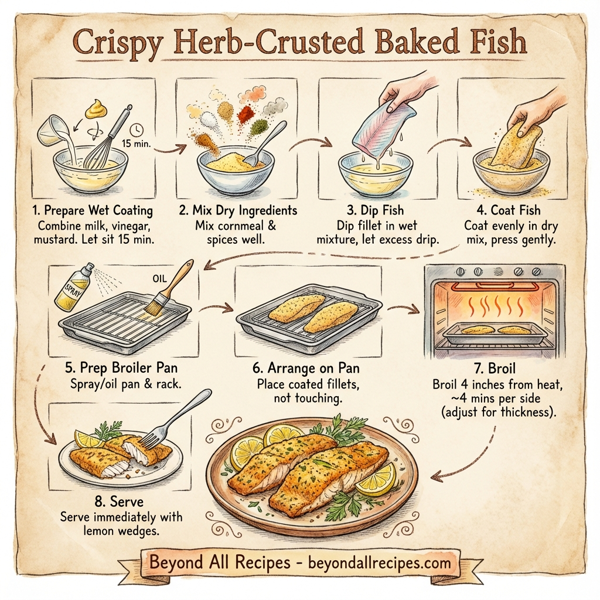
In a mixing bowl, combine the milk, vinegar, and Dijon mustard. Allow the mixture to sit for 15 minutes to create a tangy, buttermilk-like coating.
2
While the milk mixture thickens, prepare the dry coating. In another bowl, combine the cornmeal (or panko) with salt, onion powder, garlic powder, paprika, thyme, black pepper, and cayenne pepper. Mix well to ensure an even distribution of spices.
3
Take each fish fillet and dip it into the milk mixture, allowing any excess to drip off.
4
Next, coat the fillet in the dry mixture, pressing gently to adhere the coating evenly to both sides.
5
Prepare your broiler pan by spraying it with cooking spray or lightly brushing it with olive oil to prevent sticking.
6
Place the coated fillets on the prepared pan, ensuring they are not touching, which will help them crisp up evenly.
7
Position the pan under the broiler, about 4 inches from the heat source. Broil the fish for approximately 4 minutes on each side, or until the fish flakes easily when tested with a fork. Note that thicker fillets may require additional broiling time.
8
Once done, remove the fish from the oven and let it rest for a minute. Serve immediately with lemon wedges to enhance the flavor.
Nutrition Information
3g
Fat
12.5g
Carbs
10g
Protein
1g
Fiber
0.25g
Sugar
Frequently Asked Questions
Frequently Asked Questions
What is the secret to perfectly crispy baked fish?
Using a broiler pan or a cooling rack over a cookie sheet is essential for achieving an ideal crunch without sogginess.
What type of fish should I use for this recipe?
Tilapia fillets or any other mild white fish work best for this herb-crusted preparation.
Can I substitute cornmeal with something else?
Yes, you can replace the cornmeal with panko breadcrumbs for a different texture.
How do I make the tangy buttermilk-like coating?
Combine 1/4 cup of milk with 1/2 teaspoon of vinegar and 1 tablespoon of Dijon mustard, then let it sit for 15 minutes.
How long should the fish broil on each side?
Broil the fish for approximately 4 minutes on each side, or until it flakes easily with a fork.
Is this recipe a healthy alternative to frying?
Yes, baking the fish under the broiler provides a crispy texture similar to frying but with less oil.
How many calories are in a serving of this fish?
Each serving contains approximately 120 calories.
Can I adjust the spice level of the crust?
Absolutely; you can increase or decrease the cayenne pepper and black pepper to suit your taste preference.
How far should the fish be from the heat source when broiling?
Position your broiler pan about 4 inches away from the heat source.
How do I know when the fish is finished cooking?
The fish is done when it is golden brown on the outside and flakes easily when tested with a fork.
Should I use skinless or skin-on fish fillets?
Skinless fillets are recommended for this recipe to ensure the herb crust adheres to both sides.
How many servings does this recipe provide?
This recipe is designed to make 4 servings.
What should I serve with the crispy herb-crusted fish?
Serve immediately with fresh lemon wedges to brighten up the flavors.
Can I use dried herbs for the crust?
Yes, the recipe specifically calls for dried thyme along with other ground spices like paprika and garlic powder.
How much protein is in each serving?
Each serving provides about 10g of protein.
What is the purpose of the Dijon mustard in the milk mixture?
The Dijon mustard adds a tangy flavor and helps the dry coating stick more effectively to the fish.
How do I prevent the fish from sticking to the pan?
Spray the broiler pan with cooking spray or lightly brush it with olive oil before placing the fillets.
Can I reduce the salt in this recipe?
Yes, the salt amount can be adjusted to your dietary preference or taste.
What is the carbohydrate content per serving?
There are approximately 12.5g of carbohydrates per serving.
Is it necessary to let the milk and vinegar mixture sit?
Yes, allowing it to sit for 15 minutes lets the mixture thicken and develop a tangy flavor profile.
What if my fish fillets are thicker than 1 inch?
Thicker fillets may require a few additional minutes of broiling time to cook through completely.
Can I use this coating for other types of seafood?
While designed for mild white fish, this versatile herb crust can be used on other similar seafood varieties.
How much fat is in one serving?
One serving contains approximately 3g of fat.
Does this recipe use fresh or powdered garlic?
This recipe uses 1 teaspoon of garlic powder for even distribution in the dry coating.
What role does paprika play in the recipe?
Paprika adds a subtle earthiness and contributes to the golden-brown color of the crust.
Can I use a regular cookie sheet if I don't have a broiler pan?
You should place a cooling rack over the cookie sheet to allow air circulation, preventing the bottom from becoming soggy.
Is there any sugar in this recipe?
There is a minimal amount of sugar, approximately 0.25g per serving.
What is the prep time for the milk mixture?
The milk mixture requires 15 minutes of sitting time to achieve the right consistency.
Should the fillets touch each other on the pan?
No, ensure the fillets are not touching so they can crisp up evenly on all sides.
Can I use whole milk or buttermilk?
The recipe works with whole milk (combined with vinegar) or you can use standard buttermilk.