Crispy Golden Fried Yellow Squash
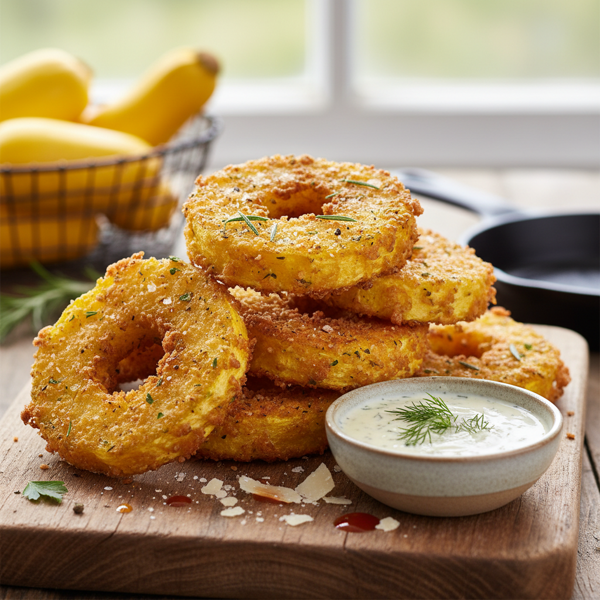
Crispy Golden Fried Yellow Squash is a delightful summer dish that captures the essence of fresh garden flavors. This classic recipe transforms the humble yellow squash into a crispy, savory treat that is perfect as a side dish or a light snack. Coated in a perfectly seasoned flour mixture and fried to golden perfection, this dish not only provides a satisfying crunch but also highlights the sweet, delicate flavor of fresh squash. It's a staple during the summer harvest, and you'll find it hard to resist devouring these tasty morsels straight from the skillet! Enjoy this simple yet beloved recipe that brings the taste of the garden to your table.
N/A
Servings
225
Calories
8
Ingredients
Ingredients
yellow squash
1 medium (washed and sliced into 1/4-inch rounds)
flour
1 cup (for coating)
frying oil
1 cup (for frying)
kosher salt
1 teaspoon (for seasoning)
white pepper
1 teaspoon (for seasoning)
parsley
1 tablespoon (fresh, chopped)
milk
1/4 cup (for egg mixture)
egg
1 large (beaten)
Instructions
1
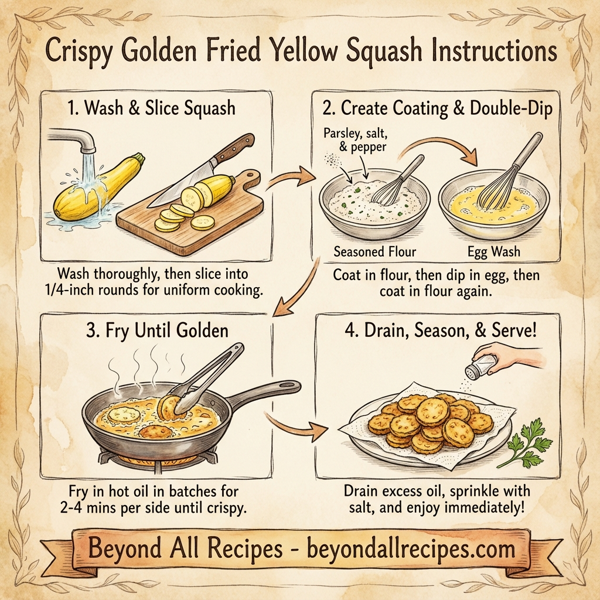
Thoroughly wash the yellow squash under running water and pat dry with a towel.
2
Slice the squash into 1/4-inch rounds, ensuring even thickness for uniform cooking.
3
In a frying pan, heat the frying oil over medium heat until hot (around 350°F/175°C).
4
In a shallow bowl, combine the flour, kosher salt, white pepper, and parsley, and mix well.
5
Coat each squash round lightly in the seasoned flour mixture, shaking off any excess.
6
In another bowl, whisk together the milk and egg until well combined and slightly frothy.
7
Dip each floured squash round into the egg mixture to fully coat it, then return it to the flour mixture, patting gently to ensure a thorough coating.
8
Carefully place the coated squash rounds into the hot oil in batches, ensuring not to overcrowd the pan. Fry until they turn golden brown and crisp, about 2-4 minutes on each side.
9
Once cooked, use a slotted spoon to transfer the fried squash to a plate lined with paper towels to drain excess oil.
10
Sprinkle the hot fried squash with a little extra kosher salt to taste, and serve immediately for the best flavor and crunch.
Nutrition Information
14g
Fat
23g
Carbs
5g
Protein
Frequently Asked Questions
Frequently Asked Questions
What is Crispy Golden Fried Yellow Squash?
It is a delightful summer dish that transforms yellow squash into a crispy, savory treat using a seasoned flour and egg coating, fried until golden.
How should I prepare the yellow squash before cooking?
Thoroughly wash the squash under running water, pat it dry with a towel, and slice it into 1/4-inch rounds.
What is the recommended thickness for the squash slices?
The squash should be sliced into 1/4-inch rounds to ensure even thickness and uniform cooking.
What temperature should the frying oil reach?
Heat the frying oil over medium heat until it reaches approximately 350°F (175°C).
What ingredients are in the seasoned flour mixture?
The mixture consists of 1 cup of flour, 1 teaspoon of kosher salt, 1 teaspoon of white pepper, and 1 tablespoon of fresh chopped parsley.
How do I make the egg mixture for dipping?
Whisk together 1/4 cup of milk and one large beaten egg until the mixture is well combined and slightly frothy.
What is the step-by-step coating process?
Coat the squash in the flour mixture first, dip into the egg mixture, and then return it to the flour mixture, patting gently for a thorough coating.
How long should I fry each side of the squash?
Fry the squash rounds for about 2-4 minutes on each side until they turn golden brown and crisp.
How should I drain the squash after frying?
Use a slotted spoon to transfer the fried squash to a plate lined with paper towels to remove excess oil.
When should I add the final seasoning?
Sprinkle the hot fried squash with a little extra kosher salt to taste immediately after removing them from the oil.
What are the nutritional facts for this dish?
Each serving contains approximately 225 calories, 14g of fat, 23g of carbohydrates, and 5g of protein.
How many ingredients are required for this recipe?
The recipe requires 8 ingredients: yellow squash, flour, frying oil, kosher salt, white pepper, parsley, milk, and an egg.
Can I use this recipe as a snack?
Yes, it is versatile and works perfectly as both a side dish and a light snack.
Is it important to pat the squash dry?
Yes, patting the squash dry after washing ensures the flour mixture adheres properly.
Should I shake off excess flour during the coating process?
Yes, you should shake off any excess flour after the first coating to keep the crust from becoming too thick or gummy.
Why shouldn't I overcrowd the pan while frying?
Overcrowding the pan can lower the oil temperature, leading to greasy squash that doesn't crisp properly.
What type of salt is best for this recipe?
Kosher salt is recommended for both the seasoning mixture and the final sprinkle.
Can I use dried parsley instead of fresh?
While fresh parsley is recommended for the best flavor, you can use dried parsley if fresh is unavailable.
Is this a good recipe for summer harvests?
Absolutely, it is a staple summer harvest recipe that highlights the sweet, delicate flavor of fresh squash.
What kind of pepper is used in the seasoning?
White pepper is used to provide a subtle heat without the dark specks of black pepper.
How much oil is needed for frying?
The recipe calls for 1 cup of frying oil, typically enough to provide an even layer in a frying pan.
What is the carbohydrate count per serving?
There are 23 grams of carbohydrates in this fried squash recipe.
How much protein is in this dish?
This dish provides 5 grams of protein per serving.
What is the total fat content?
The dish contains 14 grams of fat per serving.
What size squash should I use?
The recipe specifies using 1 medium-sized yellow squash.
Is this recipe considered easy?
Yes, it is tagged as an easy recipe and is a simple way to prepare garden vegetables.
Should the egg be beaten before mixing with milk?
Yes, using a beaten egg ensures it incorporates smoothly with the milk for a uniform dip.
Does this recipe contain fiber or sugar information?
No, the specific fiber, sugar, sodium, and cholesterol values are not provided in this nutritional breakdown.
How do I ensure the best crunch?
Serve the squash immediately after frying and draining to maintain the best crunch and flavor.
Can I substitute the yellow squash?
While this recipe is designed for yellow squash, the same breading and frying method works well for zucchini.