Crispy Gochujang Popcorn Chicken
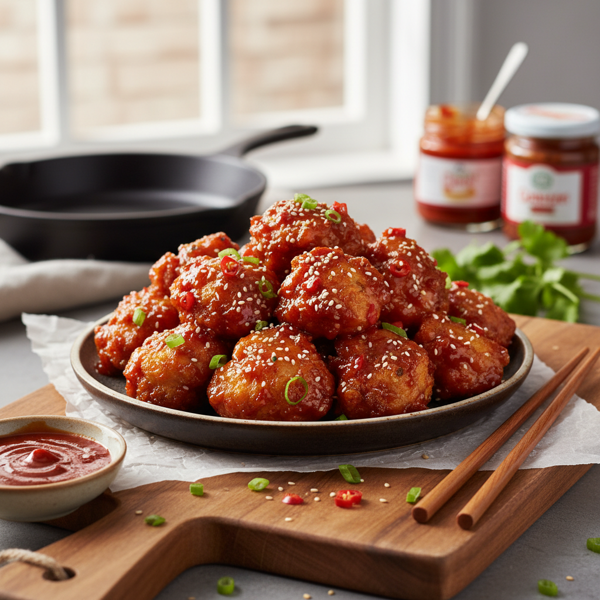
Indulge in this mouthwatering Crispy Gochujang Popcorn Chicken, a delightful fusion of Korean flavors and crispy texture. This dish features tender, bite-sized pieces of chicken marinated in rice wine vinegar and coated in a light cornstarch crust, fried to golden perfection, then tossed in a rich and savory gochujang sauce. Perfect as an appetizer or a main dish, this vibrant and flavorful chicken will elevate your dining experience and impress your family and friends. Serve it with a sprinkle of toasted sesame seeds and fresh scallions for a delicious garnish!
N/A
Servings
525
Calories
16
Ingredients
Ingredients
Chicken, boneless, skinless thighs
1 lb (cut into 1 inch pieces)
Rice wine vinegar
2 tablespoons
Cornstarch
1 cup
Kosher salt
1 teaspoon
Black pepper
1/2 teaspoon
Canola oil
1/2 cup (for frying)
Sesame seeds, toasted
1 tablespoon
Scallions
2 (thinly sliced)
Garlic clove
1 (minced)
Ginger
1 teaspoon (minced)
Gochujang (Korean red chili paste)
2 tablespoons
Soy sauce
1 tablespoon
Rice wine vinegar
1 tablespoon
Light brown sugar
2 tablespoons
Honey
1 tablespoon
Toasted sesame oil
1 tablespoon
Instructions
1
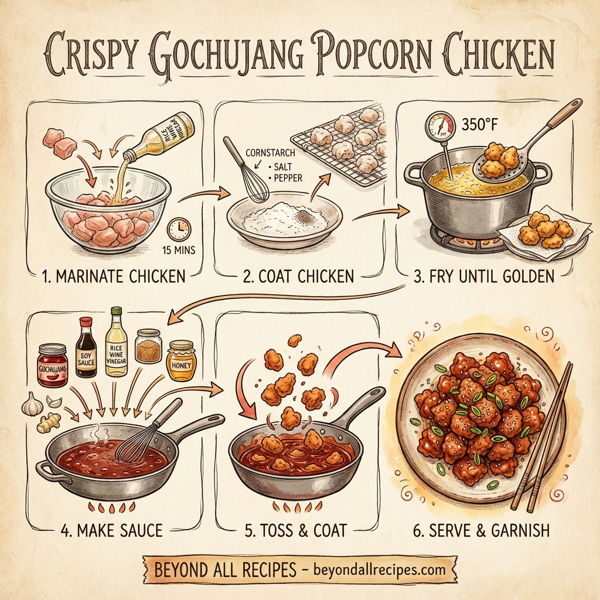
1. In a mixing bowl, combine the boneless, skinless chicken thighs with 2 tablespoons of rice wine vinegar. Allow the chicken to marinate for at least 15 minutes, which will help infuse it with flavor.
2
2. While the chicken is marinating, prepare the cornstarch coating. In a shallow dish, whisk together 1 cup of cornstarch, 1 teaspoon of kosher salt, and 1/2 teaspoon of black pepper.
3
3. In a heavy-bottomed pot, heat 1/2 cup of canola oil over medium-high heat until it reaches 350 degrees Fahrenheit.
4
4. Once the oil is hot, dredge the marinated chicken pieces in the cornstarch mixture, ensuring they are well-coated. Fry the chicken in batches for 4-5 minutes until they are golden brown and fully cooked. Make sure the oil temperature returns to 350 degrees between batches. Remove the fried chicken and place it on a paper towel-lined plate. Season lightly with salt.
5
5. For the sauce, combine 1 tablespoon of gochujang, 1 tablespoon of soy sauce, 1 tablespoon of rice wine vinegar, 2 tablespoons of light brown sugar, 1 tablespoon of honey, and 1 tablespoon of toasted sesame oil in a large sauté pan over medium-high heat. Add 1 minced garlic clove and 1 teaspoon of minced ginger for a burst of flavor.
6
6. Bring the sauce mixture to a boil, then reduce the heat to medium-low and let it cook for about 5 minutes, stirring often, until it thickens.
7
7. Add the fried chicken pieces to the sauce and gently toss them to ensure they are evenly coated.
8
8. Serve the crispy gochujang popcorn chicken warm, garnished with 1 tablespoon of toasted sesame seeds and 2 thinly sliced scallions.
Nutrition Information
25.75g
Fat
48.75g
Carbs
28.75g
Protein
Frequently Asked Questions
Frequently Asked Questions
What is Crispy Gochujang Popcorn Chicken?
It is a flavorful fusion dish featuring bite-sized chicken marinated in rice wine vinegar, fried in a cornstarch crust, and tossed in a sweet and savory gochujang-based sauce.
What cut of chicken is best for this recipe?
The recipe recommends using 1 lb of boneless, skinless chicken thighs cut into 1-inch pieces for the best flavor and texture.
How long should the chicken marinate?
The chicken should marinate in rice wine vinegar for at least 15 minutes to help tenderize it and infuse flavor.
What ingredients are used for the crispy coating?
The coating is made by whisking together 1 cup of cornstarch, 1 teaspoon of kosher salt, and 1/2 teaspoon of black pepper.
What is the recommended frying temperature?
The canola oil should be heated to 350 degrees Fahrenheit before frying the chicken.
How long should the chicken be fried?
The chicken pieces should be fried in batches for 4-5 minutes until they are golden brown and fully cooked.
What is Gochujang?
Gochujang is a Korean red chili paste that provides a rich, savory, and spicy base for the chicken sauce.
What are the main ingredients in the sauce?
The sauce consists of gochujang, soy sauce, rice wine vinegar, light brown sugar, honey, toasted sesame oil, minced garlic, and minced ginger.
How do you prepare the gochujang sauce?
Combine all sauce ingredients in a pan, bring to a boil, then reduce heat and simmer for about 5 minutes until it thickens.
How many calories are in this dish?
Each serving of this Crispy Gochujang Popcorn Chicken contains approximately 525 calories.
What is the protein content per serving?
This dish provides approximately 28.75g of protein per serving.
Is the sauce spicy?
Yes, the gochujang paste adds a spicy element, though it is balanced by the sweetness of honey and brown sugar.
What oil is recommended for frying?
Canola oil is recommended because it has a high smoke point and a neutral flavor suitable for frying.
How should the dish be garnished?
Garnish the chicken with 1 tablespoon of toasted sesame seeds and 2 thinly sliced scallions before serving.
Can chicken breast be used as a substitute?
Yes, chicken breast can be used, but thighs are preferred for their juiciness and ability to stay tender during frying.
What is the carbohydrate content?
There are approximately 48.75g of carbohydrates in this recipe.
How much fat does this recipe contain?
This recipe contains 25.75g of fat per serving.
Why is cornstarch used instead of flour?
Cornstarch creates a lighter, crunchier texture that stays crispy even after being tossed in the sauce.
Why should you fry the chicken in batches?
Frying in batches prevents the oil temperature from dropping too low, which ensures the chicken becomes crispy rather than greasy.
How do you keep the chicken crispy?
Ensure the oil is at 350°F and toss the fried chicken in the thickened sauce just before serving.
What does honey add to the sauce?
Honey adds a natural sweetness and creates a sticky, glossy glaze that clings well to the fried chicken.
What is the purpose of toasted sesame oil?
Toasted sesame oil adds a rich, nutty aroma and deep flavor that is characteristic of Korean cuisine.
Can I prepare components in advance?
The sauce can be made ahead of time, but the chicken is best fried and tossed just before eating to maintain its crunch.
How much rice wine vinegar is required in total?
You will need a total of 3 tablespoons: 2 for the marinade and 1 for the sauce mixture.
What equipment is needed?
You will need a mixing bowl, a shallow dish, a heavy-bottomed pot for frying, and a large sauté pan for the sauce.
How should the garlic and ginger be prepared?
The garlic (1 clove) and ginger (1 teaspoon) should be minced before being added to the sauce.
What type of sugar is used in the sauce?
The recipe calls specifically for 2 tablespoons of light brown sugar.
Why should the chicken be placed on paper towels?
Placing fried chicken on paper towels helps drain excess oil, keeping the pieces light and crispy.
Is this dish suitable for parties?
Yes, its bite-sized nature and bold flavor make it an excellent appetizer or finger food for gatherings.
What cuisine does this recipe belong to?
This recipe is a fusion dish based on Korean cuisine flavors.