Crispy Dill Buttermilk Fried Chicken
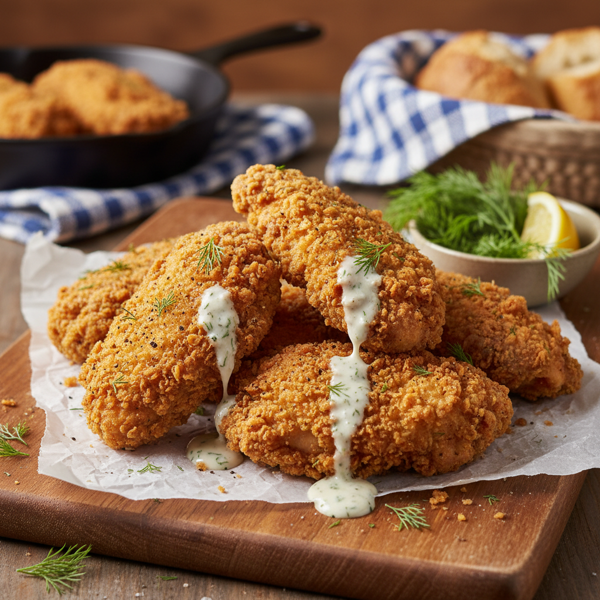
Experience the ultimate in fried chicken with this Crispy Dill Buttermilk Fried Chicken recipe. The chicken is marinated in tangy buttermilk, which not only tenderizes the meat but also adds a wonderful depth of flavor. The crispy coating, infused with the aromatic notes of dried dill weed and garlic, creates a mouthwatering crunch that you won't be able to resist. Allowing the chicken to soak in the buttermilk for several hours or overnight ensures a juicier bite. This fried chicken is perfect for a family dinner, gatherings, or special occasions, and will undoubtedly become a favorite in your kitchen.
6
Servings
N/A
Calories
7
Ingredients
Ingredients
Frying chickens
2 1/2-3 lbs (Cut into pieces)
Vegetable oil
For frying
All-purpose flour
2 1/2 cups
Dried dill weed
1 1/4 teaspoons
Garlic salt
1 teaspoon
Black pepper
3/4 teaspoon
Buttermilk
2 1/2 cups
Instructions
1
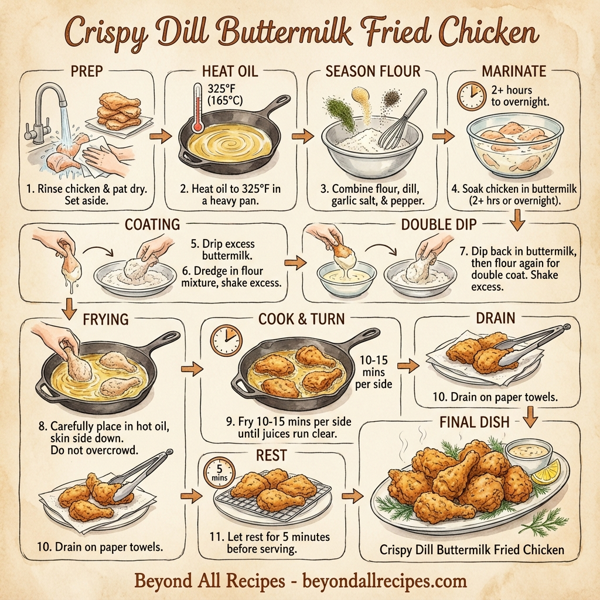
Rinse the chicken pieces under cold water and pat them dry with paper towels. Set aside.
2
In a heavy-bottomed frying pan, pour vegetable oil until it reaches half the depth of the pan. Heat the oil to 325°F (165°C).
3
In a large mixing bowl, combine the flour, dried dill weed, garlic salt, and black pepper. Mix well to ensure even distribution of the seasoning.
4
Pour the buttermilk into a separate bowl. If using, soak the chicken in the buttermilk for at least 2 hours, or preferably overnight in the refrigerator for maximum tenderness.
5
Remove a piece of chicken from the buttermilk, allowing any excess to drip off before proceeding.
6
Dredge the chicken piece lightly in the flour mixture, shaking off any excess flour.
7
Dip the coated chicken back into the buttermilk and then again into the flour mixture for a double coat. Shake off any excess.
8
Carefully place the coated chicken pieces skin side down into the hot oil, ensuring not to overcrowd the pan. Fry in batches if necessary.
9
Fry the chicken for 10 to 15 minutes on one side, then turn and cook for an additional 12 to 15 minutes or until the internal juices run clear when pierced with a fork.
10
Once cooked, remove the chicken pieces from the oil and place them on paper towels to drain any excess oil.
11
Let the chicken rest for about 5 minutes before serving to allow the juices to redistribute.
Nutrition Information
Frequently Asked Questions
Frequently Asked Questions
How long should I marinate the chicken in buttermilk?
For maximum tenderness and flavor, you should soak the chicken in buttermilk for at least 2 hours, or preferably overnight in the refrigerator.
What is the recommended frying temperature for the oil?
The vegetable oil should be heated to 325°F (165°C) in a heavy-bottomed frying pan before adding the chicken.
How do I get the chicken extra crispy?
This recipe uses a double-coating method: dredge the chicken in flour, dip it back into the buttermilk, and then dredge it in the flour mixture a second time.
What seasonings are used in the flour mixture?
The flour is seasoned with 1 1/4 teaspoons of dried dill weed, 1 teaspoon of garlic salt, and 3/4 teaspoon of black pepper.
How long does it take to fry the chicken pieces?
Fry the chicken for 10 to 15 minutes on the first side, then turn and cook for an additional 12 to 15 minutes until the juices run clear.
Should I fry the chicken skin side up or down first?
You should carefully place the coated chicken pieces into the hot oil skin side down.
How much chicken is required for this recipe?
The recipe calls for 2 1/2 to 3 lbs of frying chickens, cut into pieces.
Why is it important to let the chicken rest after frying?
Letting the chicken rest for about 5 minutes allows the internal juices to redistribute, ensuring a juicier bite.
What type of flour is used for the coating?
The recipe specifies using 2 1/2 cups of all-purpose flour.
How much oil should I use for frying?
Pour enough vegetable oil into your frying pan until it reaches half the depth of the pan.
Can I fry all the chicken at once?
No, you should fry the chicken in batches if necessary to ensure you do not overcrowd the pan, which can drop the oil temperature.
How do I know the chicken is done without a thermometer?
The chicken is generally done when the internal juices run clear when the meat is pierced with a fork.
Does this recipe include dill?
Yes, it uses dried dill weed in the flour mixture to provide a unique aromatic and tangy flavor profile.
What kind of pan is best for this recipe?
A heavy-bottomed frying pan is recommended for even heat distribution during the frying process.
How many servings does this recipe yield?
This recipe is designed to provide approximately 6 servings.
What is the primary role of buttermilk in this recipe?
The buttermilk serves two purposes: it acts as a tenderizing marinade and helps the flour coating adhere to the chicken.
Should I rinse the chicken before cooking?
Yes, the instructions suggest rinsing the chicken pieces under cold water and patting them dry with paper towels before starting.
Is this recipe suitable for a holiday meal?
Yes, it is tagged as a holiday meal and is perfect for family gatherings or special occasions.
What type of cuisine does this dish belong to?
This dish is classified as Southern cuisine and is a classic comfort food.
How should I drain the excess oil after frying?
Once removed from the oil, place the chicken pieces on paper towels to drain the excess grease.
Can I use fresh dill instead of dried?
The recipe calls for dried dill weed to be mixed into the flour; if using fresh, you would likely need a larger quantity and it may fry differently.
Does the recipe call for garlic?
The recipe uses garlic salt in the breading to provide a savory garlic flavor.
What do I do if the chicken is browning too fast?
Ensure your oil stays at 325°F; if it gets too hot, the outside will burn before the inside is cooked.
How much buttermilk is used in total?
The recipe requires 2 1/2 cups of buttermilk for the marinade and the dipping process.
Is there any preparation needed for the chicken pieces?
The chicken should be cut into pieces, rinsed, and patted dry with paper towels.
What tags are associated with this recipe?
Tags include fried chicken, buttermilk chicken, crispy chicken, dill chicken, comfort food, southern cuisine, and main dish.
Can I use other types of oil for frying?
While the recipe calls for vegetable oil, other high-smoke point oils can be used for frying.
Is the chicken dredging a messy process?
It can be; it involves moving the chicken from buttermilk to flour twice to create a thick, crispy crust.
What is the flavor profile of this fried chicken?
It is tangy from the buttermilk, aromatic from the dill, and savory due to the garlic salt and black pepper.
How do I ensure the coating doesn't fall off?
Patting the chicken dry before the first dredge and shaking off excess flour at each step helps the coating adhere properly.