Crispy Chinese Scallion Pancakes
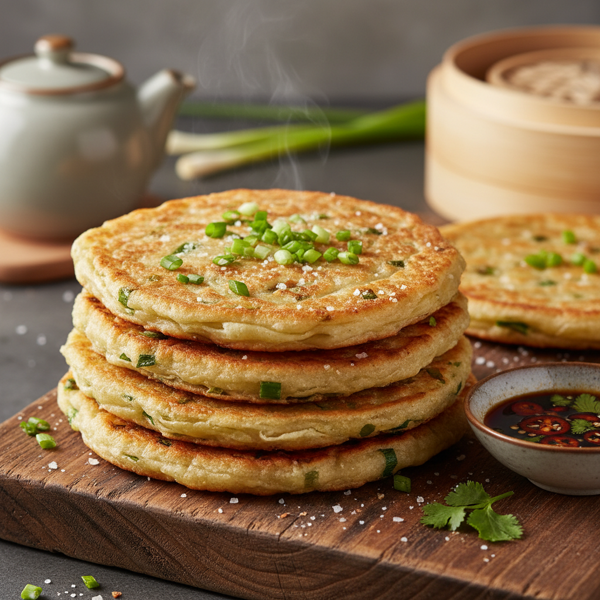
Crispy Chinese Scallion Pancakes are a delightful fusion of simplicity and flavor. With their crispy exterior and tender, chewy interior, these pancakes make for a perfect appetizer, light breakfast, or snack. Originating from bustling street vendors in China, they are made using just a handful of ingredients. Scallion pancakes are known for their aromatic essence of fresh green onions infused within soft layers of dough, creating an irresistible experience for the senses. Not only are they budget-friendly and quick to prepare, but these pancakes also embody the essence of traditional Chinese street food culture.
11
Servings
N/A
Calories
5
Ingredients
Ingredients
All-purpose flour
3 1/2 cups (None)
Water
1 1/4 cups (Boiled)
Green onions
3 (Finely chopped)
Cooking oil
1/4 to 1/2 cup (For brushing and frying)
Salt
To taste (None)
Instructions
1
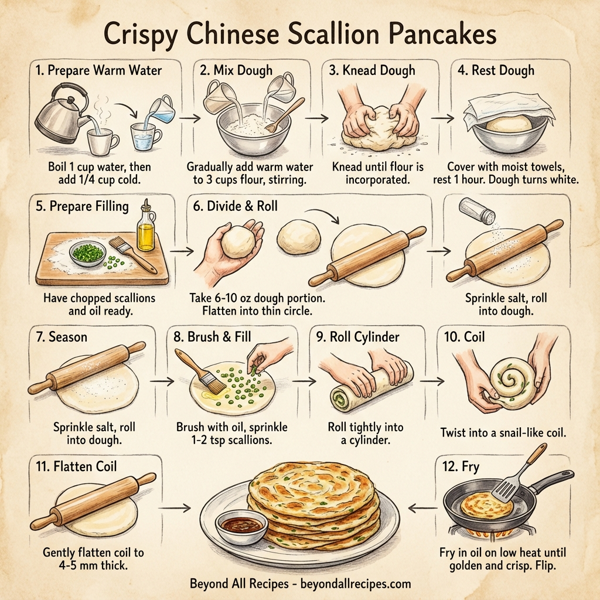
Boil 1 cup of water. Once boiling, combine it with 1/4 cup of cold water to slightly lower its temperature.
2
In a large mixing bowl, place 3 cups of all-purpose flour. Gradually add approximately 1 cup of the warm water to the flour, stirring consistently as you pour.
3
Knead the mixture until all the flour has incorporated into the dough. At first, it may appear that there isn't enough water, but continue kneading.
4
Once a rough dough forms, cover it with two layers of moist paper towels and let it rest for at least 1 hour. The dough should transition from grayish to white during this resting period.
5
On a floured surface, make sure to have your finely chopped green onions and cooking oil ready. Lightly flour your rolling pin and board. Repeat the following steps with all the dough and fillings.
6
Take a portion of the dough around 6-10 ounces in size. This will form the base of your pancake.
7
Flatten each dough ball with a rolling pin into a circle about 2 mm thick. Lightly sprinkle the surface with salt to taste and roll the salt into the dough with the pin.
8
Brush each dough circle with cooking oil, ensuring an even distribution. Sprinkle 1-2 teaspoons of chopped green onions evenly over each circle.
9
Roll the circle tightly into a cylinder, being careful not to overfill with onions, to avoid breaking it as you roll.
10
Twist the cylinder into a coil that resembles a snail shell, tucking the end underneath.
11
Gently flatten the coil with the rolling pin to about 4-5 mm thick. Although some onions may fall out, try to capture as much within the dough as possible.
12
Heat a frying pan with a thin layer of cooking oil over low heat. Fry each pancake until the bottom is crisp and golden. Flip and repeat on the other side until fully cooked.
13
Taste the first pancake to see if any adjustments are needed, such as adding more salt or scallions, or adjusting thickness.
Nutrition Information
Frequently Asked Questions
Frequently Asked Questions
What are Crispy Chinese Scallion Pancakes?
They are a traditional Chinese street food consisting of savory dough layers infused with fresh green onions, fried until crispy on the outside and chewy on the inside.
What is the origin of these pancakes?
These pancakes originate from the bustling street vendors in China and represent a classic element of Chinese street food culture.
What is the texture of a scallion pancake?
The texture is characterized by a crispy exterior and a tender, chewy interior with aromatic layers.
How many ingredients are needed for this recipe?
There are 5 main ingredients: all-purpose flour, water, green onions, cooking oil, and salt.
What type of flour is recommended for scallion pancakes?
This recipe uses 3 1/2 cups of all-purpose flour.
How do I prepare the water for the dough?
Boil 1 cup of water and then combine it with 1/4 cup of cold water to slightly lower the temperature before adding it to the flour.
How much water total is used in the dough?
The recipe uses approximately 1 1/4 cups of water in total.
What is the first step in making the dough?
Gradually add the warm water to the 3 cups of flour in a mixing bowl while stirring consistently.
What should I do if the dough seems too dry while kneading?
Continue kneading even if it appears there isn't enough water; the flour will eventually incorporate into a rough dough.
How long should the scallion pancake dough rest?
The dough should rest for at least 1 hour.
How should the dough be covered while resting?
Cover the dough with two layers of moist paper towels during the resting period.
What physical change happens to the dough after resting?
The dough will transition from a grayish color to white during its rest.
How many green onions are used in this recipe?
The recipe calls for 3 finely chopped green onions.
What size should each portion of dough be?
Each portion of dough should be between 6 to 10 ounces.
How thin should I roll the dough circles?
Flatten each dough ball into a circle that is approximately 2 mm thick.
When do I add salt to the recipe?
Sprinkle salt to taste onto the flattened 2 mm circle and roll it into the dough with a rolling pin.
Why is oil brushed onto the dough circle?
Cooking oil is brushed onto the dough to help create the distinct layers and ensure even distribution of the scallions.
How much scallion goes into each pancake?
Sprinkle 1-2 teaspoons of chopped green onions evenly over each dough circle.
How do I shape the dough to create layers?
Roll the dough circle into a tight cylinder, then twist that cylinder into a coil resembling a snail shell.
How thick should the final pancake be before frying?
Gently flatten the snail-shaped coil until it is about 4-5 mm thick.
What should I do if onions fall out while flattening the coil?
Try to capture as many onions as possible within the dough, but do not worry if some fall out.
What heat setting should I use for frying?
The pancakes should be fried over low heat in a thin layer of cooking oil.
How do I know when the pancake is finished cooking?
Fry until the bottom is crisp and golden, then flip and repeat until both sides are fully cooked.
Why should I taste the first pancake?
Tasting the first pancake allows you to adjust the salt, scallion amounts, or thickness for the rest of the batch.
How many servings does this recipe provide?
This recipe makes 11 servings.
Are these scallion pancakes vegetarian?
Yes, the ingredients consist of flour, water, onions, oil, and salt, making them suitable for vegetarians.
Can these pancakes be served as a breakfast item?
Yes, they are perfect for a light breakfast, an appetizer, or a quick snack.
Is this recipe considered budget-friendly?
Yes, it uses a handful of simple and inexpensive ingredients, embodying the essence of traditional street food.
How much oil is needed for the entire process?
You will need between 1/4 to 1/2 cup of cooking oil for both brushing the dough and frying.
What is the best way to roll the dough to prevent breaking?
Avoid overfilling with onions and roll the cylinder tightly to keep the structure intact.