Crispy Artisan Ciabatta Bread
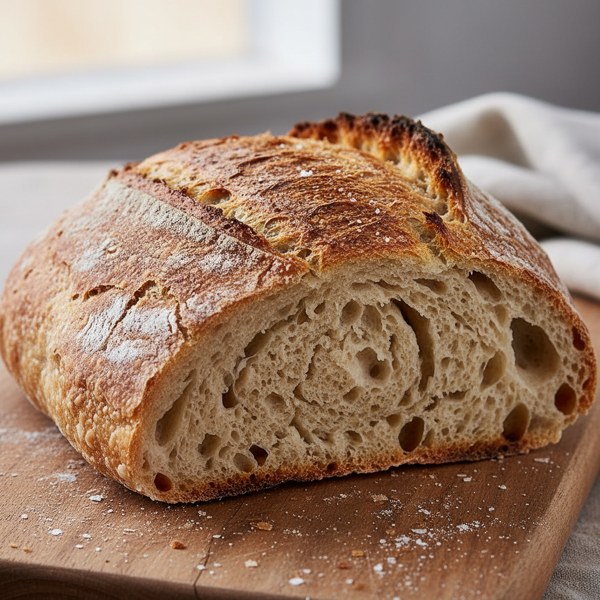
Experience the incredible flavor and texture of homemade ciabatta bread with this detailed recipe. This Ciabatta is known for its wonderfully crisp crust and tender, airy interior, making it the perfect companion for any meal. Perfect when combined with high-quality olive oil for dipping or transformed into a delicious Italian sandwich, layered with fresh mozzarella, aromatic basil, ripe tomatoes, and a drizzle of balsamic vinegar. The dough is incredibly sticky; however, this contributes to the bread’s characteristic texture, so resist the urge to add any extra flour. Whether served fresh out of the oven or as a side for hearty soups, this homemade ciabatta will elevate any dining experience and leave your taste buds wanting more. Dive into the art of bread-making and delight your loved ones with this incredible treat!
N/A
Servings
N/A
Calories
10
Ingredients
Ingredients
Active Dry Yeast
1/8 teaspoon (For sponge)
Warm Water
2 tablespoons (Between 105-115°F for sponge)
Room Temperature Water
1/3 cup (For sponge)
Bread Flour
1 cup (For sponge)
Active Dry Yeast
1/2 teaspoon (For bread)
Warm Milk
2 tablespoons (Between 105-115°F for bread)
Room Temperature Water
2/3 cup (For bread)
Olive Oil
1 tablespoon (For bread)
Bread Flour
2 cups (For bread)
Salt
1 1/2 teaspoons (For bread)
Instructions
1
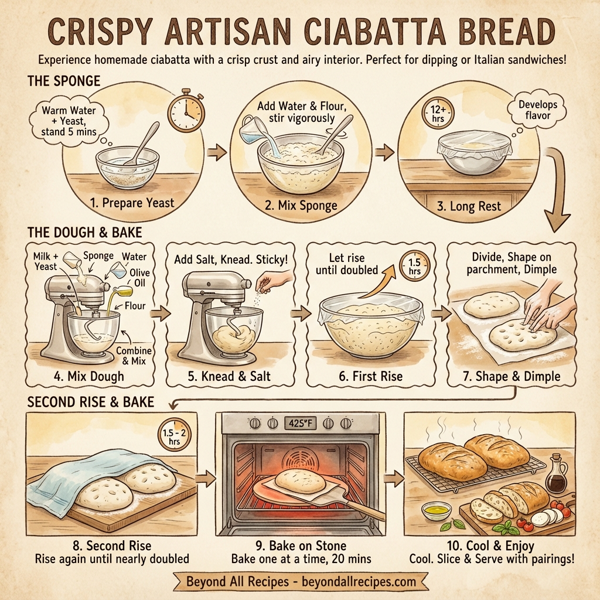
Begin by making the sponge: In a small bowl, stir together the warm water (between 105-115°F) and 1/8 teaspoon of active dry yeast. Allow it to stand for 5 minutes, or until it becomes creamy.
2
Transfer the yeast mixture to a larger bowl. Add 1/3 cup of room-temperature water and 1 cup of bread flour. Stir vigorously for about 4 minutes until well combined.
3
Cover the bowl with plastic wrap and let the sponge sit at a cool room temperature for at least 12 hours, or up to 1 day, allowing the flavors to develop.
4
To make the bread, combine 1/2 teaspoon of active dry yeast and 2 tablespoons of warm milk (between 105-115°F) in a small bowl and let it stand for 5 minutes until creamy.
5
In the bowl of a standing electric mixer fitted with a dough hook, combine the milk mixture, sponge, 2/3 cup of room-temperature water, olive oil, and 2 cups of bread flour at low speed until the flour is moistened.
6
Increase the speed to medium and beat the dough for about 3 minutes. Then, add 1 1/2 teaspoons of salt and continue to beat for an additional 4 minutes.
7
The dough will be very sticky and full of bubbles. Carefully scrape it into a lightly oiled bowl, cover it with plastic wrap, and let it rise until it doubles in size, about 1 1/2 hours.
8
Prepare for baking by cutting two pieces of parchment paper, each approximately 12 inches by 6 inches, and flouring them well. Once the dough has risen, turn it out onto a well-floured surface and cut it in half.
9
Transfer each half of the dough onto the parchment paper. From each half, gently shape them into irregular ovals about 9 inches in length. Dimple the tops of each loaf with floured fingers.
10
Dust the tops with additional flour, cover them with a dampened kitchen towel, and allow them to rise for another 1 1/2 to 2 hours, until nearly doubled.
11
At least 45 minutes before baking, preheat your oven to 425°F with a pizza stone placed on the lowest rack.
12
Carefully transfer one loaf, still on the parchment, onto the hot pizza stone and bake for 20 minutes, or until the bread is pale golden in color.
13
Remove the loaf to a cooling rack and repeat the baking process with the second loaf. Allow both loaves to cool before slicing.
Nutrition Information
Frequently Asked Questions
Frequently Asked Questions
What is the characteristic texture of this Ciabatta bread?
This Artisan Ciabatta is known for its wonderfully crisp crust and tender, airy interior.
How should I serve homemade ciabatta?
It is perfect when served with high-quality olive oil for dipping or used for Italian sandwiches layered with mozzarella, basil, and tomatoes.
Why is the ciabatta dough so sticky?
The dough is incredibly sticky by design, which contributes to the bread’s characteristic airy texture; you should not add extra flour.
What is the first step in making the bread sponge?
Stir together 1/8 teaspoon of active dry yeast and warm water between 105-115°F and let it stand for 5 minutes.
How long does the sponge need to sit?
The sponge should sit at a cool room temperature for at least 12 hours or up to one full day.
What are the ingredients for the sponge?
The sponge consists of active dry yeast, warm water, room-temperature water, and bread flour.
What temperature should the water be for the sponge?
The warm water used to activate the yeast for the sponge should be between 105-115°F.
How do I prepare the yeast for the main bread dough?
Combine 1/2 teaspoon of active dry yeast with 2 tablespoons of warm milk and let it stand for 5 minutes until creamy.
What type of mixer is recommended for this recipe?
A standing electric mixer fitted with a dough hook is recommended for mixing the ciabatta dough.
How long should I beat the dough after adding the sponge?
Beat the dough on medium speed for about 3 minutes before adding salt, then for an additional 4 minutes after the salt.
When do I add salt to the dough?
Salt is added after the dough has been beaten at medium speed for the first 3 minutes.
How long is the first rise for the dough?
The dough should rise in a lightly oiled bowl for about 1.5 hours until it doubles in size.
What size should the parchment paper be for the loaves?
Cut two pieces of parchment paper, each approximately 12 inches by 6 inches, and flour them well.
How many loaves does this recipe make?
This recipe makes two loaves of ciabatta bread.
How should I shape the ciabatta loaves?
Shape each half of the dough into irregular ovals approximately 9 inches in length.
What is the purpose of dimpling the dough?
Dimpling the tops of the loaves with floured fingers helps create the traditional artisan texture and appearance.
How long is the second rise?
The second rise takes between 1.5 to 2 hours until the loaves are nearly doubled in size.
At what temperature should the oven be set?
The oven should be preheated to 425°F for baking the ciabatta.
Where should the pizza stone be placed in the oven?
The pizza stone should be placed on the lowest rack of the oven.
How long should I preheat the pizza stone?
Preheat the oven and pizza stone for at least 45 minutes before you begin baking.
How do I bake the loaves on the stone?
Transfer one loaf at a time, still on the parchment paper, onto the hot stone and bake for 20 minutes.
What color should the bread be when finished?
The ciabatta bread is done when it reaches a pale golden color.
How long do I bake each loaf?
Each loaf takes approximately 20 minutes to bake in the preheated oven.
Should I bake both loaves at the same time?
The instructions recommend baking one loaf first and then repeating the process with the second loaf.
Can I slice the bread immediately after baking?
It is best to allow both loaves to cool on a rack before slicing.
Does this recipe use olive oil?
Yes, 1 tablespoon of olive oil is included in the main bread dough.
What type of flour is best for this recipe?
Bread flour is required for both the sponge and the main dough to ensure the correct structure.
How much total bread flour is needed?
The recipe calls for a total of 3 cups of bread flour (1 cup for the sponge and 2 cups for the dough).
Is milk used in this ciabatta recipe?
Yes, the recipe uses 2 tablespoons of warm milk to activate the yeast for the main dough.
What kind of yeast should I buy?
You should use active dry yeast for this ciabatta bread recipe.