Crisp & Tangy Refrigerator Dill Pickles
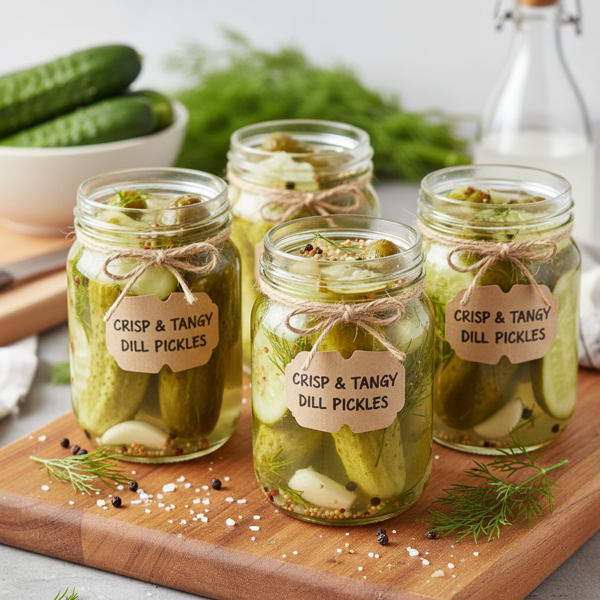
Craving a burst of crunch and flavor without the hassle of canning? These Crisp & Tangy Refrigerator Dill Pickles are perfect for satisfying your pickle cravings in just a few minutes! This simple, no-cook recipe produces 3 to 4 half pint jars of delicious pickles ready to enhance your meals or be enjoyed as a snack. The best part? You can customize these pickles with your choice of fresh vegetables like baby corn, cucumbers, or even chickpeas, allowing you to experiment and find your favorite combinations. Just be patient as they steep in the fridge—your taste buds will thank you after a week of anticipation!
N/A
Servings
N/A
Calories
10
Ingredients
Ingredients
water
2 cups (none)
vinegar
1/4 cup (none)
pickling salt
1 tablespoon (none)
dill sprigs
4 sprigs (fresh)
garlic clove
1 clove (split in half)
bay leaves
3-4 leaves (optional) (none)
mustard seeds
1 tablespoon (optional) (none)
black peppercorns
1/2-1 tablespoon (optional) (none)
chili flakes
to taste (none)
carrots or cucumbers
1-2 lbs (prepared for packing)
Instructions
1
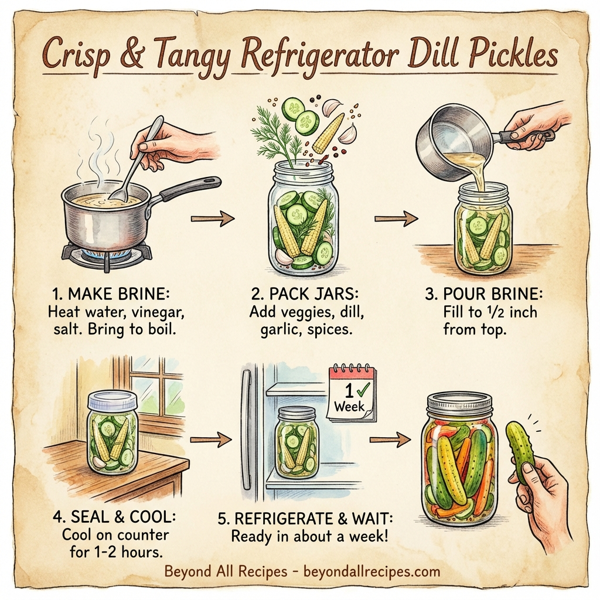
In a small saucepan, combine water, vinegar, and pickling salt. Heat over medium-high to bring to a boil, then remove from heat. Skipping this step is possible but may lengthen the time for the pickles to develop flavor.
2
Prepare your sterilized jars by packing them tightly with your chosen vegetables. For each jar, add 1 sprig of fresh dill, half a garlic clove, and, if desired, a bay leaf. Sprinkle mustard seeds, peppercorns, and chili flakes in each jar to your taste.
3
Carefully pour the hot brine into each jar, filling to about 1/2 inch from the top. Be sure the vegetables are submerged in the brine.
4
Seal each jar with a plastic screw-on lid and allow them to cool on the counter for 1 to 2 hours.
5
Once cooled, place the jars in the refrigerator. Your pickles will be ready to enjoy in about a week, with thinner vegetables like baby corn infusing faster than heartier options like carrots.
Nutrition Information
Frequently Asked Questions
Frequently Asked Questions
What are Crisp & Tangy Refrigerator Dill Pickles?
They are a no-cook, small-batch pickle recipe designed for refrigerator storage rather than traditional canning.
How long does it take to prepare these pickles?
Preparation takes only a few minutes, followed by a short cooling period and one week of steeping in the refrigerator.
Is canning equipment required for this recipe?
No, this is a refrigerator pickle recipe that does not require a boiling water bath or specialized canning equipment.
How many jars does this recipe produce?
This recipe typically makes 3 to 4 half-pint jars.
What types of vegetables can I pickle with this brine?
You can use cucumbers, carrots, baby corn, or even chickpeas.
Can I use baby corn for this recipe?
Yes, baby corn is a recommended vegetable and tends to infuse with flavor faster than heartier vegetables.
Are chickpeas a good option for pickling?
Yes, the recipe suggests chickpeas as a creative and delicious vegetable choice for these pickles.
Do I need to boil the brine?
While you can skip boiling the water, vinegar, and salt, heating them helps the flavors develop more quickly.
What is the ratio of water to vinegar in the brine?
The brine uses 2 cups of water and 1/4 cup of vinegar.
What kind of salt is used for these pickles?
The recipe calls for 1 tablespoon of pickling salt.
How much garlic should I add to each jar?
Each jar should contain half of a garlic clove.
How many dill sprigs are needed?
The recipe uses 4 fresh dill sprigs in total, placing 1 sprig in each jar.
Are the bay leaves mandatory?
No, the bay leaves are optional but recommended for extra flavor.
What spices provide the 'tangy' flavor?
The tanginess comes from the vinegar, mustard seeds, peppercorns, and optional chili flakes.
How much mustard seed is recommended?
You can use up to 1 tablespoon of mustard seeds for the entire batch.
Can I make these pickles spicy?
Yes, you can add chili flakes to taste to increase the spice level.
What type of peppercorns should I use?
The recipe specifies using black peppercorns, approximately 1/2 to 1 tablespoon for the batch.
Should the jars be sterilized before packing?
Yes, you should prepare sterilized jars before packing them tightly with vegetables.
How much headspace should be left in the jar?
You should fill the jars with brine until it is about 1/2 inch from the top.
Do the vegetables need to be fully covered?
Yes, ensure all vegetables are completely submerged in the brine.
What kind of lids are best for refrigerator pickles?
Plastic screw-on lids are recommended for sealing the jars.
How long should the jars cool before refrigerating?
Allow the jars to cool on the counter for 1 to 2 hours.
How long must I wait before eating the pickles?
The pickles will be ready to enjoy after approximately one week in the refrigerator.
Which vegetables pickle the fastest?
Thinner vegetables, such as baby corn, will infuse with flavor faster than heartier options like carrots.
How many pounds of vegetables are needed?
The recipe requires approximately 1 to 2 pounds of vegetables.
Is this a good recipe for beginners?
Yes, it is an easy, no-cook recipe perfect for those new to pickling.
Can I adjust the ingredient amounts?
Yes, the recipe allows for customization of spices like mustard seeds and chili flakes to suit your taste.
What is the benefit of letting them steep for a week?
A week of steeping allows the brine and aromatics to fully penetrate the vegetables for maximum flavor.
Are these pickles considered a healthy snack?
Yes, they are a flavorful, vegetable-based snack with no added sugars in this specific recipe.
Can I reuse the brine once the pickles are gone?
While not explicitly mentioned, refrigerator brine is often flavorful enough to be used in salad dressings or for another quick batch of vegetables.