Creamy Whey Ricotta Cheese
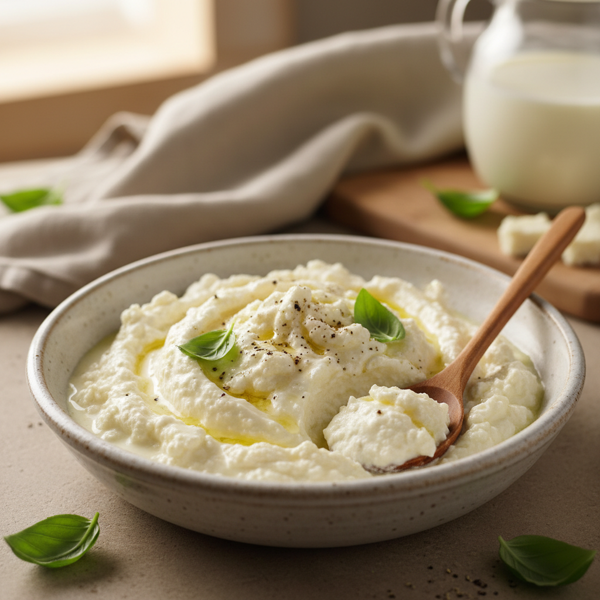
Transform your leftover whey into a delightful and creamy ricotta cheese with this simple recipe! After making your favorite cheese, you typically end up with a pot full of whey, which often goes to waste. In Italy, ricotta means 'recooked', reflecting the origin of this delicious cheese. By reheating the whey, you can capture the rich flavors and textures left behind after your cheesemaking process. This recipe not only helps reduce waste but also creates a versatile cheese that can be used in a myriad of dishes, from pastas and salads to spreads and desserts. Add a touch of salt and fresh herbs like chives for an elevated flavor experience!
2
Servings
65
Calories
3
Ingredients
Ingredients
Whey
1 gallon (leftover from cheesemaking session)
Salt
1 pinch (to taste (optional))
Fresh chives
1 tablespoon (chopped (optional))
Instructions
1
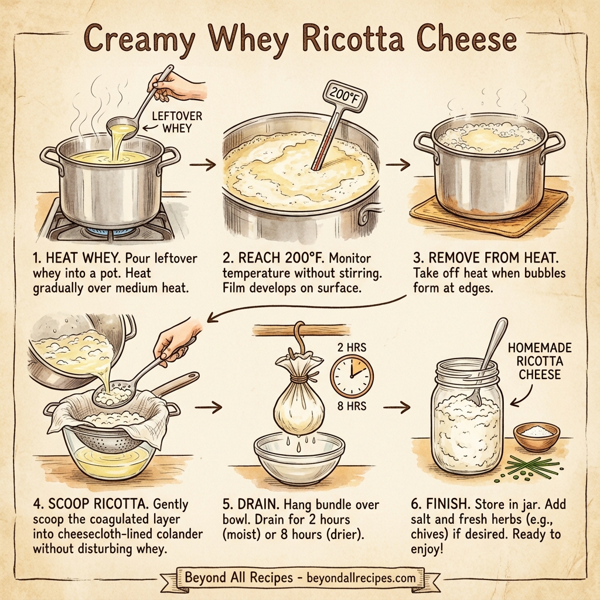
In a large stainless steel pot, pour in the leftover whey and heat it gradually over medium heat.
2
Monitor the temperature carefully, allowing the whey to reach 200 degrees Fahrenheit without stirring. You'll notice a film developing on the surface, which is the beginning of your ricotta.
3
As the whey reaches the target temperature, take it off the heat. Bubbles should form around the edges, confirming that the whey is adequately heated.
4
Using a slotted spoon or ladle, gently scoop the coagulated layer of ricotta that has formed on top of the whey. Be sure to do this without disturbing the clear whey beneath.
5
Transfer the scooped ricotta into a cheesecloth-lined colander set over a bowl to catch any draining liquid.
6
Once all the ricotta has been scooped out, gather the four corners of the cheesecloth and tie them together securely. Hang this bundle over the bowl to allow excess whey to drain.
7
For a moist ricotta texture, let it drain for 2 hours. If you prefer a drier ricotta, allow it to hang for 8 hours.
8
After draining, carefully remove your ricotta from the cheesecloth and store it in a mason jar or plastic container. If desired, mix in a pinch of salt and freshly chopped herbs like chives for added flavor. Your homemade ricotta is now ready to use in a variety of recipes!
Nutrition Information
3.5g
Fat
2g
Carbs
6g
Protein
Frequently Asked Questions
Frequently Asked Questions
What is Creamy Whey Ricotta Cheese?
It is a fresh cheese made by reheating leftover whey from cheesemaking to capture the remaining proteins and flavors.
What does the word 'ricotta' mean?
In Italian, ricotta means 'recooked,' which describes the process of heating the whey a second time to produce the cheese.
How much whey is needed for this recipe?
The recipe requires 1 gallon of leftover whey from a previous cheesemaking session.
To what temperature should the whey be heated?
The whey should be heated gradually until it reaches 200 degrees Fahrenheit.
Should I stir the whey while it is heating?
No, you should allow the whey to reach the target temperature without stirring to allow the ricotta film to form.
How do I know when the ricotta is forming?
You will notice a film developing on the surface of the liquid as it heats up.
What visual cues indicate the whey is hot enough?
Bubbles should begin to form around the edges of the pot when it reaches the target temperature.
What tool should I use to remove the ricotta?
A slotted spoon or a ladle is ideal for gently scooping the coagulated layer of ricotta off the top.
How do I drain the ricotta?
Transfer the scooped ricotta into a cheesecloth-lined colander set over a bowl.
How long should I drain the cheese for a moist texture?
For a moist ricotta, let the cheesecloth bundle drain for approximately 2 hours.
How do I make a drier ricotta cheese?
To achieve a drier consistency, allow the ricotta to hang and drain for 8 hours.
What kind of pot is recommended?
A large stainless steel pot is recommended for heating the whey safely and evenly.
Can I add flavor to the homemade ricotta?
Yes, you can mix in a pinch of salt and fresh herbs like chives after the draining process.
How many servings does this recipe yield?
This recipe yields 2 servings of creamy ricotta cheese.
What is the calorie count per serving?
There are approximately 65 calories per serving of this ricotta.
How much protein is in this cheese?
Each serving contains about 6 grams of protein.
What is the fat content per serving?
Each serving contains approximately 3.5 grams of fat.
How many carbohydrates are in the ricotta?
There are 2 grams of carbohydrates per serving.
Is there any fiber in this recipe?
No, this ricotta cheese contains 0 grams of fiber.
How should I store the finished ricotta?
Store the ricotta in a mason jar or a plastic container in the refrigerator.
What can I use this ricotta for?
It is highly versatile and can be used in pastas, salads, spreads, and desserts.
Is this recipe good for reducing food waste?
Yes, it is an excellent way to use up leftover whey that would otherwise be discarded.
What happens if I stir the whey while it heats?
Stirring can disturb the formation of the delicate ricotta curds that gather on the surface.
Do I need to add any acid like vinegar or lemon juice?
This specific recipe focuses on the 'recooking' of leftover whey without additional acidifiers.
What color is the whey beneath the ricotta?
Once the ricotta has coagulated on top, the liquid beneath should appear as clear whey.
How much salt should I add?
A pinch of salt is recommended, but you can adjust it to your personal taste.
Can I use dried chives instead of fresh?
While fresh chives provide the best flavor, dried herbs can be used as a substitute if necessary.
Is this considered an artisan cheese?
Yes, making ricotta from scratch using traditional whey-heating methods is a form of artisan cheesemaking.
What is the preparation time for the chives?
The chives should be freshly chopped before being mixed into the finished cheese.
Can this be made by beginners?
Yes, this is a simple and accessible recipe for anyone interested in home cheesemaking.