Creamy Vegan Greek Lemon Rice Soup
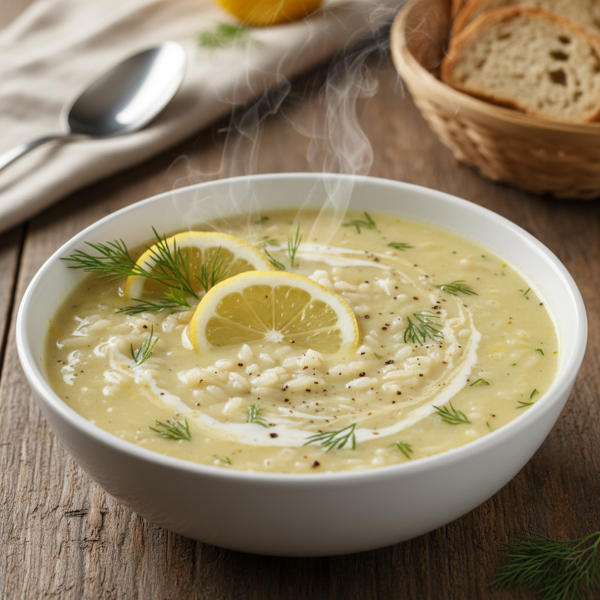
This Creamy Vegan Greek Lemon Rice Soup offers a delightful twist on the traditional Avgolemono, combining a rich and comforting base with zesty lemon and fragrant herbs. Crafted with wholesome ingredients like long-grain rice, chicken-style seitan, and a smooth almond or soy milk blend, it provides a hearty meal that's not only vegan but also packed with flavor. Perfect for a cozy night in or as a crowd-pleaser for gatherings, this soup will leave you feeling nourished and satisfied. Enjoy the bright flavors of Greece with every spoonful!
N/A
Servings
N/A
Calories
15
Ingredients
Ingredients
Vegetable Broth
1 quart (none)
Long-Grain White Rice
1/4 cup (rinsed)
Nutritional Yeast Flakes
3 tablespoons (optional)
Tamari
2 teaspoons (optional)
Unsweetened Soymilk or Almond Milk
1 cup (none)
Cornstarch
2 tablespoons (none)
Turmeric
1/4 teaspoon (none)
Finely Chopped Chicken-Style Seitan
1/3 cup (homemade or storebought)
Vegan Margarine or Extra Virgin Olive Oil
2 tablespoons (none)
Fresh Lemon Juice
1/4-1/3 cup (adjust to taste)
Lemon Zest
from 1 small lemon or 1/2 large lemon (zested)
Chopped Fresh Parsley
1/4 cup (none)
Salt
1/2 to 1 tsp (to taste)
Pepper
1/4 to 1/2 tsp (to taste)
Fresh Dill
to garnish (optional)
Instructions
1
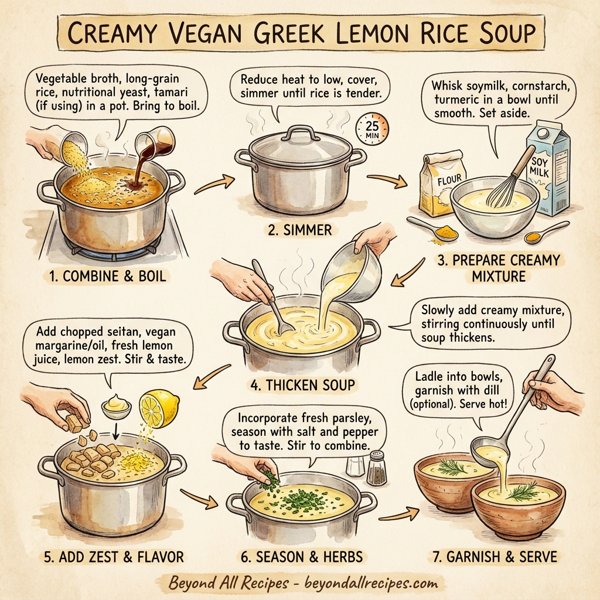
In a medium stockpot, combine the vegetable broth, long-grain rice, nutritional yeast, and tamari (if using). Bring the mixture to a vigorous boil.
2
Once boiling, reduce heat to low, cover, and simmer for 25 minutes, or until the rice is tender and fully cooked.
3
While the rice is cooking, prepare the creamy mixture by whisking together the soymilk, cornstarch, and turmeric in a small bowl until smooth. Set aside.
4
After the 25 minutes are up, give the soup a good stir. Slowly incorporate the creamy soymilk mixture into the pot, stirring continuously until the soup thickens.
5
Add the finely chopped chicken-style seitan, vegan margarine (or olive oil), fresh lemon juice, and lemon zest to the soup. Stir to combine and taste to adjust the tartness, adding more lemon juice if desired.
6
Incorporate the chopped fresh parsley, and season the soup with salt and pepper to taste. Stir to combine all ingredients.
7
Ladle the soup into bowls and garnish with freshly snipped dill, if desired. Serve hot and enjoy!
Nutrition Information
Frequently Asked Questions
Frequently Asked Questions
What is Creamy Vegan Greek Lemon Rice Soup?
It is a plant-based twist on traditional Greek Avgolemono soup, featuring a zesty lemon flavor and a creamy rice base.
What replaces the eggs used in traditional Avgolemono?
This recipe uses a mixture of unsweetened soy or almond milk, cornstarch, and a touch of turmeric to achieve a creamy texture and yellow hue.
How long does it take to cook the rice?
The long-grain white rice should simmer for approximately 25 minutes until it is tender.
Can I use almond milk instead of soy milk?
Yes, you can use either unsweetened soy milk or almond milk for the creamy mixture.
Is this recipe gluten-free?
As written, it contains seitan and potentially tamari. To make it gluten-free, replace the seitan with chickpeas and ensure your tamari is certified gluten-free.
What is the purpose of turmeric in this soup?
Turmeric is added primarily for color, giving the soup the traditional golden look of an egg-based broth.
Can I use brown rice instead of white rice?
Yes, but you will need to increase the simmering time to approximately 45-50 minutes and potentially add more broth.
What kind of seitan should I use?
You can use either homemade or store-bought chicken-style seitan, ensuring it is finely chopped.
Is nutritional yeast necessary?
Nutritional yeast is optional but recommended for adding a savory, umami depth to the soup.
Can I substitute olive oil for vegan margarine?
Yes, extra virgin olive oil works perfectly as a substitute for vegan margarine in this recipe.
How much lemon juice should I add?
The recipe calls for 1/4 to 1/3 cup of fresh lemon juice, which you can adjust based on your preference for tartness.
How do I prevent the cornstarch from clumping?
Whisk the cornstarch into the cold plant milk until smooth before adding the mixture to the hot soup.
What is the best way to garnish this soup?
The soup is best garnished with freshly snipped dill and a bit of fresh parsley.
Should I rinse the rice before cooking?
Yes, rinsing the long-grain white rice helps remove excess surface starch for a better soup consistency.
How do I add the creamy mixture to the pot?
Slowly incorporate the milk and cornstarch mixture into the pot while stirring continuously until the soup thickens.
Can I make this soup oil-free?
Yes, you can omit the margarine or olive oil entirely for a lower-fat version.
How much lemon zest is needed?
You should use the zest from one small lemon or half of a large lemon.
What type of broth is recommended?
A standard vegetable broth is the recommended base for this recipe.
Is tamari required?
Tamari is an optional ingredient used to enhance the savory flavor profile of the broth.
Can I use bottled lemon juice?
While you can use bottled juice, fresh lemon is preferred because the recipe also requires fresh lemon zest.
How many servings does this recipe provide?
The recipe generally serves 4 people depending on the portion size.
Can I add extra vegetables?
Yes, vegetables like sautéed carrots, celery, or spinach would make great additions to this soup.
How do I store leftovers?
Store leftovers in an airtight container in the refrigerator for up to 3 to 4 days.
Will the soup thicken as it sits?
Yes, the rice will continue to absorb liquid and the starch will set, so you may need to add a splash of broth when reheating.
Can I freeze this soup?
You can freeze it, but be aware that the rice may become softer and the creamy base might slightly separate upon thawing.
What is the first step of the recipe?
The first step is to combine vegetable broth, rice, nutritional yeast, and tamari in a stockpot and bring it to a boil.
Is this soup considered healthy?
Yes, it is a plant-based, nutrient-dense soup that is low in saturated fat and contains healthy whole grains.
What if my soup is too thick?
If the soup is too thick for your liking, simply stir in a little more vegetable broth or water until you reach the desired consistency.
When should I add the salt and pepper?
Salt and pepper should be added at the very end to season the soup according to your personal taste.
What is the texture of the seitan in the soup?
The finely chopped seitan provides a chewy, meat-like texture that mimics the chicken found in traditional Greek lemon soup.