Creamy Taro Pearls in Coconut Bliss
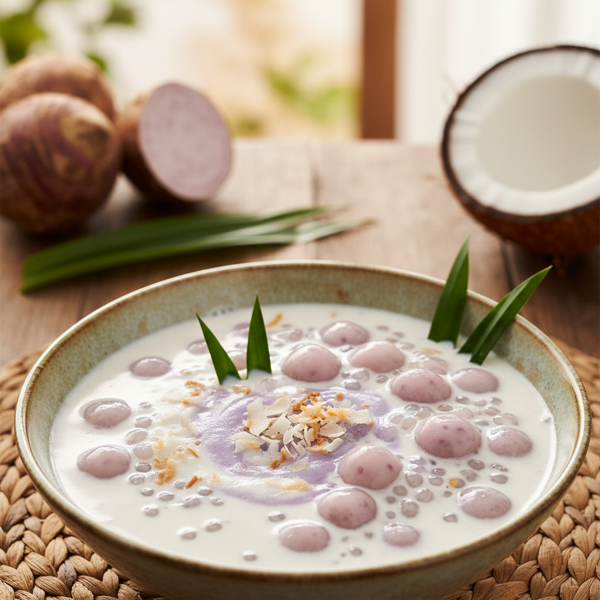
This delectable Thai dessert combines the rich creaminess of coconut milk with chewy taro pearls, offering a beautiful balance of flavors and textures. Introduced to this delightful dessert in an intimate Thai eatery nestled in Seattle, I've been captivated ever since. It's a comforting and satisfying finale to any meal, bringing the authentic taste of Thailand to your table.
4-6
Servings
N/A
Calories
8
Ingredients
Ingredients
Taro root
1 cup (cooked and mashed)
Glutinous rice flour
2 cups (measured)
Cornstarch
1 cup (measured)
Coconut milk
4 cups (unsweetened)
Palm sugar
1 cup (grated or finely chopped)
Salt
1/8 teaspoon (measured)
Water
6-8 teaspoons (as needed to adjust dough consistency)
Sesame seeds
optional for garnish (toasted)
Instructions
1
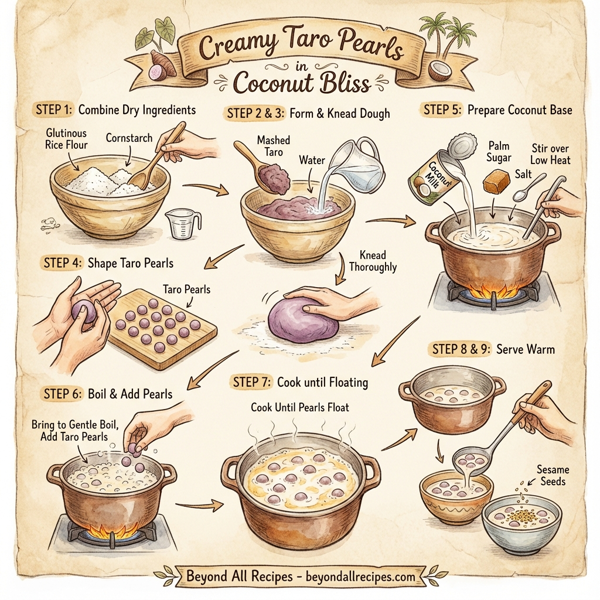
In a large mixing bowl, combine the glutinous rice flour and cornstarch.
2
Gradually incorporate the mashed taro into the dry mixture, adding water as needed to form a smooth, pliable dough.
3
Once the dough reaches the desired consistency, knead it thoroughly for a few minutes.
4
Pinch small portions of the dough and roll them between your palms to form small balls, roughly the size of marbles. Set them aside on a clean surface.
5
In a separate pot, combine coconut milk, palm sugar, and salt. Stir the mixture over low heat until the sugar and salt dissolve completely.
6
Increase the heat and bring the coconut mixture to a gentle boil. Carefully add the taro balls.
7
Allow the taro balls to cook in the boiling coconut milk for a few minutes until they float to the surface, indicating they are cooked through.
8
Once the taro pearls are ready, remove the pot from the heat.
9
Ladle the warm dessert into bowls and serve immediately. For added texture and flavor, sprinkle with sesame seeds on top if desired.
Nutrition Information
Frequently Asked Questions
Frequently Asked Questions
What is Creamy Taro Pearls in Coconut Bliss?
It is a delectable Thai dessert consisting of chewy taro pearls served in a rich and creamy coconut milk base.
How many servings does this recipe provide?
This recipe yields approximately 4 to 6 servings.
What are the main ingredients for the taro pearls?
The pearls are made from cooked and mashed taro root, glutinous rice flour, cornstarch, and a small amount of water.
What kind of coconut milk should I use?
The recipe calls for 4 cups of unsweetened coconut milk.
How is the dessert sweetened?
It is sweetened using 1 cup of grated or finely chopped palm sugar.
How do I prepare the taro for the dough?
The taro root should be cooked and mashed before being incorporated into the dry flour mixture.
How much water is needed for the dough?
You will need approximately 6 to 8 teaspoons of water, added gradually as needed to reach a smooth, pliable consistency.
What size should the taro balls be?
Small portions of dough should be rolled into balls roughly the size of marbles.
How do I know when the taro pearls are fully cooked?
The taro balls are cooked through when they float to the surface of the boiling coconut milk mixture.
Is this dessert served hot or cold?
This dessert is best served warm immediately after cooking.
What can I use as a garnish?
You can sprinkle toasted sesame seeds on top for added texture and flavor.
Is this recipe suitable for vegetarians?
Yes, this is a vegetarian-friendly dessert.
What is the role of cornstarch in this recipe?
Cornstarch is mixed with the glutinous rice flour to help achieve the desired texture for the taro pearls.
How do I prepare the coconut milk base?
Combine coconut milk, palm sugar, and salt in a pot over low heat until the sugar and salt dissolve completely.
Should the taro dough be kneaded?
Yes, once the dough reaches the right consistency, it should be kneaded thoroughly for a few minutes.
Can I use regular rice flour instead of glutinous rice flour?
The recipe specifies glutinous rice flour to create the signature chewy texture of the taro pearls.
Is there salt in this sweet dessert?
Yes, 1/8 teaspoon of salt is added to balance the sweetness of the coconut milk and palm sugar.
What texture should the taro pearls have?
They should be chewy, which provides a beautiful balance against the creamy coconut milk.
Where was the inspiration for this recipe found?
The recipe was inspired by a delightful Thai eatery located in Seattle.
What category of food does this belong to?
It is classified as a Thai dessert and authentic Thai cuisine.
Can I use granulated sugar instead of palm sugar?
While palm sugar provides a specific authentic flavor, you could use other sweeteners, though it may change the final taste profile.
How many ingredients are in this recipe?
There are 8 ingredients in total, including the optional garnish.
Does the recipe contain dairy?
No, it uses coconut milk as the creamy base, making it naturally dairy-free.
Is the taro mashed before or after mixing with flour?
The taro is cooked and mashed first, then incorporated into the dry flour and cornstarch mixture.
How long do the taro pearls cook in the coconut milk?
They cook for a few minutes until they float to the surface of the boiling liquid.
What should the dough consistency be like?
The dough should be smooth and pliable so it can be easily rolled into balls.
What flavor profile can I expect?
Expect a tropical, sweet, and creamy flavor profile.
Should the sesame seeds be toasted?
Yes, the recipe recommends toasted sesame seeds for the best flavor and texture.
What is the recipe ID for this dish?
The recipe ID is creamy-taro-pearls-in-coconut-bliss.
Is this a traditional dessert?
Yes, it is described as an authentic Thai dessert bringing the taste of Thailand to your table.