Creamy Swiss Cauliflower Bake

This Creamy Swiss Cauliflower Bake is a delightful twist on a classic side dish, transforming simple cauliflower into a rich and cheesy indulgence that is sure to please even the pickiest eaters. The creamy Swiss cheese sauce, accented by the warmth of roasted garlic and a hint of nutmeg, delivers a symphony of flavors that dance on your palate. Enhanced with a subtle kick from crushed red pepper flakes, this comforting dish is perfect for family gatherings, holiday feasts, or a cozy dinner at home. With its vibrant presentation and unforgettable taste, this recipe will quickly become a cherished favorite in your household.
N/A
Servings
N/A
Calories
11
Ingredients
Ingredients
Cauliflower
1 large head (separated into florets)
Butter or Margarine
1/4 cup (melted)
All-purpose flour
1/3 cup (sifted)
Salt
1 teaspoon
Garlic powder or Roasted garlic
1/4 teaspoon or equivalent amount
Onion powder
1/2 teaspoon
Ground coarse fresh black pepper
to taste
Milk
2 cups (whole or 2%)
Swiss cheese
4 ounces (shredded)
Freshly grated nutmeg
to taste (a few specks)
Crushed red pepper flakes
2 pinches (to taste)
Instructions
1
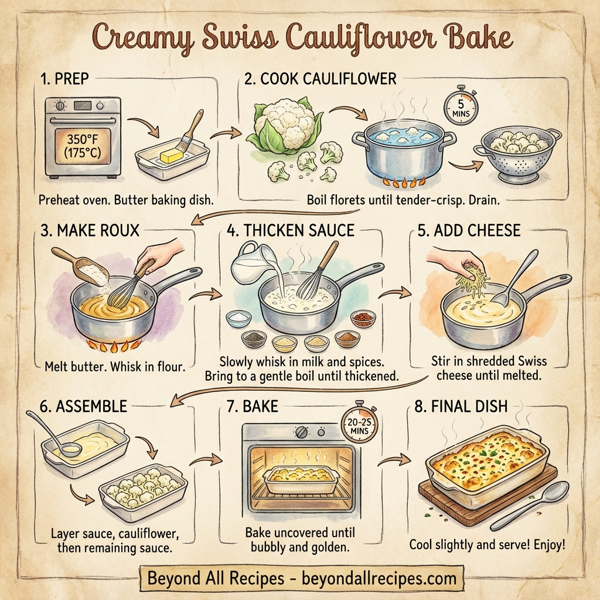
Preheat your oven to 350°F (175°C) and lightly butter a small baking dish, ensuring a non-stick surface for your bake.
2
Separate the cauliflower into florets and place them in a large saucepan filled with enough water to cover. Bring the water to a boil and cook the cauliflower for approximately 5 minutes, or until it is just tender but still crisp. Drain and set aside.
3
In a separate medium saucepan, melt the butter over medium heat, stirring constantly. Gradually whisk in the flour to create a smooth roux, cooking for 1-2 minutes.
4
Slowly add the milk while continuing to whisk to prevent lumps. Stir in the salt, black pepper, garlic powder (or roasted garlic), onion powder, freshly grated nutmeg, and crushed red pepper flakes. Bring this mixture to a gentle boil, stirring frequently until it thickens, then remove from heat.
5
Incorporate the shredded Swiss cheese into the sauce, stirring until completely melted and smooth.
6
Spread a generous 1/4 cup of the cheese sauce on the bottom of the prepared baking dish. Arrange the cooked cauliflower florets evenly over the sauce, then pour the remaining cheese mixture on top, ensuring all florets are well-covered.
7
Bake uncovered in the preheated oven for 20-25 minutes, or until the dish is bubbly and golden on top. Allow to cool slightly before serving.
Nutrition Information
Frequently Asked Questions
Frequently Asked Questions
What is Creamy Swiss Cauliflower Bake?
It is a rich and cheesy side dish made with cauliflower florets baked in a seasoned Swiss cheese sauce with hints of nutmeg and red pepper flakes.
What type of cheese is used in this recipe?
The recipe calls for 4 ounces of shredded Swiss cheese to create the creamy sauce.
What temperature should I preheat the oven to?
The oven should be preheated to 350 degrees Fahrenheit or 175 degrees Celsius.
How long does the cauliflower need to boil?
The cauliflower florets should be boiled for approximately 5 minutes until they are just tender but still crisp.
How long is the final baking time?
The dish should be baked in the oven for 20 to 25 minutes until it is bubbly and golden on top.
Can I use margarine instead of butter?
Yes, the recipe allows for either 1/4 cup of butter or margarine to be used for the sauce base.
What size cauliflower head do I need?
You should use one large head of cauliflower, separated into florets.
How do I make the roux for the sauce?
Melt the butter over medium heat, then gradually whisk in the all-purpose flour and cook for 1 to 2 minutes.
What kind of milk is recommended for the sauce?
The recipe suggests using 2 cups of either whole milk or 2 percent milk.
What spices are used to season the cheese sauce?
The sauce is seasoned with salt, black pepper, garlic powder (or roasted garlic), onion powder, freshly grated nutmeg, and crushed red pepper flakes.
Is this cauliflower bake spicy?
It has a subtle kick from two pinches of crushed red pepper flakes, but it is primarily a savory and creamy dish.
How do I prevent lumps in my sauce?
Slowly add the milk while continuing to whisk the flour and butter mixture to ensure a smooth consistency.
Should I cover the dish while baking?
No, the dish should be baked uncovered so the top can become golden and the sauce can bubble.
Can I use fresh garlic instead of powder?
Yes, the recipe states you can use an equivalent amount of roasted garlic in place of garlic powder.
How much flour is required?
You will need 1/3 cup of sifted all-purpose flour.
What is the purpose of the nutmeg in this dish?
Nutmeg adds a layer of warmth and complexity that complements the Swiss cheese sauce.
How should I prepare the baking dish?
Lightly butter a small baking dish to ensure a non-stick surface before adding the ingredients.
How do I assemble the layers?
Spread 1/4 cup of sauce on the bottom of the dish, add the cooked cauliflower, and then pour the remaining sauce over the top.
What should the texture of the cauliflower be before baking?
It should be tender-crisp after boiling; it will finish softening during the baking process.
Is this recipe suitable for holidays?
Yes, its rich flavor and vibrant presentation make it perfect for holiday feasts and family gatherings.
Can I use 1 percent milk?
While whole or 2 percent is recommended for richness, 1 percent milk can be used, though the sauce may be slightly thinner.
Does the cheese go inside the sauce or on top?
The shredded Swiss cheese is stirred directly into the thickened sauce until melted before being poured over the cauliflower.
What tags describe this recipe?
Common tags for this recipe include cauliflower, cheesy, baked, vegetable, family recipe, comfort food, and side dish.
How many ingredients are in this recipe?
There are 11 ingredients total, including vegetables, dairy, and spices.
Should I let the dish cool before serving?
Yes, it is recommended to allow the bake to cool slightly after removing it from the oven to let the sauce set.
Can I use pre-cut cauliflower florets?
Yes, pre-cut florets work perfectly as long as they equal the amount found in one large head.
How much onion powder is used?
The recipe calls for 1/2 teaspoon of onion powder.
Can I substitute the Swiss cheese?
While Swiss cheese provides the signature flavor, you could substitute with Gruyere or Emmental for a similar profile.
How much salt is needed?
The recipe requires 1 teaspoon of salt.
Is the roux cooked before adding milk?
Yes, the flour and butter mixture should be cooked for 1 to 2 minutes before the milk is gradually whisked in.