Creamy Spinach and Ricotta Chicken Rolls in Lemony White Wine Sauce
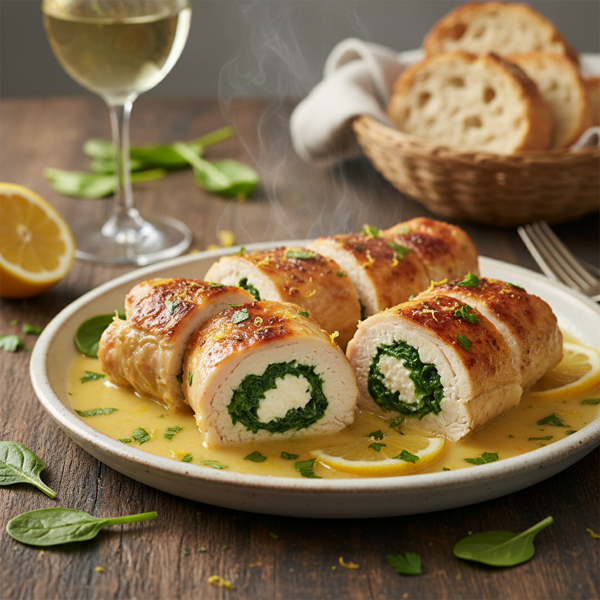
Indulge in this exquisite dish of Creamy Spinach and Ricotta Chicken Rolls in a delightful Lemony White Wine Sauce. These juicy chicken breasts are expertly stuffed with a velvety blend of fresh spinach, ricotta, and gorgonzola, delivering a burst of flavor in every bite. Cooked to perfection and complemented by a tangy white wine sauce, this dish is not only a feast for the senses but also a showstopper for any dinner occasion. Perfectly garnished with fresh parsley, serve these rolls hot for an unforgettable meal that your guests will rave about long after the table is cleared.
N/A
Servings
N/A
Calories
13
Ingredients
Ingredients
Cooked chopped and drained fresh spinach
1 cup (cooked and chopped)
Ricotta cheese
1/2 cup (none)
Gorgonzola cheese
1/2 cup (crumbled)
Kosher salt
to taste (none)
Freshly ground black pepper
to taste (none)
Large egg
1 (none)
Dry white wine
1/2 cup (none)
Homemade chicken stock
1/2 cup (none)
Dijon mustard
1 tablespoon (none)
Lemon
1 (juiced)
Chopped fresh parsley leaves
for garnish (none)
Boneless skinless chicken breasts
2 (8 ounce) (none)
Vegetable oil
2 tablespoons (none)
Instructions
1
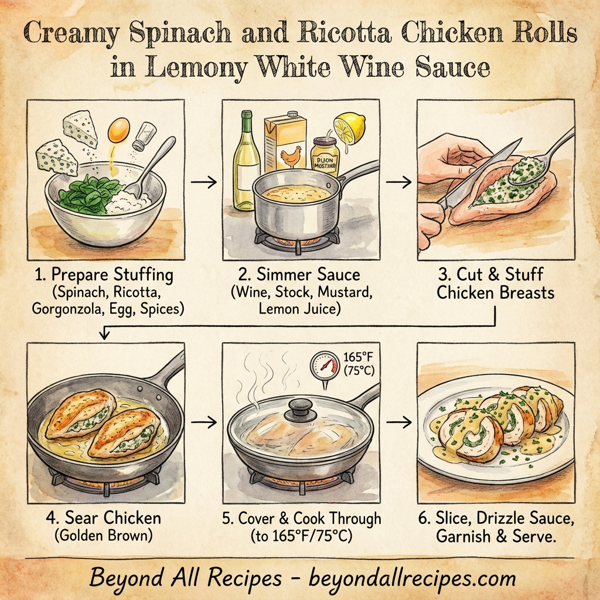
Begin by preparing the stuffing: In a mixing bowl, combine the cooked and drained spinach with ricotta and gorgonzola cheese. Stir until well incorporated, then season with kosher salt and freshly ground black pepper. Add the egg and mix thoroughly to create a cohesive stuffing. Set this mixture aside.
2
Next, prepare the lemony sauce: In a non-reactive saucepan, combine the dry white wine and homemade chicken stock. Bring the mixture to a boil over medium-high heat, then reduce to a simmer, allowing the sauce to thicken to a sauce-like consistency. Once thickened, whisk in the Dijon mustard and lemon juice, adjusting the seasoning with salt and pepper as needed. Remove from heat and set aside.
3
Prepare the chicken breasts by slicing them horizontally along one side to create a pocket for the stuffing. Be careful not to cut all the way through.
4
Divide the spinach and ricotta stuffing evenly between the two chicken breasts, carefully packing it into the pocket created earlier.
5
In a large skillet, heat the vegetable oil over medium heat. Once hot, place the stuffed chicken breasts in the skillet, cooking for approximately 2 minutes per side or until they are golden brown.
6
Reduce the heat to low, cover the skillet, and continue cooking for an additional 5 minutes or until the chicken is cooked through and juices run clear. Use a meat thermometer to ensure the internal temperature reaches 165°F (75°C).
7
Once cooked, transfer the chicken to a cutting board to rest for 5 minutes, allowing the juices to redistribute.
8
While the chicken is resting, return the lemony sauce to the skillet over high heat. Stir frequently, scraping the bottom with a wooden spoon to incorporate any browned bits and enhance the flavor.
9
After the sauce is warmed through, slice the chicken into medallions and arrange them on serving plates. Drizzle the warm lemony sauce over the chicken and garnish with freshly chopped parsley. Serve immediately to enjoy the melty goodness!
Nutrition Information
Frequently Asked Questions
Frequently Asked Questions
What are Creamy Spinach and Ricotta Chicken Rolls?
This dish consists of boneless chicken breasts stuffed with a mixture of spinach, ricotta, and gorgonzola cheese, then cooked and topped with a lemony white wine sauce.
What kind of cheese is used in the chicken stuffing?
The stuffing uses a combination of ricotta cheese and gorgonzola cheese for a creamy and slightly tangy flavor profile.
How should I prepare the spinach for the filling?
You should use one cup of fresh spinach that has been cooked, chopped, and thoroughly drained to prevent the stuffing from becoming watery.
What is the purpose of the egg in the stuffing mixture?
The egg acts as a binding agent, helping the spinach and cheese mixture stay together inside the chicken breast while cooking.
How do I create a pocket in the chicken breast for stuffing?
Slice the chicken breast horizontally along one side to create a pocket, being careful not to cut all the way through to the other side.
What type of wine should be used for the lemony sauce?
A dry white wine is recommended for this recipe to provide the right acidity and balance for the lemon and chicken flavors.
What temperature should the chicken reach to be considered safe?
The internal temperature of the chicken should reach 165°F (75°C) as measured by a meat thermometer.
How long should the chicken rest after cooking?
Allow the chicken to rest on a cutting board for 5 minutes before slicing to let the juices redistribute, ensuring it stays moist.
What ingredients are in the lemony white wine sauce?
The sauce is made from dry white wine, chicken stock, Dijon mustard, and fresh lemon juice.
How do I ensure the sauce has a rich flavor?
Return the sauce to the skillet used for the chicken and scrape the bottom with a wooden spoon to incorporate any browned bits left behind.
Can I substitute the gorgonzola cheese?
Yes, if you prefer a milder taste, you can substitute gorgonzola with feta or goat cheese.
What is the best way to sear the chicken?
Heat vegetable oil in a large skillet over medium heat and cook the chicken for about 2 minutes per side until golden brown.
How do I serve the chicken rolls?
Slice the chicken into medallions, arrange them on a plate, drizzle with the warm sauce, and garnish with fresh parsley.
What kind of chicken stock is best?
Homemade chicken stock is suggested for the best flavor, though high-quality store-bought stock can also be used.
Is this recipe considered healthy?
Yes, it uses lean chicken breasts, fresh spinach, and a light wine-based sauce, making it a nutritious dinner choice.
Why is a non-reactive saucepan used for the sauce?
Non-reactive pans (like stainless steel) are used because the sauce contains acidic ingredients like wine and lemon which can react with metals like aluminum.
How many chicken breasts are used in this recipe?
The recipe specifies using two 8-ounce boneless, skinless chicken breasts.
Can I use frozen spinach instead of fresh?
Yes, but you must ensure it is completely thawed and squeezed very dry before adding it to the cheese mixture.
What is the role of Dijon mustard in the sauce?
The mustard adds a savory tang and helps slightly thicken and emulsify the white wine sauce.
How long does it take to simmer the chicken after searing?
After searing, cover the skillet and cook on low heat for an additional 5 minutes or until fully cooked.
What can I use as a garnish?
Freshly chopped parsley leaves are the recommended garnish for this dish.
Should the stuffing be seasoned?
Yes, you should season the spinach and ricotta mixture with kosher salt and freshly ground black pepper to taste.
Can this dish be served for special occasions?
Absolutely, the elegant appearance of the medallions and the sophisticated flavor profile make it a perfect dinner party showstopper.
Is there any oil in the sauce?
No, the sauce is based on wine, stock, and lemon juice, though it incorporates flavor from the oil used to sear the chicken.
How do I thicken the white wine sauce?
The sauce is thickened by simmering the wine and stock until it reduces to a sauce-like consistency.
Can I prepare the stuffing in advance?
Yes, the spinach and cheese mixture can be prepared ahead of time and stored in the refrigerator until you are ready to stuff the chicken.
Does the recipe use lemon zest or juice?
This specific recipe calls for the juice of one lemon to be added to the sauce.
What should I look for in the chicken juices to ensure it is done?
The juices should run clear when the chicken is pierced or sliced.
What type of salt is recommended?
The recipe specifies using kosher salt for seasoning both the stuffing and the sauce.
Can I substitute the white wine?
If you prefer not to use alcohol, you can substitute the wine with additional chicken stock and a teaspoon of white wine vinegar.