Creamy Spicy Peanut Satay Sauce
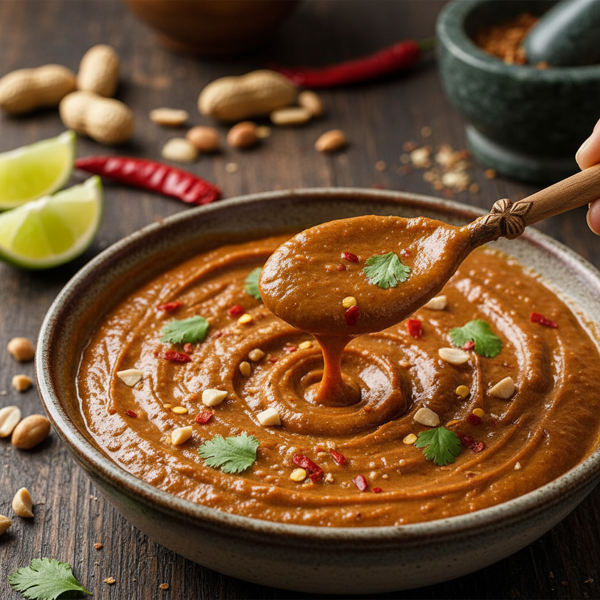
Indulge in the rich and aromatic flavors of this Creamy Spicy Peanut Satay Sauce, a deliciously versatile sauce perfect for drizzling over skewered meats, vegetables, or as a tasty dip for fresh spring rolls. This homemade recipe combines the nutty richness of roasted peanuts with the fragrant warmth of lemongrass and subtle heat from chili sauce. With its balance of sweetness and spice, this sauce will elevate your dishes and impress your guests. Serve it warm or at room temperature, and enjoy the burst of Southeast Asian flavors in every bite.
10
Servings
273
Calories
14
Ingredients
Ingredients
lemongrass
1 1/2 stalks (coarsely chopped, tough tops removed)
shallots
6 (peeled)
garlic cloves
5 (peeled)
fresh coriander leaves
3 tablespoons (fresh)
hot chili sauce
1 tablespoon (adjust based on heat preference)
cumin seeds
2 teaspoons (toasted if possible)
turmeric
1/4 teaspoon
water
1 tablespoon
oil
1/3 cup (for frying)
dried shrimp paste
1 teaspoon
coconut milk
2 cups
brown sugar
1 tablespoon
salt
1/4 teaspoon (to taste)
roasted unsalted peanuts
3/4 cup (roughly chopped)
Instructions
1
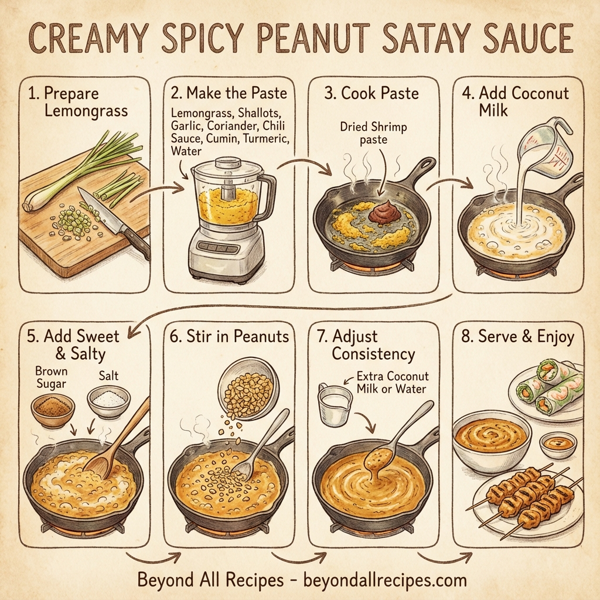
Begin by preparing the lemongrass: remove the coarse outer layers and tough tops, saving them for broth if desired. Chop the tender part into 1-inch lengths.
2
In a food processor, combine the chopped lemongrass, shallots, garlic cloves, fresh coriander leaves, hot chili sauce, cumin seeds, turmeric, and water. Process until a fine paste forms, adding more water if necessary.
3
In a large frying pan, heat the oil over medium heat. Once hot, add the lemongrass paste and dried shrimp paste. Cook, stirring frequently for about 4 minutes until the mixture is fragrant.
4
Pour in half of the coconut milk, continuously stirring, and let it cook for about 8 minutes.
5
Gradually stir in the remaining coconut milk, then add the brown sugar and salt. Mix well to fully incorporate.
6
Add the chopped peanuts to the sauce and stir to combine. Taste and adjust the sweetness, saltiness, and spiciness to your liking.
7
If the sauce is too thick, you can thin it out with additional coconut milk or water until the desired consistency is reached.
8
Serve warm or at room temperature as a perfect accompaniment to your favorite dishes.
Nutrition Information
19g
Fat
18g
Carbs
6g
Protein
Frequently Asked Questions
Frequently Asked Questions
What is Creamy Spicy Peanut Satay Sauce?
It is a rich, aromatic Southeast Asian sauce made from roasted peanuts, coconut milk, and fragrant spices, perfect for dipping or drizzling.
What are the main ingredients in this recipe?
The primary ingredients are roasted peanuts, coconut milk, lemongrass, shallots, garlic, fresh coriander, and hot chili sauce.
How do I prepare the lemongrass for the paste?
Remove the coarse outer layers and tough tops, then chop the tender inner part into 1-inch lengths before blending.
Is this satay sauce vegan?
The base recipe contains dried shrimp paste; to make it vegan, you should substitute the shrimp paste with a vegan alternative or extra salt.
Is this recipe gluten-free?
Yes, the ingredients listed are naturally gluten-free, though you should always verify the labels on your chili sauce and shrimp paste.
How many calories are in one serving?
Each serving contains approximately 273 calories.
What is the serving size for this recipe?
This recipe is designed to yield approximately 10 servings.
How do I make the aromatic paste?
Combine lemongrass, shallots, garlic, coriander, chili sauce, cumin, turmeric, and water in a food processor and blend until smooth.
What type of peanuts should I use?
The recipe calls for 3/4 cup of roasted unsalted peanuts, roughly chopped for texture.
Can I adjust the spiciness of the sauce?
Yes, you can adjust the heat by increasing or decreasing the amount of hot chili sauce used in the paste.
How long does it take to cook the paste?
The paste should be fried in oil for about 4 minutes until it becomes fragrant.
How do I incorporate the coconut milk?
Pour in half the coconut milk first and cook for 8 minutes, then stir in the remaining half with the sugar and salt.
What should I do if the sauce is too thick?
If the consistency is too heavy, you can thin it out with a little extra coconut milk or water.
Can this sauce be served cold?
While it is traditionally served warm, it is also delicious at room temperature.
What are the best dishes to pair with this sauce?
It is a perfect accompaniment for skewered meats, grilled vegetables, or fresh spring rolls.
How much fat is in a serving?
Each serving contains about 19 grams of fat.
How many carbohydrates are in this sauce?
There are approximately 18 grams of carbohydrates per serving.
Does this sauce provide any protein?
Yes, each serving provides approximately 6 grams of protein.
What is dried shrimp paste?
It is a fermented condiment that adds a deep, savory umami flavor common in Southeast Asian cooking.
Can I substitute shallots?
If shallots are unavailable, you can use a small amount of finely diced red onion as a substitute.
How do I store leftover satay sauce?
Store leftovers in an airtight container in the refrigerator for up to 5 days.
Can I freeze this peanut sauce?
Yes, it can be frozen for up to 3 months, though you may need to whisk it well after reheating to restore the texture.
What spices are used in the paste?
The recipe uses toasted cumin seeds and turmeric to provide warmth and a vibrant color.
How do I reheat the sauce?
Reheat gently on the stovetop over low heat, adding a splash of liquid if it has thickened too much.
Can I use peanut butter instead of chopped peanuts?
You can use natural creamy peanut butter if you prefer a smoother texture, though chopped peanuts are traditional.
Is there a substitute for fresh coriander?
If you dislike coriander, you can omit it, though it adds a significant fresh floral note to the paste.
What kind of oil is best for frying the paste?
A neutral oil with a high smoke point, such as vegetable or peanut oil, is best for frying the aromatics.
How do I ensure the paste is fine enough?
If the mixture is too dry to blend, add a small amount of water to the food processor to help it reach a smooth consistency.
Why add brown sugar to the sauce?
Brown sugar balances the heat of the chili and the saltiness of the shrimp paste with a subtle sweetness.
Can I use light coconut milk?
Yes, but the sauce will be less creamy and may require additional simmering time to reach the desired thickness.