Creamy Rye Sourdough Bread
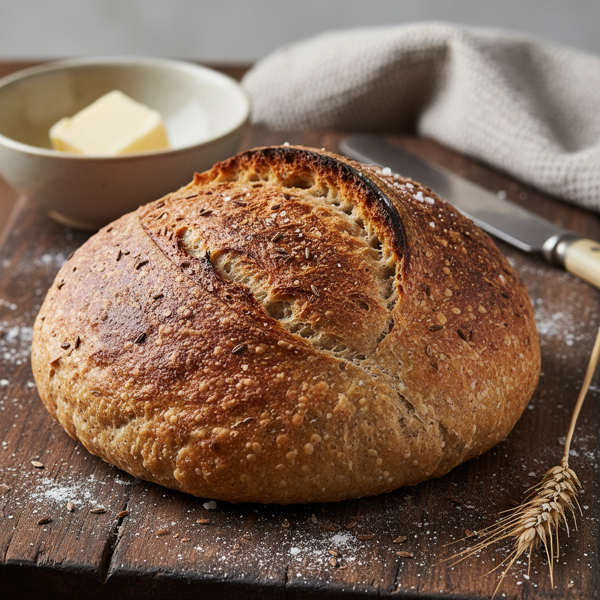
This Creamy Rye Sourdough Bread takes inspiration from traditional methods to create a deliciously tangy and hearty loaf. A reliable sourdough starter is essential for achieving the perfect flavor and texture. The fermentation process not only enhances the bread’s storability, preventing it from becoming stale quickly, but also improves the absorption of nutrients. The quality of your chosen rye flour impacts the character of the starter and the final loaf. This bread boasts a soft crumb and a beautiful crust, making it an excellent addition to any meal or a great base for sandwiches. With a method that can be built upon over time, you will find the joy in crafting your unique sourdough journey.
10
Servings
240
Calories
9
Ingredients
Ingredients
whole rye flour
100 g (finely ground)
lukewarm water
100 ml (for starter)
whole rye flour
100 g (finely ground)
lukewarm water
100 ml (for starter)
whole rye flour
800 g (finely ground)
sourdough starter
300 g
lukewarm water
450 ml
salt
2 teaspoons
flour
(for dusting)
Instructions
1
Starter Preparation:
2
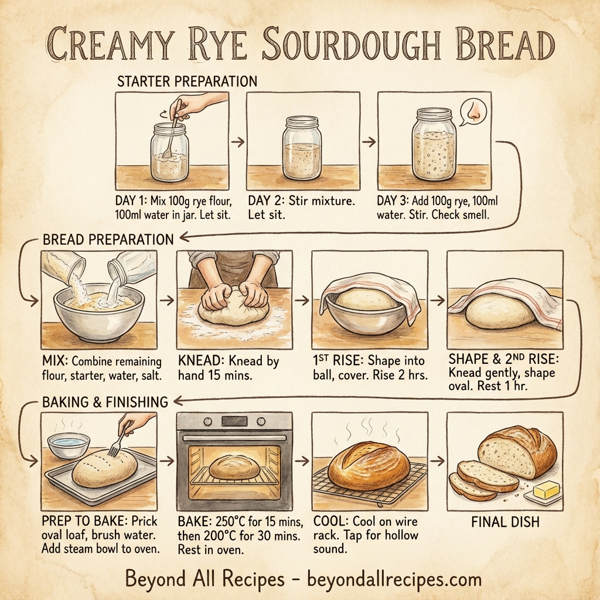
Day 1: In a 1-quart jar, combine 100 g of finely ground whole rye flour with 100 ml of lukewarm water. Mix thoroughly until the dough is smooth and homogenous. Leave the lid loosely on the jar to allow for air circulation. Let it sit at room temperature for 24 hours.
3
Day 2: Stir the mixture thoroughly. Close the lid loosely yet securely, and allow it to sit for another 24 hours.
4
Day 3: Stir in an additional 100 g of finely ground whole rye flour and 100 ml of lukewarm water. Cover loosely and let it rest for 24 hours. After this time, carefully check the smell and appearance; the starter should have a pleasant, slightly sour smell and a greyish-brown color.
5
Bread Preparation:
6
Gather the remaining flour in a large bowl and make a well in the center. Pour the 300 g of sourdough starter into this well, reserving about 2 tablespoons to store in a sealed jar in the refrigerator for future baking.
7
Mix the starter with the surrounding flour, then gradually add 450 ml of lukewarm water and the 2 teaspoons of salt. Knead the dough by hand on a floured surface for about 15 minutes, until it becomes smooth and elastic. The dough will be heavy, so don’t be discouraged if it’s a workout!
8
Shape the dough into a ball, dust it lightly with flour, and cover it with a clean kitchen towel. Allow it to rise for 2 hours in a warm spot.
9
Once the dough has risen, gently knead it on a floured surface. Shape it into an oval loaf and let it rest for an additional hour, covered again.
10
Preheat your oven to 250°C (220°C for fan-assisted).
11
Place the loaf onto a baking tray lined with non-stick parchment paper, prick the surface with a fork in a decorative pattern, and brush with water.
12
Create steam in the oven by placing an ovenproof bowl filled with hot water at the bottom and then carefully place the baking tray inside. Bake for 15 minutes.
13
Afterwards, reduce the oven temperature to 200°C (180°C fan-assisted) and continue baking for another 30 minutes.
14
Once the baking time is up, turn off the oven but do not open the door. Allow the bread to rest in the hot oven for 15 additional minutes.
15
To check for doneness, tap the bottom of the loaf; it should sound hollow. Remove the bread from the oven and let it cool completely on a wire rack.
16
This bread can be stored at room temperature and does not require refrigeration, ensuring you can enjoy its freshness for longer.
Nutrition Information
1.6g
Fat
48.2g
Carbs
7g
Protein
Frequently Asked Questions
Frequently Asked Questions
What is Creamy Rye Sourdough Bread?
It is a tangy and hearty loaf made using traditional sourdough methods with rye flour, featuring a soft crumb and beautiful crust.
How many servings does this recipe provide?
This recipe makes 10 servings.
What are the nutritional values per serving?
Each serving contains approximately 240 calories, 1.6g of fat, 48.2g of carbohydrates, and 7g of protein.
What type of flour is recommended for the sourdough starter?
Finely ground whole rye flour is recommended for both the starter and the main dough.
How long does it take to prepare the sourdough starter from scratch?
The starter preparation takes three days of mixing and resting before it is ready for baking.
How much starter should be used in the bread recipe?
You should use 300 g of the sourdough starter for the bread dough.
Should I save any of the starter for future use?
Yes, you should reserve about 2 tablespoons of the starter in a sealed jar in the refrigerator for future baking.
What should the starter look and smell like on the third day?
It should have a pleasant, slightly sour smell and a greyish-brown color.
How much water is added to the main bread dough?
You should add 450 ml of lukewarm water to the flour and starter mixture.
How long should the dough be kneaded?
The dough should be kneaded by hand on a floured surface for about 15 minutes until it is smooth and elastic.
How many times does the dough need to rise?
The dough rises twice: first for 2 hours in a warm spot, and then for 1 hour after being shaped into an oval loaf.
What shape should the bread loaf be?
The dough should be shaped into an oval loaf.
What is the initial oven temperature for baking?
The oven should be preheated to 250°C (or 220°C for fan-assisted ovens).
How do you prepare the crust before putting it in the oven?
Prick the surface with a fork in a decorative pattern and brush the top with water.
How is steam created in the oven during baking?
By placing an ovenproof bowl filled with hot water at the bottom of the oven.
What is the baking schedule for this rye bread?
Bake for 15 minutes at 250°C, then reduce to 200°C for another 30 minutes, followed by a 15-minute rest in the turned-off oven.
How can I tell if the bread is fully baked?
Tap the bottom of the loaf; if it is done, it should sound hollow.
Should the bread be refrigerated for storage?
No, this bread can be stored at room temperature and does not require refrigeration.
What are the benefits of the fermentation process in this bread?
Fermentation enhances the flavor, improves nutrient absorption, and helps prevent the bread from going stale quickly.
Is this bread suitable for sandwiches?
Yes, its soft crumb and hearty texture make it an excellent base for sandwiches.
What tags are associated with this recipe?
Tags include sourdough, rye bread, homemade bread, fermented, healthy bread, baking, artisan bread, and whole grain.
Can I use cold water for the starter?
The recipe specifies lukewarm water to help activate the fermentation process effectively.
What should I do if the dough feels heavy during kneading?
Rye dough is naturally heavy; continue kneading for the full 15 minutes as it is a normal part of the process.
Why do I need to leave the jar lid loose during starter preparation?
Leaving the lid loose allows for necessary air circulation which is vital for the starter to develop.
How much total rye flour is used in the entire process?
The process uses 1,000 g (1 kg) of whole rye flour in total across the starter and bread preparation.
Is there any salt in the starter?
No, salt is only added during the final bread preparation stage, as salt can inhibit the initial growth of the starter.
Why brush the loaf with water before baking?
Brushing with water helps create a better crust and allows the decorative pricked patterns to hold their shape.
What equipment is needed for cooling?
A wire rack is recommended to let the bread cool completely and prevent the bottom from becoming soggy.
How much salt is used in the recipe?
The recipe calls for 2 teaspoons of salt.
Can I use this method to start a long-term sourdough journey?
Yes, by reserving 2 tablespoons of the starter, you can continue to feed and use it for many future loaves.