Creamy Roasted Acorn Squash and Lentil Soup

This delightful vegan soup combines the natural sweetness of roasted acorn squash with the heartiness of red lentils to create a creamy, flavor-packed dish. Adapted from a classic Australian women’s cookbook, this version swaps kumara for acorn squash, making it a perfect recipe for utilizing a bountiful garden harvest. The addition of fresh sage infuses the soup with an aromatic touch, while the lentils lend a rich texture that makes this soup, not only nutritious but also comforting. Serve it warm, garnished with fresh chives and a dollop of plant-based yogurt for an extra creamy finish.
N/A
Servings
N/A
Calories
7
Ingredients
Ingredients
Olive Oil
2 tablespoons (none)
Onion
1 large, diced (diced)
Acorn Squash
1 medium, peeled and chopped (peeled and roasted)
Fresh Sage
1-2 leaves, finely chopped (finely chopped (optional))
Vegetable Broth
4 cups (none)
Red Lentils
1 cup (rinsed)
Chives
for garnish (chopped or in sprigs)
Instructions
1
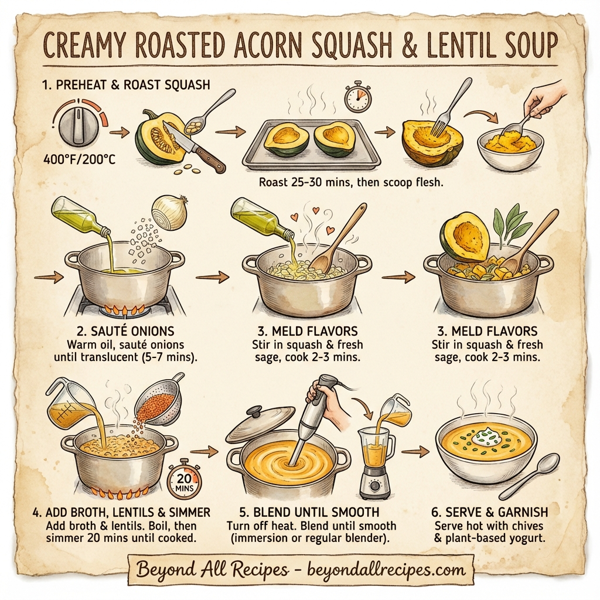
Preheat your oven to 400°F (200°C). Slice the acorn squash in half, remove the seeds, and place it cut-side down on a baking sheet. Roast for about 25-30 minutes, or until the flesh is fork-tender. Once cool, scoop out the flesh and set aside.
2
In a large soup pot or Dutch oven, warm the olive oil over medium heat. Add the diced onions and sauté until they become translucent, around 5-7 minutes.
3
Stir in the scooped roasted acorn squash and fresh sage (if using), cooking for an additional 2-3 minutes to meld the flavors.
4
Pour in the vegetable broth and bring the mixture to a boil. Add the rinsed red lentils to the pot and stir well.
5
Once boiling, reduce the heat to medium-low, cover, and let the soup simmer for about 20 minutes, or until the lentils are fully cooked and starting to break down.
6
After 20 minutes, turn off the heat and blend the soup until smooth, using either a regular blender (in batches) or an immersion blender directly in the pot.
7
Serve hot, garnished with chopped fresh chives and a dollop of plant-based yogurt for extra creaminess.
Nutrition Information
Frequently Asked Questions
Frequently Asked Questions
What is Creamy Roasted Acorn Squash and Lentil Soup?
This is a nutritious vegan soup that combines roasted acorn squash and red lentils for a rich, comforting, and flavor-packed meal.
How do I roast the acorn squash for this recipe?
Slice the squash in half, remove seeds, and roast cut-side down at 400 degrees Fahrenheit for 25 to 30 minutes until tender.
Can I substitute acorn squash with another vegetable?
Yes, you can use butternut squash or sweet potato (kumara) as they provide a similar texture and sweetness.
Is this soup recipe vegan?
Yes, the recipe uses vegetable broth, olive oil, and plant-based garnishes, making it entirely vegan.
Is this soup gluten-free?
Yes, all the primary ingredients in this roasted squash and lentil soup are naturally gluten-free.
How long do red lentils take to cook?
Red lentils usually take about 20 minutes to cook until they are soft and beginning to break down.
Can I use green lentils instead of red lentils?
You can, but green lentils take longer to cook and will result in a chunkier texture rather than a creamy one.
What is a good substitute for fresh sage?
If you do not have fresh sage, you can use a smaller amount of dried sage or substitute with fresh thyme or rosemary.
Do I need to peel the acorn squash before roasting?
No, it is easiest to roast the squash in its skin and then scoop out the soft flesh once it has cooled slightly.
How does this soup become creamy without dairy?
The creaminess comes from blending the roasted squash and cooked red lentils together, creating a thick, velvety texture.
Can this soup be frozen?
Yes, this soup freezes well in an airtight container for up to three months.
How long will the soup stay fresh in the refrigerator?
The soup can be stored in the refrigerator for 4 to 5 days.
Can I use an immersion blender?
Yes, an immersion blender is the most convenient tool for blending the soup directly in the pot.
What if I do not have a blender?
You can use a potato masher for a more rustic, chunky texture if a blender is not available.
Can I use water instead of vegetable broth?
Water can be used, but you may need to add more salt and herbs to achieve the same depth of flavor provided by broth.
Is this soup considered healthy?
Yes, it is high in fiber and plant-based protein while being low in saturated fats.
What should I serve with this soup?
It pairs perfectly with crusty bread, a side salad, or toasted pumpkin seeds.
Can I add other vegetables to this recipe?
Sautéing carrots or celery along with the onions is a great way to add more depth and nutrients.
How do I know when the lentils are fully cooked?
The lentils are done when they have lost their shape and are very soft to the touch.
Can I make this in a slow cooker?
Yes, roast the squash first, then combine all ingredients in the slow cooker and cook on low for 6 hours.
Is this a good recipe for autumn?
Definitely, the seasonal squash and aromatic sage make it a quintessential fall comfort food.
Can I use canned lentils?
Yes, but add them toward the end of the cooking process since they are already cooked.
What type of oil is best for sautéing the onions?
Olive oil is recommended for its flavor, but any neutral cooking oil will work.
How many servings does this recipe provide?
This recipe typically yields approximately 4 to 6 servings.
Can I make the soup spicy?
Yes, adding a pinch of red pepper flakes or a dash of cayenne pepper can give it a nice heat.
What kind of onion should I use?
A large yellow or white onion is best for providing a sweet and savory base.
Why is roasting the squash better than boiling?
Roasting caramelizes the natural sugars in the squash, which provides a much richer flavor than boiling.
Should I rinse the lentils before adding them?
Yes, always rinse dry lentils to remove any dust or debris before cooking.
Can I use sweet potatoes instead of squash?
Yes, sweet potatoes are a perfect swap and were the original inspiration for this adapted recipe.
What is the best way to reheat leftovers?
Reheat on the stovetop over medium heat, adding a splash of water or broth if the soup has thickened.