Creamy Peanut Stew (Kari-Kare)
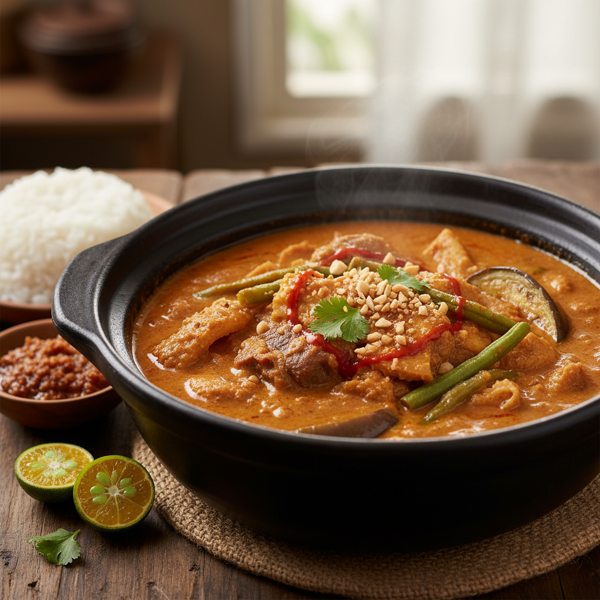
Experience the rich and hearty flavors of the Philippines with this traditional Kari-Kare, a luscious stew featuring tender pork hocks or oxtails simmered to perfection. Enhanced by a creamy peanut sauce and vibrant vegetables, this dish is perfect for family gatherings or special occasions. Served best over fluffy rice, this comforting stew brings together a delightful mix of textures and tastes that will transport your taste buds to the heart of Filipino cuisine.
N/A
Servings
92
Calories
11
Ingredients

Ingredients
Pork hocks or oxtails
2.5 lbs (Cut into 2-inch lengths)
Stewing beef (optional)
0.5 lb (Cut into bite-sized pieces)
Salt
1.5 teaspoons (To taste)
Cooking oil
2 tablespoons (For sautéing)
Garlic
2 cloves (Minced)
Onion
1 medium (Sliced)
Achute water (optional)
0.5 cup (Extracted from soaking achute seeds)
Peanut butter
3 tablespoons (Smooth)
Toasted powdered rice or mochiko sweet rice flour (optional)
2 tablespoons (For thickening)
Green beans
0.5 lb (Trimmed)
Eggplant
1 medium (Cut into 8 pieces)
Instructions
1
In a large pot, add the pork hocks or oxtail pieces and enough water to fully submerge them. Bring to a boil.
2
Reduce the heat to low and let it simmer for 1.5 hours, or until the meat is tender and easily falls off the bone.
3
If using achute for color, soak 1 tablespoon of achute seeds in water for 30 minutes until the water turns red. Squeeze the seeds to extract the color, then strain and set the colored water aside.
4
Alternatively, heat 2 tablespoons of cooking oil in a skillet and sauté the achute seeds until the oil turns red; discard the seeds and use this oil for sautéing.
5
In the same skillet, heat oil and sauté the minced garlic and sliced onion until fragrant and translucent.
6
Add the cooked meat to the skillet along with 2 cups of the reserved broth from the pot. Save the remaining broth for future use.
7
Stir in the salt and achute water or oil, and let it simmer for another 15 minutes to blend the flavors.
8
Mix in the peanut butter and toasted rice powder, allowing the stew to return to a gentle simmer for 5 minutes, stirring occasionally to combine.
9
Add in the green beans and eggplant, and cook for an additional 10 minutes, or until the vegetables are tender yet still vibrant.
10
Taste and adjust the seasoning as desired.
11
Serve this delicious Kari-Kare hot over steamed rice, alongside bagoong either plain or sautéed for that authentic Filipino experience.
Nutrition Information
5.8g
Fat
4.8g
Carbs
6.5g
Protein
Frequently Asked Questions
Frequently Asked Questions
What is Kari-Kare?
Kari-Kare is a traditional Filipino creamy peanut stew known for its rich, hearty flavors and thick sauce.
What meat is used in this recipe?
The primary meats are 2.5 lbs of pork hocks or oxtails, with an optional 0.5 lb of stewing beef.
How long should I simmer the meat?
Simmer the meat for approximately 1.5 hours or until it is tender and easily falls off the bone.
What gives Kari-Kare its signature orange color?
The color comes from achute water, which is extracted by soaking achute seeds in water for 30 minutes.
What vegetables are included in this stew?
This recipe includes half a pound of trimmed green beans and one medium eggplant cut into eight pieces.
What is used to thicken the peanut sauce?
Toasted powdered rice or mochiko sweet rice flour is used as a thickening agent for the stew.
What type of peanut butter is recommended?
The recipe calls for 3 tablespoons of smooth peanut butter.
How is the achute color extracted using oil?
Heat 2 tablespoons of oil and sauté the seeds until the oil turns red, then discard the seeds.
What should I serve with Kari-Kare?
It is best served hot over fluffy steamed rice with a side of plain or sautéed bagoong.
How many calories are in a serving of this stew?
Each serving contains approximately 92 calories.
How much fat is in one serving?
There are 5.8g of fat per serving.
How much protein does this dish provide?
This dish provides 6.5g of protein per serving.
How many carbohydrates are in this recipe?
There are 4.8g of carbohydrates per serving.
What are the essential aromatics for the base?
The base aromatics are 2 minced garlic cloves and 1 medium sliced onion.
How many ingredients are required for this recipe?
The recipe lists 11 ingredients in total.
How do I prepare the eggplant?
The eggplant should be cut into 8 pieces before being added to the stew.
When do I add the vegetables?
Add the green beans and eggplant after the peanut butter and rice powder have simmered for 5 minutes.
How long do the vegetables need to cook?
Cook the vegetables for about 10 minutes until tender but still vibrant.
Should I keep the boiling liquid from the meat?
Yes, reserve 2 cups of the broth to use in the stew and save the rest for future use.
What is the preparation for the pork hocks?
Pork hocks or oxtails should be cut into 2-inch lengths.
Is the beef mandatory for this recipe?
No, the stewing beef is listed as an optional ingredient.
How long do I soak the achute seeds?
The seeds should be soaked for 30 minutes to extract the color.
Can I use mochiko flour instead of toasted rice powder?
Yes, mochiko sweet rice flour is an acceptable optional thickener.
What is the first step in cooking the meat?
The first step is to submerge the meat in water in a large pot and bring it to a boil.
When do I add the peanut butter?
Add the peanut butter after the meat has simmered with the broth and achute for 15 minutes.
Is achute water required?
Achute water is optional, though it provides the traditional color of the dish.
How much cooking oil is needed?
The recipe calls for 2 tablespoons of cooking oil for sautéing.
What tags are associated with this recipe?
Tags include filipino stew, peanut sauce, comfort food, and traditional recipe.
How much salt is recommended?
The recipe suggests 1.5 teaspoons of salt, or to taste.
Is this dish suitable for special occasions?
Yes, it is described as perfect for family gatherings or special occasions.