Creamy Kabocha Squash Soup
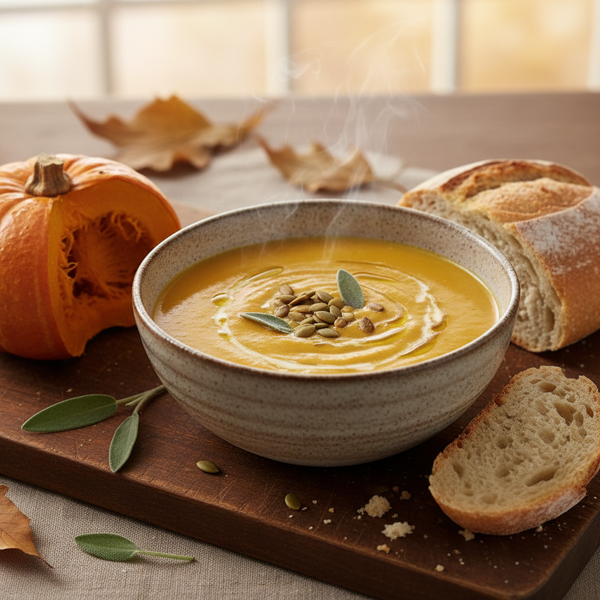
Indulge in the rich and velvety texture of this Creamy Kabocha Squash Soup, a beloved Japanese dish that's perfect for cozy evenings. The natural sweetness of the kabocha squash melds beautifully with the savory notes of sautéed onions and chicken bouillon, resulting in a comforting bowl of goodness. This recipe is simple to prepare, making it an ideal choice for both home cooks and newcomers to Japanese cuisine. Serve it warm with a drizzle of olive oil or a sprinkle of herbs for an elevated touch that will impress your family and friends.
4
Servings
N/A
Calories
8
Ingredients
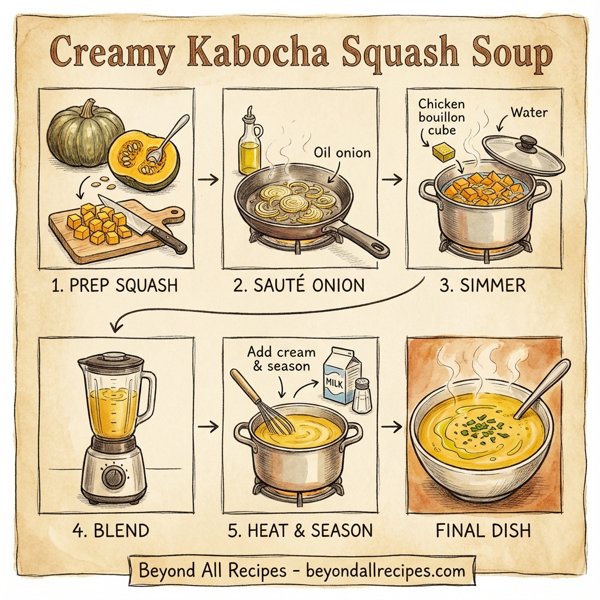
Ingredients
Japanese kabocha squash
1 lb (cut into large blocks and seeds removed)
Onion
1 small (thinly sliced)
Milk
3/4 cup (none)
Chicken bouillon cubes
2 (none)
Water
2 1/3 cups (none)
Butter
1 tablespoon (none)
Salt
to taste (none)
Pepper
to taste (none)
Instructions
Nutrition Information
Frequently Asked Questions
Frequently Asked Questions
What is Creamy Kabocha Squash Soup?
It is a velvety Japanese dish that blends the natural sweetness of kabocha squash with savory sautéed onions and chicken bouillon for a comforting meal.
How many servings does this recipe provide?
This recipe is designed to yield 4 servings.
What are the main ingredients in this soup?
The primary ingredients include 1 lb of Japanese kabocha squash, onion, milk, chicken bouillon cubes, water, butter, salt, and pepper.
Can I make this soup vegan?
Yes, you can substitute the chicken bouillon with vegetable bouillon, the butter with olive oil or vegan butter, and the milk with a plant-based alternative like soy or almond milk.
Do I need to peel the kabocha squash?
While the skin of kabocha squash is edible and nutritious, you may choose to peel it for a smoother, more vibrant orange soup texture.
What is the best way to prepare the kabocha squash for this recipe?
The squash should be cut into large blocks with the seeds removed before cooking.
How should the onion be prepared?
The recipe calls for one small onion to be thinly sliced and sautéed.
What can I use instead of chicken bouillon cubes?
You can use vegetable bouillon cubes or replace the water and cubes with 2 1/3 cups of chicken or vegetable stock.
Is this soup considered a comfort food?
Yes, the creamy texture and warm flavors make it a classic comfort food, especially in Japanese cuisine.
Can I use heavy cream instead of milk?
Yes, substituting milk with heavy cream will result in a richer and more indulgent soup.
What toppings go well with Kabocha Squash Soup?
A drizzle of olive oil, a sprinkle of fresh herbs like parsley, or even toasted pumpkin seeds make excellent toppings.
How do I store leftover soup?
Store leftovers in an airtight container in the refrigerator for up to 3-4 days.
Can I freeze this soup?
Yes, it can be frozen for up to 3 months. Note that the texture may change slightly due to the dairy; whisking it well while reheating helps.
Is kabocha squash the same as pumpkin?
Kabocha is often called Japanese pumpkin, but it is sweeter and has a texture closer to a cross between a pumpkin and a sweet potato.
Do I need a blender for this recipe?
Yes, to achieve the 'creamy' texture, you will need to blend the cooked squash and liquid using an immersion blender or a standard blender.
What is the purpose of adding butter?
Butter is used to sauté the onions and adds a rich, savory depth to the overall flavor of the soup.
Can I add garlic to this recipe?
Absolutely, sautéing a clove of minced garlic with the onions can add a delicious aromatic quality.
What if my soup is too thick?
If the consistency is too thick, simply stir in a little more milk or water until you reach your desired thickness.
What if my soup is too thin?
You can simmer the soup for a few extra minutes to reduce the liquid, or blend in more cooked squash if available.
Is this soup gluten-free?
The main ingredients are gluten-free, but always check your chicken bouillon cubes as some brands contain wheat-based fillers.
Can I use a different type of squash?
While kabocha is traditional, you can use butternut squash or Red Kuri squash as substitutes, though the flavor will vary.
How do I remove the seeds from the squash?
After cutting the squash in half or into blocks, use a large spoon to scrape out the seeds and fibrous pulp.
Is this soup spicy?
No, this is a mild, sweet, and savory soup suitable for all ages.
What category does this recipe fall under?
This is categorized as a Vegetable dish and a soup.
When is the best time to serve this?
It is perfect for cozy autumn or winter evenings, or as a starter for a Japanese-themed dinner.
Can I make this in a slow cooker?
Yes, you can cook the squash, onions, and broth on low for 4-6 hours, then blend and stir in the milk and butter at the end.
How much water is needed?
The recipe requires 2 1/3 cups of water.
Can I add black pepper?
Yes, the recipe suggests adding salt and pepper to taste.
Is this a difficult recipe for beginners?
Not at all; it is noted as an ideal choice for home cooks and newcomers to Japanese cuisine due to its simplicity.
What type of milk is best?
Whole milk provides the best balance of creaminess and flavor, but 2% or skim milk can also be used.