Creamy Homemade Tahini
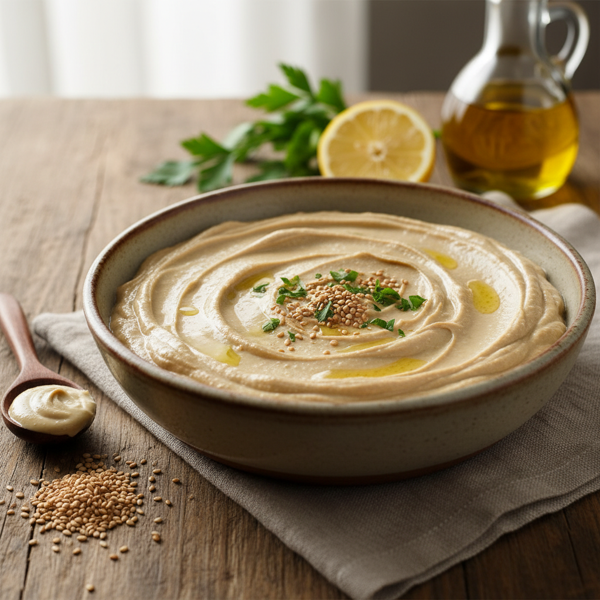
Discover the simplicity of making your own tahini with this easy recipe that requires just two affordable ingredients. Unlike many traditional methods that involve roasting sesame seeds and potentially burning them, this recipe ensures perfectly toasted seeds without any hassle. Homemade tahini is an essential ingredient in numerous dishes ranging from hummus to salad dressings, and by preparing it yourself, you can control the freshness and quality of your ingredients while saving money. Just follow these straightforward steps to create rich, creamy tahini that's full of flavor and ideal for all your culinary needs.
12
Servings
N/A
Calories
2
Ingredients
Ingredients
Brown sesame seeds
1 3/4 - 2 cups (dry roasted)
Bland oil
1/2 - 2/3 cup (none)
Instructions
1
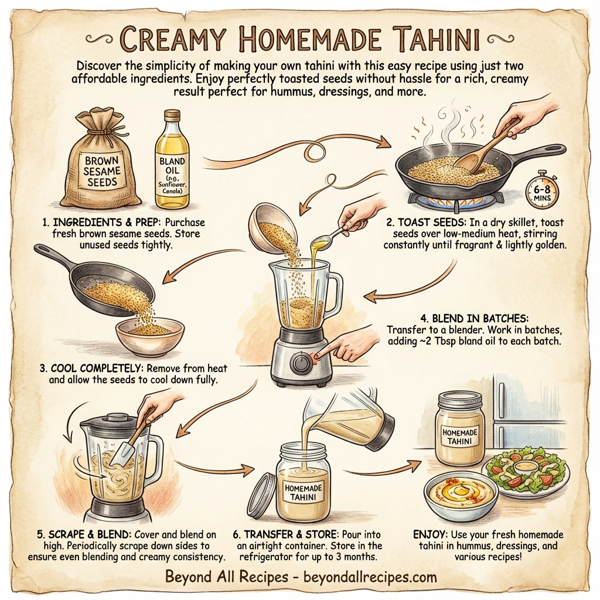
To ensure optimal quality, purchase brown sesame seeds in bulk from natural food stores or Asian markets, where they are often more affordable and fresh. Store any unused seeds in a tightly sealed container to prevent them from going rancid.
2
In a large, clean, dry skillet, toast the sesame seeds over low to medium heat. Stir the seeds constantly to prevent burning; if they start to smoke, reduce the heat. Toast for about 6-8 minutes until the seeds become fragrant and lightly golden, then remove them from the heat and allow them to cool completely.
3
Once the toasted sesame seeds have cooled slightly, transfer them to a blender or food processor fitted with a steel blade. If using a blender, work in two or three batches, adding approximately 2 tablespoons of bland oil to each batch.
4
Cover the blender or processor and blend on high speed until you achieve a thick, creamy consistency similar to nut butter. If your appliance struggles, gradually add more oil, a little at a time, until the desired texture is met. It's normal for some whole seeds to remain unblended.
5
To ensure even blending, periodically scrape down the sides of the blender or processor. Continue this process for each batch of sesame seeds until all are blended together.
6
Transfer the finished tahini to an airtight container. Store in the refrigerator, where it will stay fresh for up to three months. Enjoy your homemade tahini in a variety of recipes!
Nutrition Information
Frequently Asked Questions
Frequently Asked Questions
What are the main ingredients for homemade tahini?
The main ingredients are 1 3/4 to 2 cups of brown sesame seeds and 1/2 to 2/3 cup of a bland oil.
What type of sesame seeds should I use for this recipe?
This recipe specifically calls for brown sesame seeds.
Where is the best place to buy sesame seeds?
For the best quality and price, purchase seeds in bulk from natural food stores or Asian markets.
How should I store unused sesame seeds?
Unused seeds should be stored in a tightly sealed container to prevent them from going rancid.
Do I need to roast the sesame seeds for tahini?
Yes, you should toast the seeds in a dry skillet until they are fragrant and lightly golden.
How long does it take to toast the sesame seeds?
Toasting the seeds typically takes about 6 to 8 minutes over low to medium heat.
What is the secret to not burning sesame seeds?
Stir the seeds constantly and reduce the heat immediately if they begin to smoke.
Should the toasted seeds be hot when I blend them?
No, you should allow the toasted sesame seeds to cool completely before transferring them to a blender or food processor.
What equipment is best for making tahini?
A blender or a food processor fitted with a steel blade is ideal for making creamy tahini.
Should I blend all the sesame seeds at once?
If you are using a blender, it is recommended to work in two or three batches for the best results.
What kind of oil should I use for tahini?
You should use a bland oil to ensure the flavor of the sesame seeds remains the focus.
How much oil should I add to each batch when blending?
Start by adding approximately 2 tablespoons of oil to each batch of seeds.
What consistency should the tahini have?
The tahini should reach a thick, creamy consistency similar to nut butter.
What should I do if my blender struggles to process the seeds?
If your appliance struggles, gradually add more oil, a little at a time, until the desired texture is achieved.
Is it normal to have whole seeds in the finished tahini?
Yes, it is perfectly normal for some whole seeds to remain unblended in the final mixture.
Why do I need to scrape down the sides of the blender?
Scraping down the sides ensures even blending and a smoother consistency for the entire batch.
How should I store homemade tahini?
Transfer the finished tahini to an airtight container and store it in the refrigerator.
How long does homemade tahini stay fresh?
When stored in the refrigerator, homemade tahini will stay fresh for up to three months.
Is this tahini recipe vegan?
Yes, this recipe is vegan as it only uses sesame seeds and vegetable-based oil.
Is this recipe gluten-free?
Yes, tahini is naturally gluten-free.
How many servings does this recipe make?
This recipe makes approximately 12 servings.
Can I use tahini in salad dressings?
Yes, homemade tahini is a perfect ingredient for salad dressings, hummus, and various dips.
Why make tahini at home instead of buying it?
Making it at home allows you to control freshness, save money, and avoid the risk of burnt seeds often found in store-bought versions.
What is the preparation method for the seeds?
The seeds should be dry roasted in a skillet before blending.
Is tahini considered a nut butter?
While made from seeds, it is often categorized similarly to nut butter due to its texture and use.
What cuisine is tahini traditionally associated with?
Tahini is a staple ingredient in Middle Eastern cuisine.
Can I use a low-speed setting to blend the seeds?
The instructions recommend blending on high speed to achieve the creamy consistency.
What color should the toasted seeds be?
The seeds should be toasted until they are lightly golden.
Does this recipe use salt?
No, this specific recipe only requires sesame seeds and oil.
How many ingredients are in this recipe total?
There are only two ingredients: brown sesame seeds and bland oil.