Creamy Homemade Honey Yogurt

This delightful homemade yogurt recipe, inspired by Alton Brown's Good Eats, transforms simple ingredients into a luscious and creamy treat that elevates your breakfast or snack experience. The addition of honey beautifully balances the tanginess of the yogurt, making it an irresistible and nutritious choice. Once you savor the rich flavor and smooth texture of your homemade yogurt, you'll be awakened to a new world of culinary possibilities far beyond the store-bought varieties. Ideal for pairing with fresh fruits, granola, or even enjoying on its own, this yogurt will quickly become a staple in your kitchen.
N/A
Servings
N/A
Calories
4
Ingredients
Ingredients
2% low-fat milk
1 quart (none)
non-fat powdered milk
1/2 cup (none)
honey
2 tablespoons (none)
plain yogurt with active live cultures
1/2 cup (at room temperature)
Instructions
1
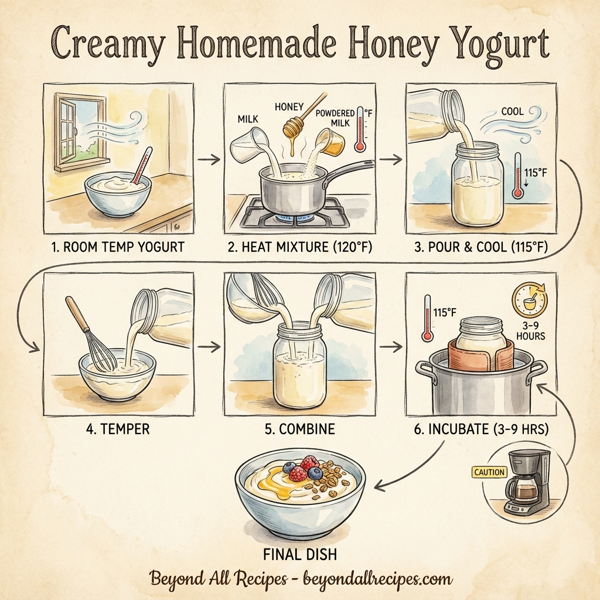
Begin by allowing the plain yogurt to reach room temperature; this sets the stage for the active cultures to thrive.
2
In a saucepan, gently heat the 2% low-fat milk, non-fat powdered milk, and honey until the mixture reaches 120°F (49°C). Stir gently to combine.
3
Once heated, pour the milk mixture into a very clean container that will serve as your yogurt incubator.
4
Allow the mixture to cool down to 115°F (46°C). This is the perfect temperature for fermentation.
5
In a separate bowl, whisk together 1 cup of the hot milk mixture with the room-temperature yogurt. This will help to temper the yogurt and incorporate it smoothly.
6
Pour the yogurt mixture back into the container with the remaining milk, stirring gently to combine.
7
For even heat distribution, wrap the container in a heating pad set to low or medium-low and place it inside a stock pot to maintain warmth.
8
Monitor the temperature closely, aiming to keep it at a steady 115°F. Adjust the heating pad as needed to prevent overheating, as temperatures above 120°F can kill the active cultures.
9
If you don't have a heating pad, an insulated electric coffee maker can also be used, but be cautious as it may not distribute heat evenly; use an oven mitt to prevent overheating.
10
Allow the yogurt to incubate for 3 to 9 hours, depending on your preferred consistency. The longer it sits, the thicker and firmer it will become.
11
Once the desired consistency is achieved, transfer the yogurt to the refrigerator to chill before serving.
Nutrition Information
Frequently Asked Questions
Frequently Asked Questions
What is Creamy Homemade Honey Yogurt?
It is a luscious treat made from simple ingredients that elevates your breakfast or snack experience.
Who inspired this yogurt recipe?
This recipe was inspired by Alton Brown's Good Eats series.
How does honey enhance the yogurt?
Honey balances the tanginess of the yogurt, making it sweet and nutritious.
What are the best serving suggestions?
This yogurt is ideal for pairing with fresh fruits, granola, or enjoying on its own.
What type of milk is used in the recipe?
The recipe calls for 2% low-fat milk.
How much 2% milk is required?
You will need exactly 1 quart of 2% low-fat milk.
Why is non-fat powdered milk added?
It helps to create a thicker and creamier consistency in the homemade yogurt.
How much honey is included?
The recipe requires 2 tablespoons of honey.
What starter is needed for this yogurt?
You need 1/2 cup of plain yogurt that contains active live cultures.
Why should the starter be at room temperature?
Bringing the yogurt to room temperature sets the stage for the active cultures to thrive.
To what temperature should the milk be heated?
The milk mixture should be heated gently to 120 degrees Fahrenheit (49 degrees Celsius).
Why is it important to stir the mixture while heating?
Stirring ensures that the milk, powdered milk, and honey are combined evenly.
What is the target temperature for fermentation?
The mixture must cool down to 115 degrees Fahrenheit (46 degrees Celsius) for perfect fermentation.
How do you temper the yogurt starter?
Whisk 1 cup of the hot milk mixture with the room-temperature yogurt before combining it with the rest.
Why is tempering the yogurt important?
Tempering helps to incorporate the yogurt smoothly into the milk mixture.
What kind of container is needed for incubation?
You should use a very clean container that will serve as your yogurt incubator.
How can you maintain warmth during incubation?
Wrap the container in a heating pad and place it inside a stock pot to maintain steady warmth.
What heat setting should be used on the heating pad?
The heating pad should be set to a low or medium-low setting.
What happens if the temperature exceeds 120 degrees F?
Temperatures above 120 degrees Fahrenheit can kill the active cultures.
Can I use an electric coffee maker for incubation?
Yes, an insulated electric coffee maker can be used as an alternative incubation method.
What precaution is needed if using a coffee maker?
Use an oven mitt to prevent overheating as coffee makers may not distribute heat evenly.
How long should the yogurt incubate?
The yogurt needs to incubate for 3 to 9 hours depending on your preference.
How does incubation time affect texture?
The longer the yogurt incubates, the thicker and firmer the final texture will be.
When should the yogurt be refrigerated?
Transfer the yogurt to the refrigerator once it reaches your desired consistency.
Is this yogurt recipe healthy?
Yes, it is described as a nutritious choice and a healthy snack.
Is this recipe low in cholesterol?
Yes, it is tagged as a low cholesterol recipe.
What makes homemade yogurt better than store-bought?
Homemade yogurt offers a rich flavor and smooth texture that surpasses store-bought options.
How much powdered milk is needed?
The recipe calls for 1/2 cup of non-fat powdered milk.
What tags are associated with this recipe?
Tags include homemade, healthy snack, fermented, dairy, and Alton Brown.
What is the role of the stock pot in the process?
The stock pot holds the container and heating pad to ensure even heat distribution.