Creamy Gluten-Free Turkey Tetrazzini Delight
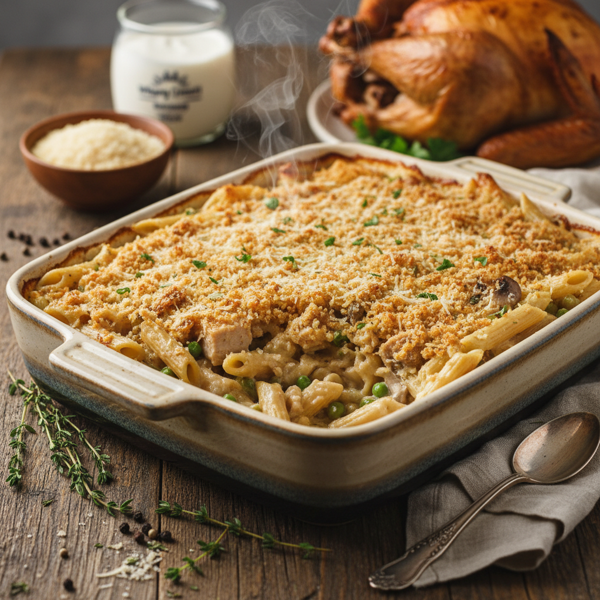
Indulge in this delicious Creamy Gluten-Free Turkey Tetrazzini Delight, a comforting dish that brings a twist to the classic recipe without the wheat! Made with creamy rice milk and non-hydrogenated margarine, this recipe retains that velvety texture and rich flavor you crave. Packed with nutritious ingredients like mushrooms and turkey, it’s perfect for a family dinner or a cozy night in. This dish is incredibly versatile; you can easily swap the turkey for chicken if you prefer, and the best part? You won’t even realize you’re skipping the gluten! This satisfying entrée is sure to please everyone at the table.
N/A
Servings
N/A
Calories
16
Ingredients
Ingredients
Cooked turkey
2-3 cups (cut up)
Brown rice or regular rice spaghetti
8 ounces (cooked)
Non-hydrogenated margarine or butter
3 tablespoons (melted)
Rice milk
1 1/4 cups
No-salt-added chicken broth or low sodium chicken broth
1 1/4 cups
Sliced mushrooms
8 ounces
Chickpea flour (garbanzo)
2 tablespoons
Fine rice flour
1 tablespoon
Potato starch
1 teaspoon
Garlic powder
1/4 teaspoon
Rubbed sage
1/8 teaspoon
Black pepper
1/8 teaspoon
Oregano
1/2 teaspoon
Basil
1/2 teaspoon
Dill
1/8 teaspoon
Parmesan cheese (optional)
1/4 cup (shredded)
Instructions
1
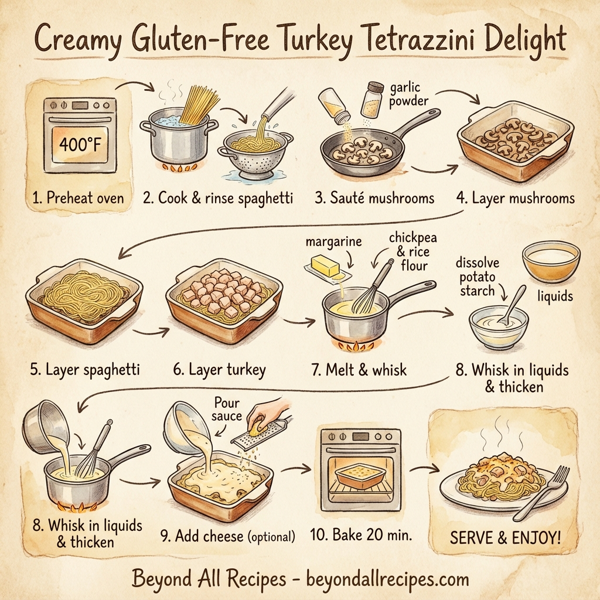
Preheat your oven to 400°F (200°C).
2
Cook the spaghetti according to package instructions until firm al dente, then drain and rinse under cold water to remove excess starch. Set aside.
3
In a non-stick pan, spray with cooking spray and heat over medium-high heat. Add sliced mushrooms and garlic powder, sautéing until the mushrooms are nicely browned. Transfer them to the bottom of a greased 3-quart square casserole dish.
4
Layer the spaghetti evenly over the sautéed mushrooms in the casserole dish.
5
Place the cooked turkey over the spaghetti in an even layer.
6
In a saucepan over medium heat, melt the margarine. Gradually whisk in the chickpea and rice flours, stirring until well combined.
7
In a separate bowl, dissolve the potato starch in one of the liquids (either the milk or broth).
8
Whisk the remaining liquid (milk or broth) into the margarine mixture, stirring continuously, and bring to a gentle boil. Cook until the sauce thickens, then pour it evenly over the turkey and spaghetti layers in the casserole dish.
9
If using, sprinkle the parmesan cheese over the top for added flavor.
10
Bake in the preheated oven for about 20 minutes, or until the dish is bubbly and golden. Let it cool slightly before serving.
Nutrition Information
Frequently Asked Questions
Frequently Asked Questions
Is this Turkey Tetrazzini recipe gluten-free?
Yes, this recipe is specifically designed to be gluten-free by using brown rice spaghetti, rice milk, chickpea flour, and rice flour.
Can I substitute chicken for turkey in this recipe?
Absolutely! You can easily swap the turkey for an equal amount of cooked chicken if you prefer.
What type of pasta works best for this gluten-free dish?
The recipe recommends using 8 ounces of brown rice or regular rice spaghetti.
At what temperature should the oven be preheated?
The oven should be preheated to 400°F (200°C).
How do I prepare the spaghetti for the casserole?
Cook the spaghetti according to the package instructions until firm al dente, then drain and rinse it under cold water to remove excess starch.
How should I prepare the mushrooms?
Sauté 8 ounces of sliced mushrooms with garlic powder in a non-stick pan until they are nicely browned.
What kind of milk is used in this recipe?
This recipe calls for 1 1/4 cups of rice milk to maintain a creamy, dairy-alternative texture.
What flours are used to thicken the sauce?
The sauce is thickened using a combination of chickpea flour (garbanzo) and fine rice flour.
How do I use potato starch in this recipe?
Dissolve 1 teaspoon of potato starch in either the rice milk or the chicken broth before adding it to the sauce.
How long should the Turkey Tetrazzini bake?
Bake the casserole for approximately 20 minutes, or until it is bubbly and golden on top.
Is parmesan cheese a required ingredient?
No, the 1/4 cup of shredded parmesan cheese is optional and can be added for extra flavor if desired.
What size casserole dish is needed?
A greased 3-quart square casserole dish is recommended for this recipe.
Which herbs are used for seasoning?
The recipe is seasoned with rubbed sage, oregano, basil, and dill.
How much cooked turkey is required?
You will need 2 to 3 cups of cooked turkey, cut into pieces.
Can I use butter instead of margarine?
Yes, you can use either non-hydrogenated margarine or butter depending on your preference.
Why should I rinse the gluten-free pasta in cold water?
Rinsing the cooked pasta in cold water helps remove excess starch, preventing the noodles from becoming too gummy in the casserole.
What type of broth should I use?
You can use 1 1/4 cups of no-salt-added chicken broth or low-sodium chicken broth.
How do I make the roux for the sauce?
Melt the margarine in a saucepan and gradually whisk in the chickpea and rice flours until well combined.
What is the layering order for the casserole?
The layers go: sautéed mushrooms on the bottom, followed by the spaghetti, then the cooked turkey, and finally the sauce.
How do I ensure the sauce thickens correctly?
Bring the sauce mixture to a gentle boil while stirring continuously until it reaches the desired thickness.
Does this recipe use fresh garlic?
No, it uses 1/4 teaspoon of garlic powder to season the mushrooms.
Can I use this recipe for meal prep?
Yes, this is a great comfort food dish that can be assembled and then baked when you are ready to eat.
Is this recipe suitable for those avoiding hydrogenated fats?
Yes, the recipe specifically suggests using non-hydrogenated margarine.
How much black pepper is added?
The recipe calls for 1/8 teaspoon of black pepper.
What is the final texture of the dish?
It results in a creamy, velvety texture with a satisfying golden top.
How much basil and oregano are needed?
The recipe uses 1/2 teaspoon each of dried basil and oregano.
Should I let the dish cool before serving?
Yes, it is recommended to let the dish cool slightly after taking it out of the oven to help the sauce set.
Can I use a different gluten-free pasta shape?
While spaghetti is classic for Tetrazzini, you could use other gluten-free shapes like fusilli or penne if needed.
Is this recipe dairy-free?
It can be dairy-free if you use margarine instead of butter and omit the optional parmesan cheese, as it already uses rice milk.
What are the main flavor profiles of this dish?
The dish is savory and earthy, thanks to the mushrooms, turkey, and a blend of sage, basil, and oregano.