Creamy Filipino Adobo Braised Beef
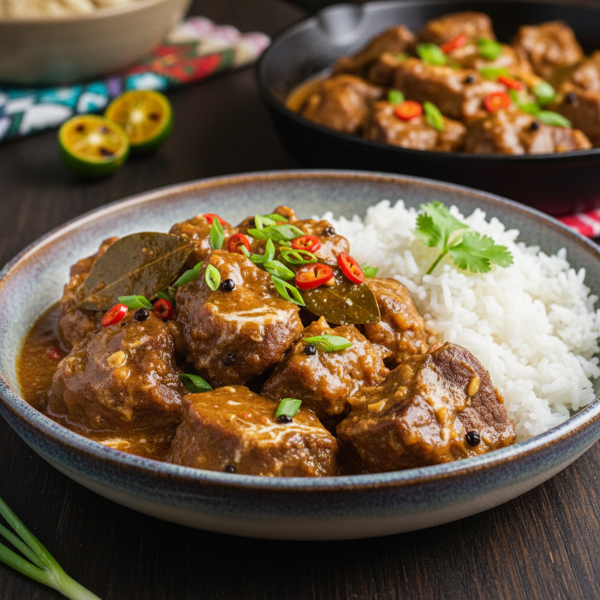
Experience the rich and harmonious flavors of Filipino cuisine with this Creamy Filipino Adobo Braised Beef recipe. Marinated in a tangy blend of vinegar and soy sauce, this dish is elevated by the addition of creamy coconut milk, making it a delightful stew that's both savory and comforting. Originally inspired by the traditional Filipino adobo, this version showcases the influence of Indonesian flavors, particularly through the use of coconut milk. It's a versatile recipe that can easily be adapted to include pork or chicken, providing a delicious and hearty meal for any occasion. Serve it over steamed rice to soak up the luscious sauce and enjoy a taste of the Philippines in every bite.
N/A
Servings
N/A
Calories
11
Ingredients
Ingredients
Stewing beef chuck
3 lbs (cubed)
White vinegar
3/4 cup
Garlic
1 head (peeled and crushed)
Soy sauce
1/2 cup
Bay leaves
4
Whole black peppercorns
1 1/2 tablespoons
Fresh ground black pepper
1 tablespoon
Sugar
1 tablespoon
Vegetable oil
4 tablespoons
Salt or patis
1 tablespoon
Coconut milk
1 (12 ounce) can
Instructions
1
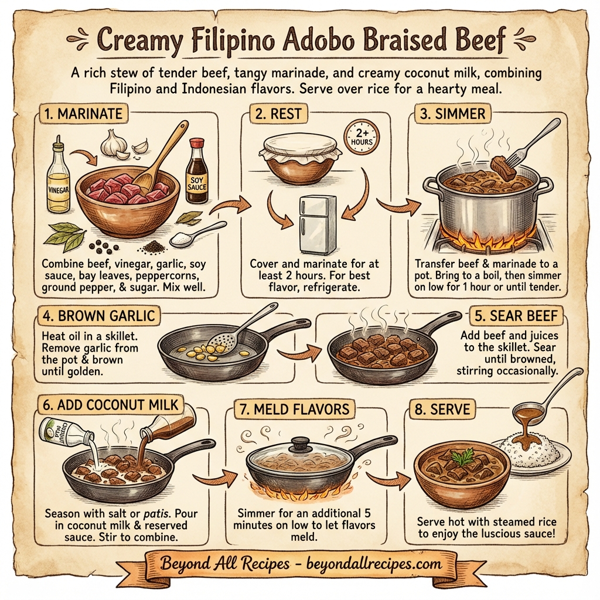
In a large mixing bowl, combine cubed beef chuck, white vinegar, crushed garlic, soy sauce, bay leaves, whole black peppercorns, ground black pepper, and sugar. Mix well to ensure the beef is coated in the marinade.
2
Cover the bowl and let the mixture stand for at least 2 hours; for best results, marinate it in the refrigerator to enhance the flavors.
3
Transfer the marinated beef and all the marinade ingredients into a large pot. Bring to a boil over medium-high heat. Once boiling, reduce the heat to low and simmer for about 1 hour or until the beef is fork-tender.
4
In a large skillet, heat the vegetable oil over medium heat. Using a slotted spoon, remove the garlic from the beef mixture and add it to the skillet. Cook the garlic until it turns golden brown.
5
Next, add the marinated beef to the skillet along with its juices. Sear the beef until it is browned on all sides, stirring occasionally to prevent sticking.
6
Season with salt or patis to taste, then pour in the coconut milk along with the reserved sauce from the pot. Stir well to combine.
7
Allow the mixture to cook for an additional 5 minutes on low heat, letting all the flavors meld together.
8
Serve hot, accompanied by steamed rice to soak up the delicious sauce.
Nutrition Information
Frequently Asked Questions
Frequently Asked Questions
What is Creamy Filipino Adobo Braised Beef?
It is a Filipino-inspired stew featuring beef marinated in vinegar and soy sauce, braised until tender, and finished with creamy coconut milk.
What cut of beef is best for this recipe?
The recipe recommends using 3 lbs of stewing beef chuck, cubed for optimal tenderness.
How long should I marinate the beef?
You should marinate the beef for at least 2 hours, preferably in the refrigerator.
Can I marinate the beef overnight?
Yes, marinating the beef overnight in the refrigerator will enhance the flavors and further tenderize the meat.
What makes this adobo recipe 'creamy'?
The addition of a 12-ounce can of coconut milk at the end of the cooking process provides its signature creamy texture.
Can I substitute beef with other meats?
Yes, this recipe is versatile and can easily be adapted to include pork or chicken.
How much garlic is needed for this dish?
This recipe calls for one full head of garlic, peeled and crushed.
What type of vinegar should I use?
The recipe specifies 3/4 cup of white vinegar for the marinade.
How long does the beef need to simmer?
Simmer the marinated beef for approximately 1 hour or until it becomes fork-tender.
Why do I need to sear the beef after simmering?
Searing the beef in a skillet after simmering browns the meat and adds a deeper flavor profile to the dish.
What is patis?
Patis is Filipino fish sauce, used in this recipe as an alternative to salt to add savory depth.
How many bay leaves are required?
The recipe uses 4 bay leaves to infuse the marinade with flavor.
What should I serve with this beef adobo?
It is best served hot over steamed rice to soak up the luscious creamy sauce.
What kind of soy sauce should I use?
The recipe calls for 1/2 cup of soy sauce; standard Filipino soy sauce or regular soy sauce works well.
Is there sugar in this recipe?
Yes, 1 tablespoon of sugar is included in the marinade to balance the acidity of the vinegar.
When do I add the coconut milk?
The coconut milk is added in the final stages of cooking, after the beef has been seared and returned to the sauce.
How much oil is used for searing?
The recipe uses 4 tablespoons of vegetable oil to sear the beef and golden the garlic.
What types of pepper are used?
The recipe uses a combination of 1 1/2 tablespoons of whole black peppercorns and 1 tablespoon of fresh ground black pepper.
Do I use the marinade liquid for cooking?
Yes, the marinated beef and all the marinade ingredients are transferred to a pot and brought to a boil.
How do I prepare the garlic?
The garlic should be peeled and crushed, then later removed from the marinade and browned in the skillet.
Can I use coconut cream instead of coconut milk?
Yes, coconut cream can be used for an even richer and thicker sauce, though the recipe specifies a 12-ounce can of coconut milk.
How many ingredients are in this recipe?
There are 11 ingredients total in this Creamy Filipino Adobo Braised Beef recipe.
Is this recipe spicy?
No, it is savory and tangy. While it contains peppercorns, the heat is very mild.
Can I make this in a slow cooker?
Yes, you can simmer the beef in a slow cooker until tender before finishing the searing and coconut milk steps on the stove.
What is the origin of this dish?
While based on traditional Filipino adobo, this creamy version shows influence from Indonesian flavors via the use of coconut milk.
Should I remove the bay leaves before serving?
It is standard practice to remove bay leaves before serving as they are used for flavor infusion and are not meant to be eaten.
How do I know when the beef is ready?
The beef is ready when it is fork-tender, which usually takes about an hour of simmering.
Can I use apple cider vinegar instead of white vinegar?
Yes, apple cider vinegar or cane vinegar are suitable substitutes if white vinegar is unavailable.
How long do I cook the mixture after adding coconut milk?
Allow the mixture to cook for an additional 5 minutes on low heat after adding the coconut milk.
Is this dish considered comfort food?
Yes, the rich, savory, and creamy nature of this stew makes it a popular comfort food choice.