Creamy Fennel and Basmati Rice Porridge

Start your day with a warm and comforting bowl of Creamy Fennel and Basmati Rice Porridge. This wholesome breakfast is made with fragrant basmati rice, sweet fennel, and nutrient-packed peas, simmered to perfection in a savory chicken broth or vegetable stock, creating a creamy texture that's both satisfying and nutritious. Topped with quartered hard-boiled eggs for added protein and garnished with fresh fennel fronds, this porridge is not only delicious but also a delightful way to enjoy the unique flavors of fennel. Perfect for meal prep or sharing with family and friends, indulge in this cozy dish that redefines breakfast.
N/A
Servings
N/A
Calories
6
Ingredients
Ingredients
water
6 cups (none)
basmati rice
2 cups (rinsed)
low sodium chicken broth or vegetable stock
4 cups (none)
fennel bulb
1 medium (about 2 cups) (chopped)
frozen peas
2 cups (none)
eggs
4 (hard boiled, peeled, and quartered)
Instructions
1
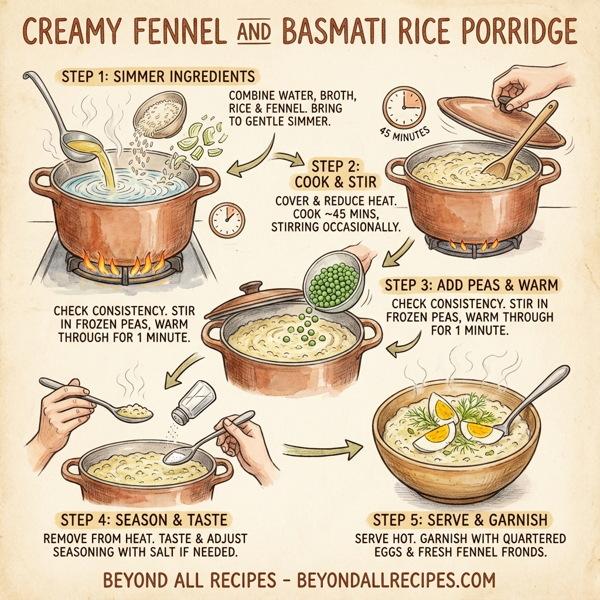
In a large pot, combine both the water and chicken broth (or vegetable stock) with the basmati rice and chopped fennel. Set the pot on medium heat and bring the mixture to a gentle simmer.
2
Once simmering, cover the pot and reduce the heat to low, allowing it to cook for approximately 45 minutes. Stir occasionally to ensure even cooking and to prevent the rice from sticking.
3
After about 45 minutes, check the consistency of the porridge. It should be creamy with a bit of liquid left. Stir in the frozen peas and let them warm through for about 1 minute.
4
Remove the pot from the heat and taste the porridge, adjusting the seasoning with salt if necessary.
5
Serve the porridge hot, garnished with quartered hard-boiled eggs and a sprinkle of fresh fennel fronds for an aromatic finish.
Nutrition Information
Frequently Asked Questions
Frequently Asked Questions
What is Creamy Fennel and Basmati Rice Porridge?
It is a warm, savory breakfast dish made with basmati rice, fresh fennel, and peas simmered in broth until they reach a creamy, comforting consistency.
What type of rice is used in this recipe?
This recipe uses basmati rice, which is known for its fragrant aroma and long grains.
Is this recipe suitable for vegetarians?
Yes, you can easily make this vegetarian by using vegetable stock instead of chicken broth.
How long does it take to cook the porridge?
The porridge needs to simmer for approximately 45 minutes on low heat to achieve the desired creamy texture.
How many eggs are required for this dish?
The recipe calls for 4 hard-boiled eggs, which are peeled and quartered for topping.
What is the ratio of liquid to rice?
The recipe uses 10 cups of liquid (6 cups water and 4 cups broth) for 2 cups of basmati rice.
When should I add the frozen peas?
Add the frozen peas after the rice has finished simmering for 45 minutes, letting them warm through for about one minute.
Do I need to rinse the rice before cooking?
Yes, the recipe recommends rinsing the basmati rice before adding it to the pot.
How should I prepare the fennel?
The fennel bulb should be chopped before cooking, and the fresh fronds should be saved for use as a garnish.
What is the best way to serve this porridge?
Serve it hot in bowls, garnished with quartered hard-boiled eggs and a sprinkle of fresh fennel fronds.
Can I use low-sodium broth?
Yes, low-sodium chicken broth or vegetable stock is specifically recommended to help control the salt content.
Is this dish good for meal prep?
Absolutely, this porridge can be made in large batches and stored for easy breakfasts throughout the week.
How do I prevent the rice from sticking to the pot?
Stir the mixture occasionally while it is simmering on low heat to ensure even cooking and prevent sticking.
Can I use brown basmati rice instead?
Yes, but keep in mind that brown rice will require a longer cooking time and potentially more liquid.
What does fennel taste like in this dish?
Fennel provides a mild, sweet, and slightly aromatic flavor that complements the savory broth and rice.
Should the pot be covered during cooking?
Yes, once the mixture reaches a simmer, cover the pot and reduce the heat to low for the 45-minute cooking duration.
Can I add extra seasonings?
Yes, you can adjust the taste with salt after cooking, and optionally add black pepper or other herbs.
Is this recipe gluten-free?
The ingredients are naturally gluten-free, but always double-check your broth or stock label to ensure it is certified gluten-free.
How many servings does this recipe provide?
Based on the 2 cups of rice and 10 cups of liquid, this recipe generally serves 4 to 6 people.
Can I use fresh peas instead of frozen?
Yes, fresh peas work well; you may just need to simmer them for an extra minute or two compared to frozen peas.
Is this a healthy breakfast option?
Yes, it is a nutrient-packed meal featuring whole grains, vegetables, and protein from the eggs.
How do I reheat leftovers?
Reheat the porridge on the stovetop or in the microwave, adding a splash of water or broth if it has thickened too much in the fridge.
What is the texture of the finished porridge?
The texture should be creamy and soft, with a small amount of liquid still remaining.
Can I substitute the eggs with another protein?
Yes, if you prefer not to use eggs, you could try topped with smoked salmon, tofu, or even some cooked shredded chicken.
How do I know when the porridge is done?
It is done when the rice is tender and the mixture has a creamy consistency, usually after 45 minutes.
Can I use a different type of bulb vegetable?
While fennel is key for the specific flavor, you could experiment with leeks for a different savory profile.
Is the fennel bulb the only part of the plant used?
No, the recipe uses the chopped bulb for cooking and the fronds for an aromatic garnish.
Can I make this in a pressure cooker?
Yes, though timing will vary; typically rice porridge in a pressure cooker takes about 15-20 minutes on high pressure with a natural release.
What if I want it even creamier?
You can stir in a small amount of milk, cream, or a dollop of Greek yogurt just before serving.
Can this be eaten for dinner?
Yes, its savory nature makes it a great option for a light and comforting dinner or lunch.