Creamy Cultured Spreadable Butter
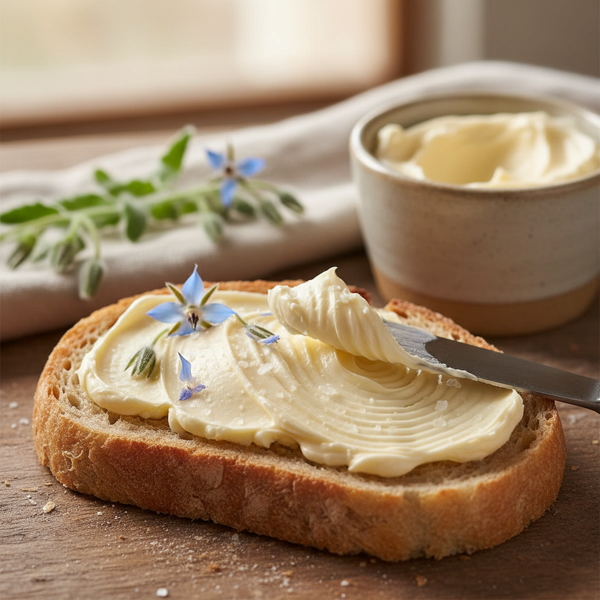
Create your own creamy, spreadable butter that’s perfect for slathering on toast, bagels, or muffins straight from the refrigerator. This homemade version emulates the smooth, spreadable butter alternatives found in stores but is more cost-effective and healthier, containing less saturated fat than traditional butter. Using your choice of mild-flavored oils, like expeller-pressed safflower or a blended canola and olive oil, allows you to customize the taste while keeping the texture irresistibly soft. Enjoy this buttery delight in sautéed dishes without the worry of burning, providing a flavorful yet versatile cooking fat that elevates your culinary creations. Make sure to keep it chilled to maintain its perfect consistency!
N/A
Servings
N/A
Calories
2
Ingredients
Ingredients
Cultured Unsalted Butter
4 ounces (Softened)
Safflower Oil
1/4 cup (Or your choice of oil)
Instructions
1
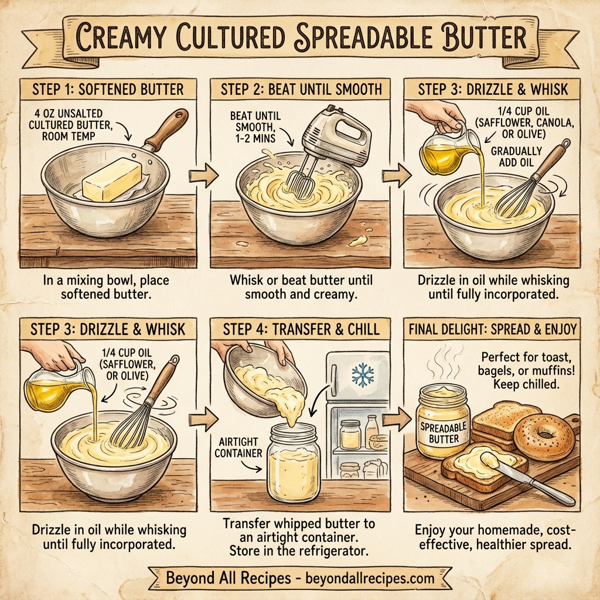
In a mixing bowl, place 4 ounces of softened unsalted cultured butter at room temperature.
2
Using a whisk or an electric mixer, beat the butter until it is smooth and creamy, about 1-2 minutes.
3
Gradually drizzle in 1/4 cup of your chosen oil (safflower, canola, or olive) while continuously whisking until the mixture is fully incorporated and has an even consistency.
4
Transfer the whipped butter into an airtight container, smoothing the top for easy access.
5
Store in the refrigerator for optimal freshness. Remember, this spreadable butter can soften quickly, so return it to the fridge after use.
Nutrition Information
Frequently Asked Questions
Frequently Asked Questions
What is Creamy Cultured Spreadable Butter?
It is a homemade, smooth, and spreadable butter alternative made by whisking cultured butter with mild-flavored oils, making it easier to spread straight from the fridge.
How does this compare to store-bought spreadable butter?
This homemade version emulates store-bought alternatives but is more cost-effective and healthier, containing less saturated fat than traditional butter.
What are the primary ingredients needed?
The recipe requires 4 ounces of softened unsalted cultured butter and 1/4 cup of your choice of oil, such as safflower, canola, or olive oil.
What type of oil is best for this recipe?
Mild-flavored oils are best. Options include expeller-pressed safflower oil or a blend of canola and olive oil.
Can I use this butter for cooking?
Yes, it is a versatile cooking fat that can be used for sautéing without the worry of burning.
How do I ensure the butter is spreadable?
By incorporating oil into the whipped butter, the mixture remains soft even when stored in the refrigerator.
What is the first step in the instructions?
Start by placing 4 ounces of softened unsalted cultured butter at room temperature into a mixing bowl.
How long should I beat the butter?
You should beat the butter using a whisk or electric mixer for about 1-2 minutes until it is smooth and creamy.
How should the oil be added?
Gradually drizzle the oil into the butter while continuously whisking until the mixture is fully incorporated.
How should I store the spreadable butter?
Transfer the butter into an airtight container and store it in the refrigerator to maintain optimal freshness and consistency.
Why should I return the butter to the fridge immediately after use?
This spreadable butter can soften very quickly at room temperature, so keeping it chilled is necessary to maintain its texture.
What can I serve this butter with?
It is perfect for slathering on toast, bagels, or muffins.
Is this recipe healthy?
It is considered a healthier alternative because it contains less saturated fat than traditional pure butter.
Can I use salted butter instead?
The recipe specifies unsalted cultured butter, but you can customize it based on your flavor preferences.
Does the type of butter matter?
The recipe calls for cultured butter, which provides a distinct, slightly tangy flavor compared to regular butter.
Can I use an electric mixer?
Yes, an electric mixer or a manual whisk can be used to beat the butter and oil together.
How many ingredients are in this recipe?
There are only 2 ingredients: cultured unsalted butter and your choice of oil.
Is the recipe easy to follow?
Yes, it is tagged as an easy recipe with only five simple steps.
Will the oil separate from the butter?
If you whisk continuously while drizzling the oil, the mixture will reach an even consistency and stay incorporated.
Can I use olive oil exclusively?
Yes, you can use olive oil, though a blend with a milder oil like canola can help prevent the olive flavor from being too overpowering.
Why use expeller-pressed safflower oil?
It is recommended because of its mild flavor, which allows the natural taste of the butter to shine through.
How many steps are in the preparation process?
There are 5 steps: preparing the butter, beating it, adding oil, transferring to a container, and storing.
Does it have a high burning point?
Because it is blended with oil, it provides a flavorful cooking fat that is less likely to burn during sautéing than plain butter.
Can I make a larger batch?
Yes, you can scale the recipe as long as you maintain the ratio of 4 parts butter to 1 part oil.
Is the butter supposed to be melted?
No, the butter should be softened to room temperature, not melted, to ensure it whips properly.
How do I smooth the top of the butter?
Once transferred to the container, use a spatula or the back of a spoon to smooth the top for easy access.
What is the texture of the final product?
The final product is irresistibly soft, creamy, and easy to spread.
Can I customize the flavor?
Yes, by choosing different mild-flavored oils, you can subtly customize the final taste of your spread.
Is this recipe cost-effective?
Yes, making it at home is generally cheaper than purchasing premium spreadable butter brands at the store.
How do I maintain the consistency?
Keeping the butter in an airtight container in the refrigerator is the key to maintaining its perfect spreadable consistency.