Creamy Classic Risotto
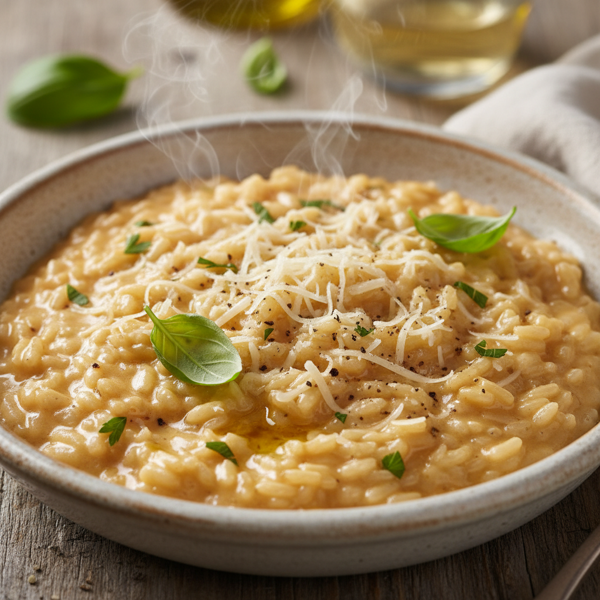
Discover the rich, velvety texture and comforting flavors of this creamy classic risotto, perfect for any occasion. With carefully sautéed shallots, aromatic garlic, and a hint of zesty dry vermouth or white wine, every spoonful brings you a taste of Italian culinary tradition. This dish is not only versatile; it can be tailored with your favorite ingredients, from seasonal vegetables to succulent seafood. Engage your senses and enjoy a heartwarming dish that requires your undivided attention for just 17 minutes — a small investment for a show-stopping meal that will impress family and friends alike!
N/A
Servings
N/A
Calories
11
Ingredients
Ingredients
Chicken stock (or vegetable stock)
1 liter (Heated)
Olive oil
1 tablespoon (For sautéing)
Shallots (or onions)
3 (Finely chopped)
Celery
1 head (Finely chopped, discard tough outer sticks)
Sea salt
To taste (Added during cooking)
Black pepper
To taste (Freshly ground, added during cooking)
Garlic
2 cloves (Finely chopped)
Risotto rice
400 g (No preparation needed)
Dry white vermouth (or white wine)
100 ml (Pour to deglaze the rice)
Butter
70 g (Cubed)
Freshly grated Parmesan cheese
100 g (Grated, save some for garnish)
Instructions
1
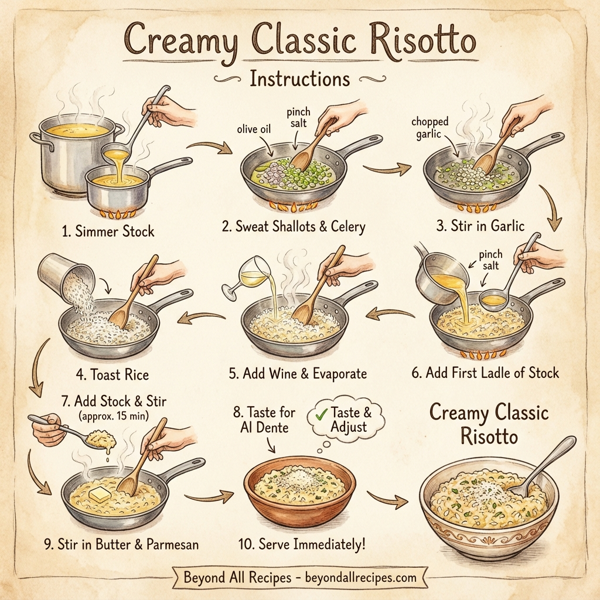
1. Begin by heating the chicken stock (or vegetable stock) in a saucepan and keep it simmering lightly.
2
2. In a separate, large pan, heat the olive oil over medium heat. Add the finely chopped shallots (or onions) and celery, along with a pinch of sea salt. Sweat the vegetables gently for about 3 minutes, or until softened.
3
3. Stir in the finely chopped garlic and continue to cook for an additional 2 minutes until fragrant.
4
4. Increase the heat slightly and add the risotto rice to the pan. Stir continuously for about 2 to 3 minutes, ensuring the rice does not color and begins to look translucent. This toasting step enhances the flavor.
5
5. Pour in the dry vermouth (or white wine) and stir well, allowing the liquid to evaporate while savoring the enticing aroma. This moment is crucial as it infuses the rice with a wonderful essence – choose your favorite between the two for a personal touch.
6
6. Once the wine has mostly evaporated, add your first ladle of hot stock to the rice along with a pinch of salt. Reduce the heat to a simmer.
7
7. Continue to add ladlefuls of stock one at a time, stirring constantly until each addition is mostly absorbed before adding the next. This process should take about 15 minutes and is key to achieving that creamy consistency.
8
8. Once the rice is cooked but retains a slight al dente bite, taste and adjust the seasoning as needed.
9
9. Remove from heat, stir in the butter and freshly grated Parmesan cheese, saving a little for garnish if desired. Mix gently until the cheese has melted and incorporated, creating a luxuriously creamy texture.
10
10. Serve immediately, either on its own or alongside a crisp green salad and a hunk of crusty bread for a complete meal experience.
Nutrition Information
Frequently Asked Questions
Frequently Asked Questions
What is Creamy Classic Risotto?
It is a rich, velvety Italian rice dish featuring a comforting texture achieved through slow cooking and constant stirring.
What type of rice is best for this recipe?
You should use specific risotto rice, such as Arborio or Carnaroli, to ensure the necessary starch release for creaminess.
Can I make this risotto vegetarian?
Yes, simply substitute the chicken stock with vegetable stock to make the dish vegetarian-friendly.
How long does it take to cook the rice?
The rice typically takes about 15 to 17 minutes of active cooking and stirring once the stock additions begin.
What can I use as a substitute for shallots?
If shallots are unavailable, you can use finely chopped onions as an excellent alternative.
Why must the stock be kept simmering?
Keeping the stock hot ensures that the temperature of the risotto remains consistent when adding liquid, allowing for even cooking.
Is the dry vermouth or white wine necessary?
While it adds a wonderful aromatic essence, you can omit it or replace it with a splash of extra stock or lemon juice if preferred.
What does 'toasting' the rice mean?
Toasting involves stirring the dry rice in the oil for 2-3 minutes until the edges look translucent, which enhances the final flavor.
Why is constant stirring important?
Stirring helps the rice grains rub against each other, which releases the starches that create the signature creamy sauce.
How do I know when the risotto is done?
The risotto is done when the rice is tender but still retains a slight 'al dente' bite in the center.
What is the role of celery in this recipe?
Finely chopped celery provides a subtle aromatic base and depth of flavor when sautéed with the shallots.
How much stock should I add at once?
Add the stock one ladleful at a time, ensuring most of the liquid is absorbed before adding the next ladle.
Can I use red wine instead of white?
While possible, red wine will significantly change the color and flavor profile of this classic white risotto.
When should I add the garlic?
Add the finely chopped garlic after the shallots and celery have softened, cooking for just 2 minutes until fragrant to avoid burning.
Can I use pre-grated Parmesan cheese?
Freshly grated Parmesan is recommended as it melts more smoothly and offers a superior flavor compared to pre-grated options.
What should I serve with this risotto?
It pairs perfectly with a crisp green salad and a piece of crusty bread for a complete meal.
How do I store leftovers?
Store leftovers in an airtight container in the refrigerator for up to 3 days.
What is the best way to reheat risotto?
Reheat it gently on the stovetop with a small splash of water or stock to loosen the texture and restore creaminess.
Is this recipe gluten-free?
Risotto rice is naturally gluten-free; however, always verify that your stock and other ingredients are certified gluten-free.
Can I add other ingredients like vegetables or seafood?
Yes, this versatile recipe can be customized with seasonal vegetables or succulent seafood to suit your taste.
What does 'sweating' the vegetables mean?
Sweating means cooking the vegetables gently over medium heat until they are soft and translucent without letting them brown.
How much butter is used in the finish?
The recipe calls for 70g of cubed butter, stirred in at the end for a luxurious, creamy texture.
Can I use olive oil instead of butter?
While the initial sautéing uses olive oil, the butter at the end is traditional for achieving the creamy 'mantecatura' finish.
What size pan is best?
A large, heavy-bottomed pan or skillet is ideal to allow for even heat distribution and plenty of room for stirring.
How much rice is needed for this recipe?
The recipe requires 400g of risotto rice.
Can I use dried garlic?
Fresh garlic is preferred for its aroma, but 1/4 teaspoon of garlic powder can be used if fresh is unavailable.
What is the total amount of stock needed?
You will need approximately 1 liter of chicken or vegetable stock.
Do I need to wash the rice before cooking?
No, do not wash risotto rice, as you need the surface starch to create the creamy consistency.
When do I add the salt and pepper?
Add a pinch of sea salt while sweating the vegetables and adjust the seasoning again just before serving.
Can I make this ahead of time?
Risotto is best served immediately for the best texture, as it tends to thicken and lose its creaminess as it sits.