Creamy Cashew Hummus Delight
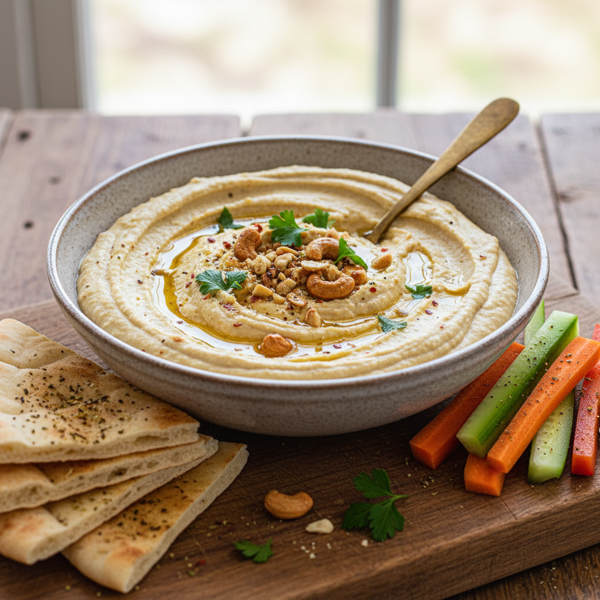
Indulge in this deliciously creamy Cashew Hummus, a unique twist on the traditional dip that eliminates beans altogether! Perfectly suited for primal and paleo diets, this nut-based hummus packs a punch with flavors of garlic, tangy lemon, and spices. With the flexibility to customize it with your favorite add-ins like olives, roasted red peppers, or sun-dried tomatoes, you can enjoy a bold, nutritious spread that’s perfect for dipping, spreading, or simply savoring. Whip this up for your next gathering, or keep it on hand for a healthy snack option. This recipe produces a generous 2 cups, making it ideal for sharing or for meal prep throughout the week.
N/A
Servings
N/A
Calories
12
Ingredients
Ingredients
raw cashews
1 cup (soaked for at least 3 hours)
tahini
1/4 cup (none)
lemon juice
1/3 cup (freshly squeezed)
garlic cloves
2 (crushed)
salt
1/2 teaspoon (none)
cumin
1/2 teaspoon (none)
cayenne pepper
1/4 teaspoon (none)
canned olives
25 (optional)
roasted red pepper
1 (optional)
paprika
1/2 teaspoon (optional)
sun-dried tomatoes
6 (optional)
fresh parsley
to garnish (optional)
Instructions
1
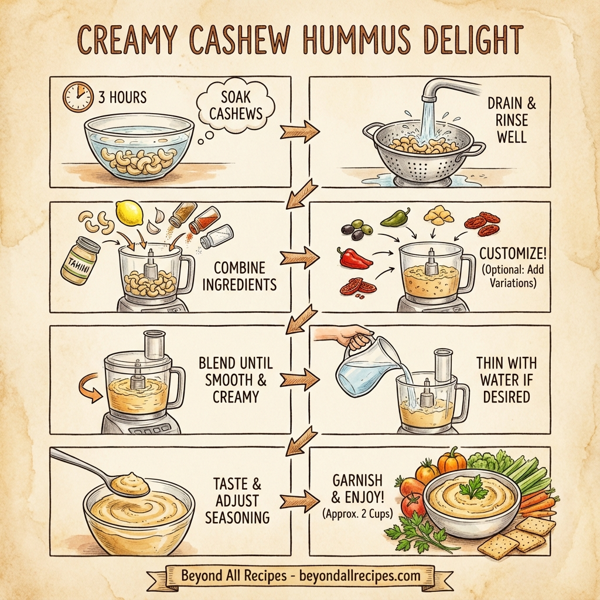
Begin by soaking the raw cashews in water for at least 3 hours to soften them, which helps achieve a creamy texture.
2
After soaking, drain the cashews and rinse them thoroughly under cold water to remove any excess starch.
3
In a food processor, combine the soaked cashews with tahini, lemon juice, crushed garlic, salt, cumin, and cayenne pepper.
4
For added flavor variations, incorporate either the olives, roasted red pepper with paprika, or sun-dried tomatoes at this stage. Alternatively, leave them out for a classic version.
5
Blend the mixture until smooth, scraping down the sides as needed. The consistency should be thick and creamy.
6
If you prefer a thinner texture, gradually add water, one-quarter cup at a time, until you reach your desired consistency.
7
Taste and adjust seasoning if necessary, then transfer the hummus to a serving bowl.
8
For an extra touch, garnish with fresh parsley before serving. Enjoy with fresh vegetables, crackers, or as a spread in wraps!
Nutrition Information
Frequently Asked Questions
Frequently Asked Questions
What is Creamy Cashew Hummus Delight?
It is a unique, bean-free twist on traditional hummus that uses raw cashews as a base for a creamy, nutritious dip.
Is this cashew hummus recipe bean-free?
Yes, this recipe is entirely bean-free, making it a great alternative for those avoiding legumes.
Is this recipe suitable for a paleo diet?
Yes, this cashew hummus is perfectly suited for both paleo and primal diets.
Is this hummus vegan?
Yes, all ingredients used in this Creamy Cashew Hummus Delight are plant-based and vegan-friendly.
How long should I soak the cashews?
The raw cashews should be soaked in water for at least 3 hours to ensure a smooth and creamy texture.
Why do the cashews need to be soaked?
Soaking softens the nuts, which helps the food processor blend them into a creamy consistency similar to traditional hummus.
How much hummus does this recipe yield?
This recipe produces a generous 2 cups of cashew hummus.
What are the primary ingredients for the base?
The base consists of raw cashews, tahini, lemon juice, garlic, salt, cumin, and cayenne pepper.
Can I add other flavors to this cashew hummus?
Yes, you can customize it with optional add-ins like canned olives, roasted red peppers, or sun-dried tomatoes.
What if the hummus is too thick after blending?
You can gradually add water, one-quarter cup at a time, until you reach your desired consistency.
How do I prepare the roasted red pepper version?
Simply incorporate one roasted red pepper and 1/2 teaspoon of paprika during the blending stage.
How many olives should I add for an olive-flavored hummus?
The recipe suggests adding 25 canned olives for a flavorful variation.
How many sun-dried tomatoes are needed for the tomato variation?
You should add 6 sun-dried tomatoes to the mixture before blending.
What type of lemon juice should I use?
The recipe calls for 1/3 cup of freshly squeezed lemon juice for the best tangy flavor.
Is this recipe spicy?
It contains 1/4 teaspoon of cayenne pepper, which provides a mild kick, but you can adjust this to your preference.
How should I serve the cashew hummus?
It is delicious served with fresh vegetables, crackers, or used as a spread in wraps.
Do I need to rinse the cashews after soaking?
Yes, you should drain and rinse the cashews thoroughly under cold water to remove any excess starch.
What kind of garlic is best for this recipe?
The recipe recommends using 2 crushed garlic cloves for a punchy, fresh flavor.
What equipment is necessary to make this dip?
You will need a food processor to blend the ingredients until they are thick and creamy.
What is the recommended garnish for this hummus?
Fresh parsley is the recommended garnish for an extra touch of flavor and color.
Is this recipe high in protein?
While specific nutritional data isn't provided, cashews and tahini are natural sources of plant-based protein and healthy fats.
Can I use roasted cashews instead of raw?
The recipe specifies raw cashews for the best texture; roasted cashews may result in a different flavor and grittier consistency.
What is tahini?
Tahini is a paste made from toasted ground sesame seeds, a staple ingredient in traditional hummus.
How much cumin is in the recipe?
The recipe uses 1/2 teaspoon of cumin to provide an earthy, traditional hummus flavor.
Is this recipe gluten-free?
Yes, all the listed ingredients are naturally gluten-free.
Can this hummus be used for meal prep?
Yes, with a 2-cup yield, it is ideal for keeping on hand as a healthy snack throughout the week.
What is the texture of this hummus?
The consistency should be thick and creamy, though it can be thinned with water if preferred.
How many ingredients are in the basic version?
The core recipe contains 7 main ingredients excluding water and optional garnishes.
Is there any sugar in this recipe?
No, this recipe contains no added sugars.
Can I make this hummus without tahini?
While tahini is a key ingredient for flavor and creaminess, you could experiment with other nut or seed butters if necessary.