Creamy Cashew Herb Gravy
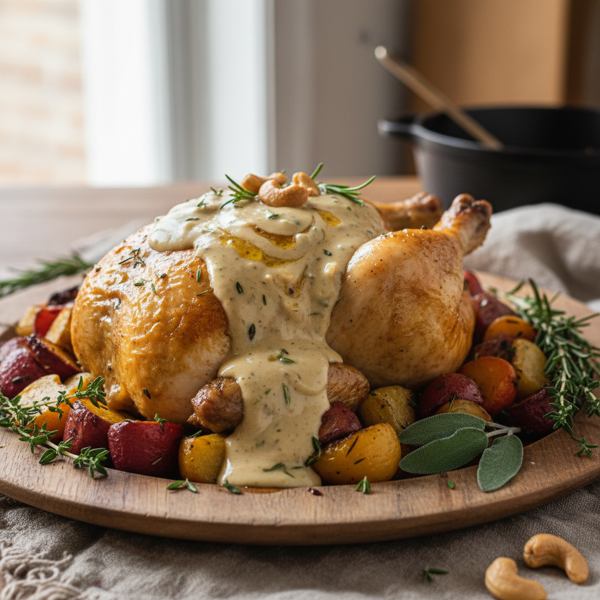
This Creamy Cashew Herb Gravy is the perfect velvety accompaniment to elevate your holiday meals. Whether drizzled over lentil and wild rice loaf, lush mashed potatoes, or fresh roasted vegetables, this rich, flavorful sauce is sure to impress your guests. Made with a base of toasted onions, raw or roasted cashews blended to a creamy perfection, and enhanced with aromatic garlic and herbs, each bite delivers a savory warmth. Feel free to experiment with additional flavors like white wine or fresh herbs to suit your taste. With a large batch yielding plenty for sharing or freezing, you'll always have a delightful addition to your meals on hand!
N/A
Servings
N/A
Calories
11
Ingredients
Ingredients
Oil
1 tablespoon (For sautéing)
Onion
1 (Chopped)
Cashews
2 cups (Raw or roasted unsalted)
Garlic cloves
3 (Crushed (or more based on preference))
Flour
2 tablespoons (All-purpose or whole grain)
Soy sauce
2 tablespoons (For seasoning)
Salt
to taste (For seasoning)
Black pepper
to taste (For seasoning)
Water
2-4 cups (As needed to achieve desired consistency)
White wine
1/3 cup (Optional, for added flavor)
Fresh herbs (e.g., rosemary)
1 teaspoon (Optional, finely chopped)
Instructions
1
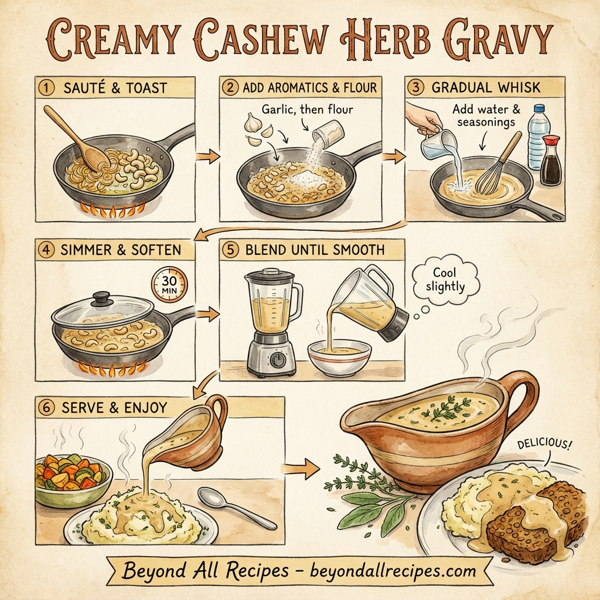
In a large skillet, heat the oil over medium heat. Add the chopped onion and sauté until soft and golden brown, about 5-7 minutes. For a deeper flavor, let the onions caramelize a bit more.
2
If you are using raw cashews, add them at this step and toast them with the onions for an additional 3-5 minutes until they acquire a light golden color and nutty aroma.
3
Stir in the crushed garlic and cook for an additional minute until fragrant, being careful not to let it burn.
4
Sprinkle in the flour and stir in to combine, cooking for about 1 minute until slightly golden.
5
Gradually pour in 1 to 2 cups of water, adding a half cup at a time while stirring to incorporate the flour and create a smooth mixture. Add more water as needed to achieve a thin consistency.
6
If you are using roasted cashews, add them to the mixture now.
7
Pour in additional water (1-2 cups more) so the cashews are completely submerged and a soup-like broth forms.
8
Stir in the soy sauce, black pepper, and salt to taste. Feel free to add any additional flavorings, such as white wine or fresh herbs.
9
Allow the mixture to simmer for about 30 minutes, stirring occasionally. Add more water or soy sauce as needed to maintain your desired consistency while the flavors meld and the cashews soften.
10
Once the cashews are tender, remove the skillet from heat and let it cool slightly for a few minutes.
11
Carefully transfer the mixture to a blender or food processor in batches and puree until smooth. You may need to add more water to reach your preferred consistency. Taste and adjust seasoning if necessary.
12
Serve immediately or store in the refrigerator for several days. Freeze any leftovers in small batches for future enjoyment.
Nutrition Information
Frequently Asked Questions
Frequently Asked Questions
What is Creamy Cashew Herb Gravy?
It is a velvety and rich sauce made from a base of toasted onions and blended cashews, seasoned with garlic and herbs.
Is this gravy recipe vegan?
Yes, this recipe is entirely vegan as it uses cashews for creaminess instead of dairy.
Can I use raw cashews for this recipe?
Yes, if using raw cashews, toast them with the onions for 3-5 minutes until they are light golden and aromatic.
Can I use roasted cashews?
Yes, you can use roasted cashews; simply add them to the mixture after the water and flour have been incorporated.
What type of oil should I use for sautéing?
You can use any neutral cooking oil suitable for medium heat to sauté the onions.
How long should I sauté the onions?
Sauté the onions for about 5-7 minutes until they are soft and golden brown.
How many garlic cloves are needed?
The recipe calls for 3 crushed garlic cloves, but you can add more based on your preference.
What kind of flour is best for this gravy?
You can use either all-purpose flour or whole grain flour to help thicken the sauce.
How do I prevent the flour from clumping?
Gradually pour in the water a half cup at a time while stirring constantly to create a smooth mixture.
How much water is required in total?
You will need between 2 to 4 cups of water depending on your desired gravy consistency.
What is the purpose of adding soy sauce?
Soy sauce is used to add saltiness and a deep savory umami flavor to the gravy.
Can I add alcohol to this gravy?
Yes, you can add 1/3 cup of white wine for an extra layer of sophisticated flavor.
Which fresh herbs go well with this cashew gravy?
Finely chopped fresh rosemary is highly recommended, though you can experiment with other aromatic herbs.
How long should the gravy simmer?
Allow the mixture to simmer for about 30 minutes to let the flavors meld and soften the cashews.
Do I need a blender for this recipe?
Yes, a blender or food processor is necessary to puree the mixture until it is perfectly smooth.
Should I cool the mixture before blending?
Yes, let the mixture cool slightly for a few minutes after removing it from the heat before transferring it to the blender.
What if the gravy is too thick after blending?
Simply add more water or a bit more soy sauce during the blending process to reach your preferred consistency.
What can I serve with Creamy Cashew Herb Gravy?
It pairs beautifully with mashed potatoes, lentil and wild rice loaf, or roasted vegetables.
How should I store leftovers?
Store the gravy in the refrigerator for several days or freeze it in small batches for later use.
Is this recipe suitable for the holidays?
Yes, its rich and savory profile makes it an excellent choice for holiday meals and gatherings.
Can I make this gravy gluten-free?
Yes, you can substitute the flour with a gluten-free flour blend and ensure your soy sauce is a certified gluten-free variety or tamari.
How do I make the flavor deeper?
You can let the onions caramelize for a longer period before adding other ingredients to create a deeper base flavor.
How do I adjust the seasoning?
Taste the finished puree and add more salt, black pepper, or soy sauce as needed to suit your palate.
Can I use a food processor?
Yes, a food processor will work, though a high-speed blender often yields a smoother, creamier texture.
What if I don't have fresh herbs?
You can use dried herbs, but use about one-third of the amount called for since dried herbs are more concentrated.
How do I reheat the gravy?
Reheat it on the stove over low heat, adding a splash of water if it has thickened too much in the fridge.
Does this gravy contain cholesterol?
No, because it is made from plant-based ingredients, it is cholesterol-free.
How many people does one batch serve?
The recipe yields a large batch, making it suitable for sharing with a group during a holiday dinner.
Can I omit the wine?
Yes, the white wine is optional and the gravy will still be delicious without it.
Is this gravy high in protein?
While it contains some protein from the cashews, it is primarily intended as a high-flavor accompaniment rather than a main protein source.