Creamy Basil Pesto Fettuccine
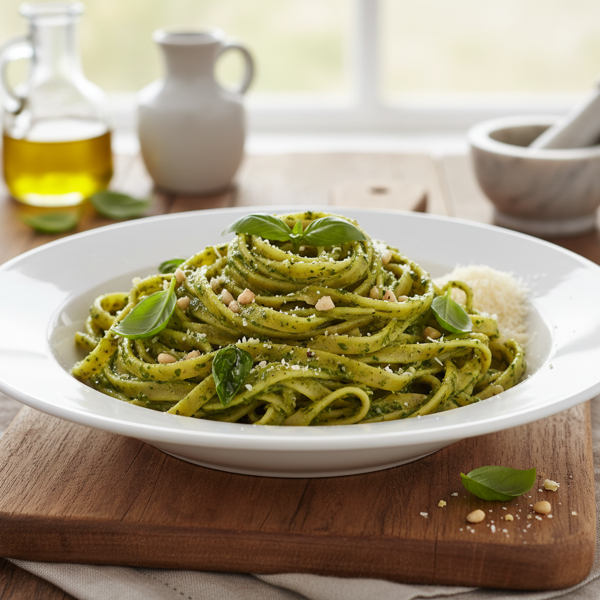
Indulge in a luscious bowl of Creamy Basil Pesto Fettuccine, a delightfully fresh and vibrant dish that combines the fragrant flavors of basil and garlic with the rich nuttiness of pine nuts. This pesto sauce is a labor of love, perfected through the perfect balance of Parmesan and Pecorino Romano cheeses. Ideal for any occasion, this recipe can easily be customized to your taste—just remember, if you're feeling adventurous, add more garlic for an extra kick! Serve this dish as a hearty main course or a delightful side, and enjoy a burst of Italian flavors in every bite.
6
Servings
N/A
Calories
7
Ingredients
Ingredients
fresh basil leaves
2 cups (packed)
garlic cloves
2-3 (minced)
pine nuts
1/2 cup (toasted (optional))
extra virgin olive oil
1 1/4 cups (cold-pressed)
grated parmesan cheese
1/2 cup (freshly grated)
grated pecorino romano cheese
1/2 cup (freshly grated)
fettuccine
1 lb (uncooked)
Instructions
1
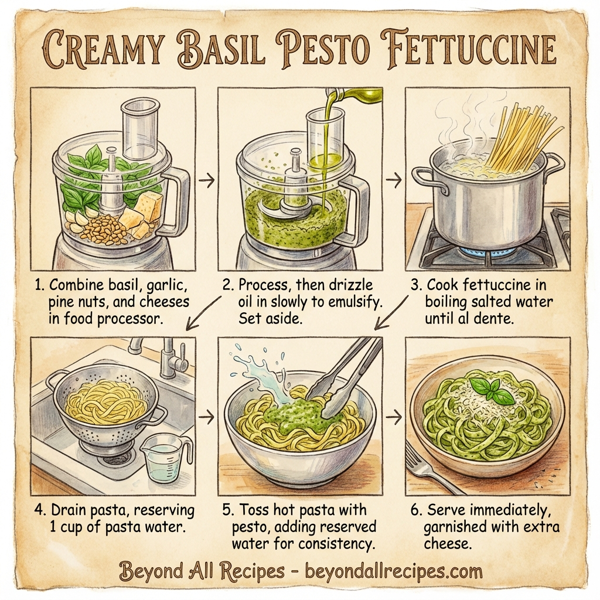
In a food processor, combine the packed basil leaves, minced garlic, toasted pine nuts, and both types of cheese.
2
Process the mixture for about 15 seconds until it is finely chopped but not pureed.
3
While the processor is running, slowly drizzle in the extra virgin olive oil through the tube, allowing it to emulsify with the other ingredients until fully incorporated.
4
Turn off the processor and set the pesto sauce aside.
5
In a large pot, bring salted water to a boil. Once boiling, add the fettuccine and cook according to package instructions until al dente. Stir occasionally to prevent sticking.
6
Once cooked, reserve about 1 cup of pasta water, then drain the fettuccine thoroughly.
7
In the pasta pot or a large serving bowl, combine the hot fettuccine with the pesto sauce. Toss gently to coat the pasta evenly. If the sauce is too thick, add reserved pasta water a little at a time until the desired consistency is reached.
8
Serve immediately, garnished with extra Parmesan or Pecorino Romano cheese if desired.
Nutrition Information
Frequently Asked Questions
Frequently Asked Questions
What is Creamy Basil Pesto Fettuccine?
It is a fresh and vibrant Italian-inspired dish that combines fettuccine pasta with a rich sauce made from basil, garlic, pine nuts, and two types of cheese.
What are the primary ingredients for the pesto?
The pesto consists of fresh basil leaves, minced garlic, toasted pine nuts, extra virgin olive oil, Parmesan cheese, and Pecorino Romano cheese.
How many people does this recipe serve?
This recipe is designed to provide 6 servings.
Can I make this recipe vegan?
Yes, you can substitute the Parmesan and Pecorino Romano with nutritional yeast or vegan cheese alternatives.
How do I toast the pine nuts?
You can toast them in a dry pan over medium heat for 3-5 minutes until they are fragrant and golden brown, stirring frequently.
What type of pasta is best for this recipe?
Fettuccine is recommended, but other long pastas like linguine or spaghetti also work well.
How long should I process the ingredients in the food processor?
Process the basil, garlic, nuts, and cheese for about 15 seconds before drizzling in the oil.
Can I use a blender instead of a food processor?
Yes, a blender can be used, though the texture of the pesto might be smoother and more pureed than when using a food processor.
Why should I reserve the pasta water?
The starchy pasta water is used to thin out the sauce if it is too thick and helps the pesto adhere better to the noodles.
How do I prevent the fettuccine from sticking?
Stir the pasta occasionally while it is boiling in a large pot of salted water.
Can I use dried basil for this recipe?
Dried basil is not recommended for pesto; fresh basil leaves are essential for the flavor and texture of the sauce.
How much olive oil is required?
The recipe calls for 1 1/4 cups of cold-pressed extra virgin olive oil.
What can I use as a substitute for pine nuts?
Walnuts, cashews, or sunflower seeds are excellent alternatives if pine nuts are unavailable.
Which cheeses are used in the pesto?
The recipe uses a 1/2 cup each of freshly grated Parmesan and Pecorino Romano cheese.
Is this dish suitable for vegetarians?
Yes, this is a vegetarian recipe, provided the cheeses used are made with vegetarian rennet.
How should I store leftover pesto?
Store the pesto in an airtight container in the refrigerator for up to 5 days, ideally with a thin layer of oil on top to prevent browning.
Can the pesto sauce be frozen?
Yes, you can freeze the pesto sauce in airtight containers or ice cube trays for up to 3 months.
How long does cooked pesto fettuccine last in the fridge?
Once mixed, the pasta will stay fresh in an airtight container in the refrigerator for 2 to 3 days.
What side dishes pair well with this pasta?
It pairs beautifully with a fresh garden salad or a side of crusty garlic bread.
Can I add meat to this recipe?
Yes, grilled chicken, sautéed shrimp, or sliced Italian sausage are great additions for extra protein.
How many garlic cloves should I use?
The recipe suggests 2-3 minced garlic cloves, but you can add more if you prefer a stronger kick.
What does 'al dente' mean for the pasta?
Al dente means the pasta is cooked so that it remains firm to the bite when eaten.
Why do I need to drizzle the oil slowly?
Slowly drizzling the oil allows it to emulsify properly with the other ingredients, creating a creamy consistency.
Is this recipe gluten-free?
The sauce is naturally gluten-free, but you must use gluten-free fettuccine to make the entire dish gluten-free.
Is the pesto sauce cooked on the stove?
No, the pesto is a raw sauce that is warmed by the heat of the freshly cooked pasta.
What is the best way to prepare the basil?
The basil leaves should be fresh and packed tightly into the measuring cup.
Can I use only one type of cheese?
Yes, you can use only Parmesan or only Pecorino Romano, though the blend provides a more balanced flavor.
What should I do if the sauce is too thick?
Gradually add the reserved pasta water a little at a time until you reach your desired consistency.
What is the best way to garnish the dish?
Garnish with extra grated Parmesan or Pecorino Romano cheese and perhaps a few whole basil leaves.
Is the pesto sauce spicy?
No, it is a savory and herb-forward sauce, though the raw garlic provides a slight natural pungency.